Appearance
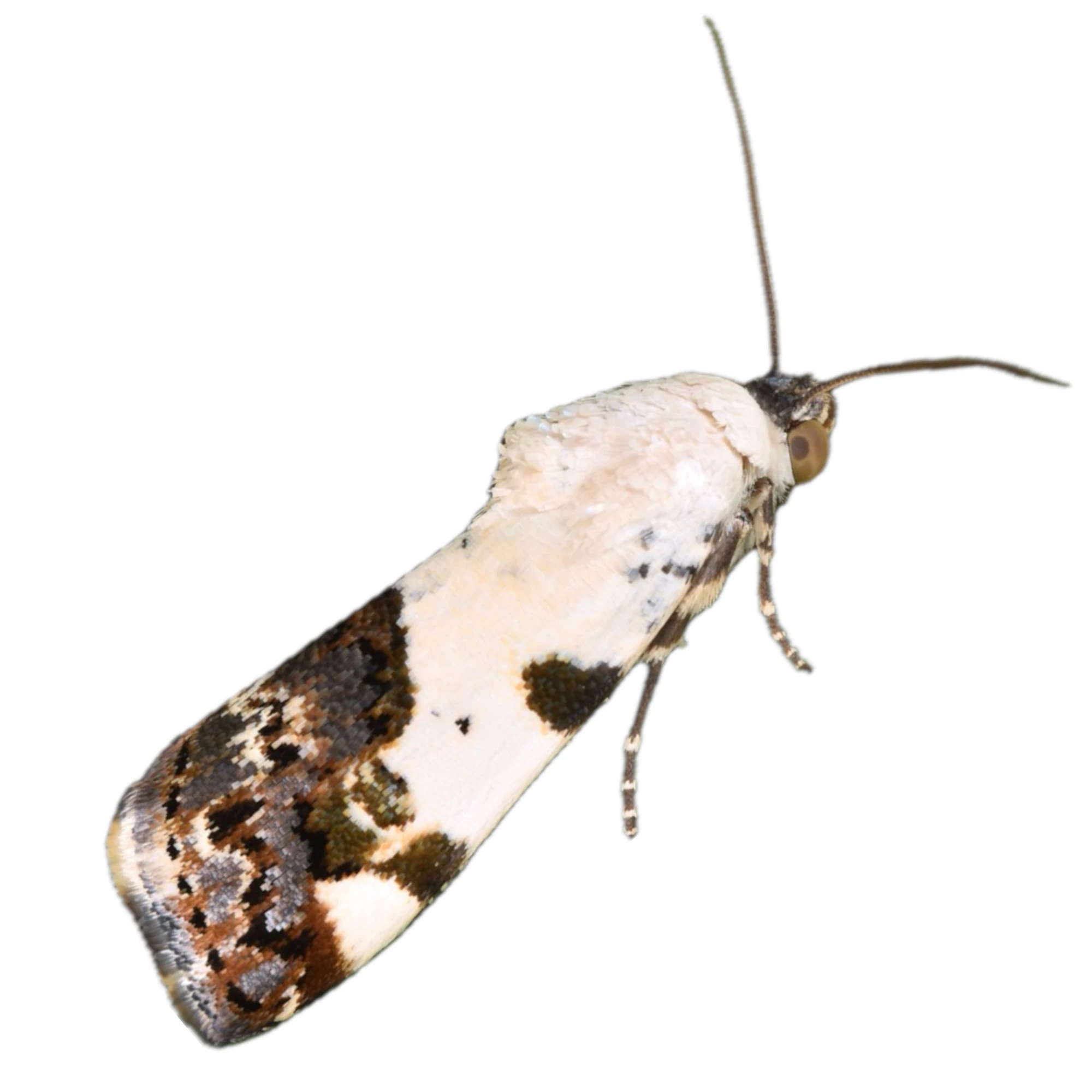
The Exposed Bird Dropping Moth reaches a wingspan of 15-29 mm. Males feature white forewings basally with two black patches along the costa. The distal patch merges with blackish shading beyond the postmedial line. This leaves a white patch near the apex. A small black orbicular spot stands out surrounded by white. Hindwings appear whitish or pale gray in males. Females show mostly dark gray or blackish forewings except for two white patches along the costa. Some white marks the base and outer margin. Dark grayish-brown shading runs along the outer margin. Hindwings stay white at the base with dark grayish outer margins in females.
Habitat and Range
This moth inhabits gardens, fields, and open areas where adults flush from plants during the day. Its range covers mostly the eastern United States to southern California. In Canada, it appears only in Ontario and Quebec. These spots provide suitable vegetation for larval hosts.
Behavior
Adults fly from March to September in southern regions, with a reduced season northward. They get disturbed easily from resting spots on plants in daylight hours. No aggressive behaviors noted; they focus on foraging and reproduction during active periods.
Life Cycle
Larvae feed on leaves of hollyhock (Alcea rosea). They develop as chunky forms, green- to brown-mottled with black spots around spiracles. Specific durations for stages remain undocumented, but the cycle aligns with seasonal patterns in temperate areas. Adults emerge to mate and lay eggs on hosts.
Economic Impact
With no mentions of harm or benefits, the Exposed Bird Dropping Moth holds neutral status. Larvae target hollyhock without notable impact on agriculture or gardens. It contributes to biodiversity without economic concerns.
This preserved specimen highlights the bird-dropping mimicry patterns, ideal for camouflage studies in moths. Check it out on BugGuide! https://bugguide.net/node/view/48312

 <—
<—