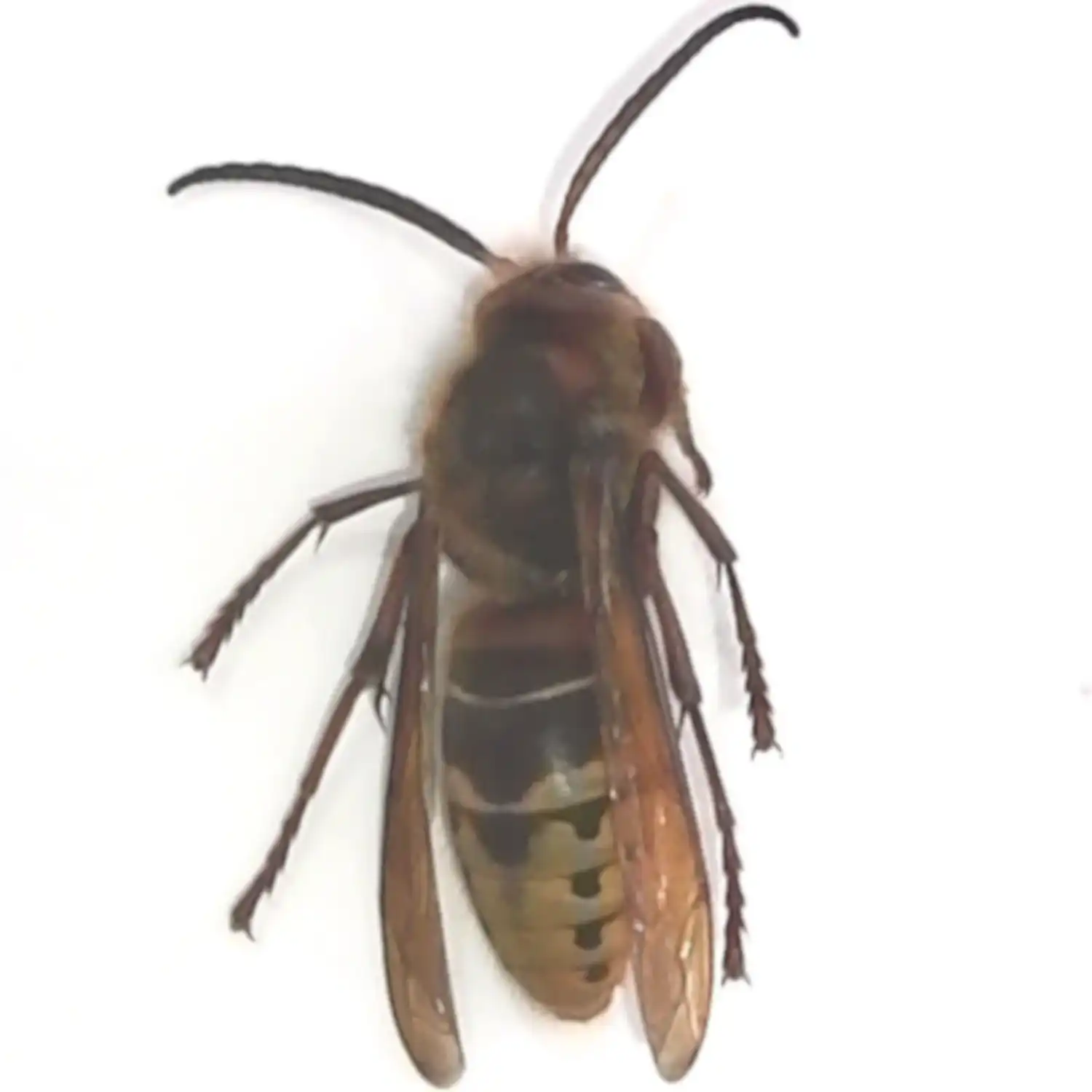
The European Hornet (Vespa crabro), introduced to North America in the mid-1800s, ranges from Texas to New York and Ontario. Queens measure 25-35 mm in body length, workers 18-24 mm, and males around 21-23 mm. Native to Eurasia, the U.S. population is subspecies V. c. germana.
Queens emerge from hibernation in spring to found nests using chewed wood pulp. Initial cells house eggs that develop into non-reproductive workers. Once 5-10 workers emerge, they expand the nest and care for brood while the queen focuses on egg-laying. Nests peak in mid-September, built in hollow trees, attics, or other sheltered sites.
Workers hunt insects to feed larvae, which exude a sugary liquid in return. Adults consume sap (girdling twigs to access it) and nectar for energy. In late summer, queens produce males and new reproductive females. Mating occurs during nuptial flights; males die afterward, and fertilized queens overwinter in protected locations. Old nests are abandoned.
Active at dusk and attracted to lights, adults are less aggressive than smaller yellowjackets but will defend nests. They play a role in controlling pest insects. Coloration includes yellow and brown markings, distinguishing them from the larger Asian giant hornet.
Check it out on BugGuide! https://bugguide.net/node/view/7230

 <—
<—