Appearance
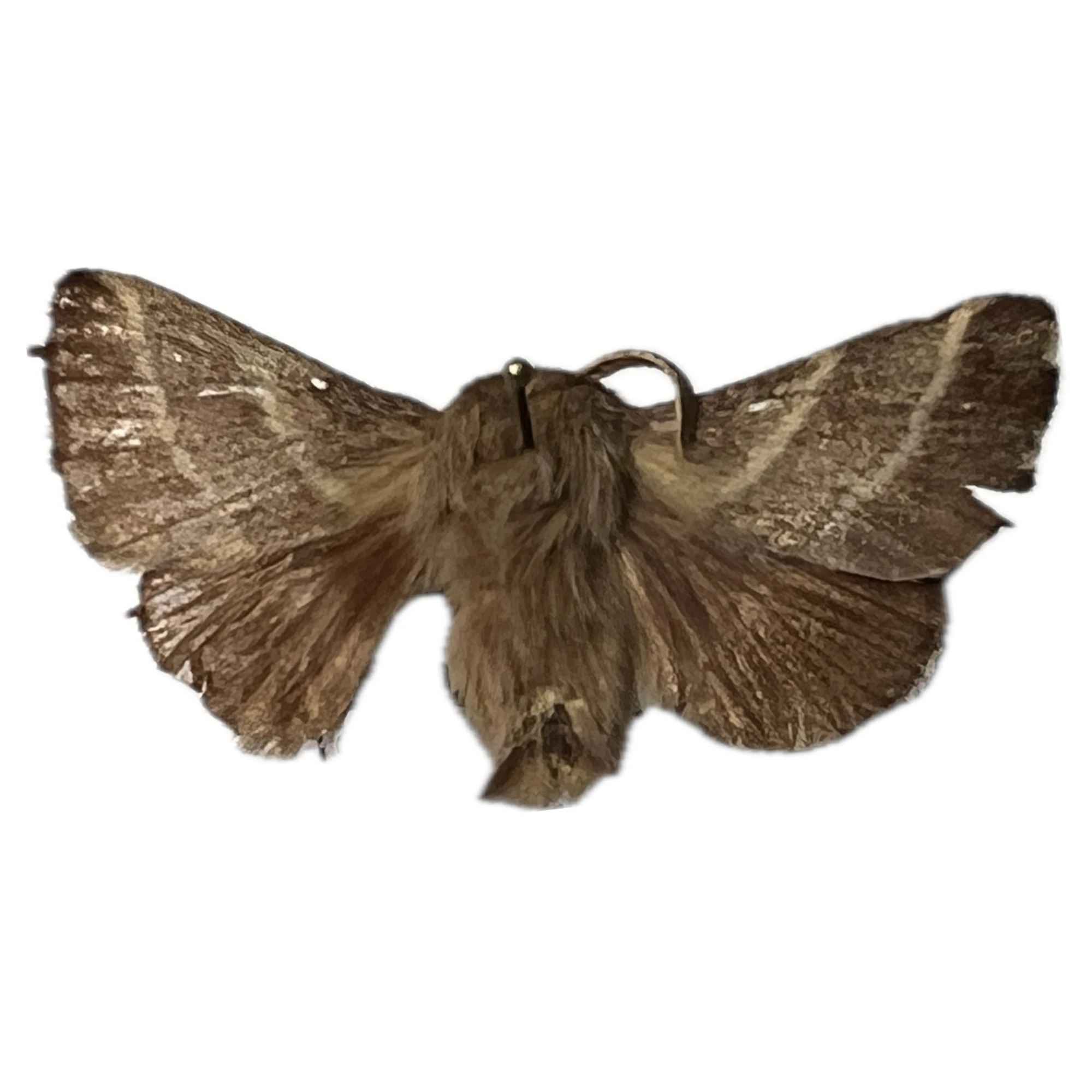
The Eastern Tent Caterpillar Moth adult spans 22-44 mm in wingspan, with females larger. Forewings appear reddish-brown with two oblique whitish or cream lines crossing from base to tip. The submarginal line curves gently, while the antemedial line stays straighter. Hindwings show uniform pale brown. Larvae grow to 50 mm long, with blue bodies covered in long brown hairs and white keyhole markings on the back. These fuzzy caterpillars form distinctive silk tents in host trees.
Habitat and Range
This moth inhabits deciduous forests, orchards, and urban areas across eastern North America. Its range extends from Nova Scotia and Ontario south to Florida, west to Texas and Minnesota. Larvae favor wild cherry, apple, and crabapple trees in open woodlands or edges where sunlight aids tent building.
Behavior
Adults fly at night in spring, drawn to lights and flowers for nectar. Larvae construct communal silk tents in tree crotches, emerging in groups to feed on leaves during daylight. They leave silk trails for navigation. When mature, they wander individually to pupate. This gregarious feeding and tent-building supports colony cohesion.
Life Cycle
Females lay 150-400 eggs in bands around twigs in summer. Eggs overwinter, hatching in spring as tiny caterpillars that spin tents and feed. Larvae develop through five instars over four to six weeks, then disperse to pupate in cocoons on trunks or ground. Adults emerge in two to three weeks to mate. One generation per year completes the cycle.
Economic Impact
Larvae act as occasional pests in orchards by defoliating fruit trees like apple and cherry, reducing yields and aesthetics. Outbreaks cause localized damage, prompting removal of tents and insecticides. Overall, impacts remain minor in forestry, with natural predators limiting populations.
This preserved specimen highlights the silken tent-building behavior, ideal for lepidopteran education and displays. Check it out on BugGuide! https://bugguide.net/node/view/558

 <—
<—