
$3.00
 <–
1 in stock
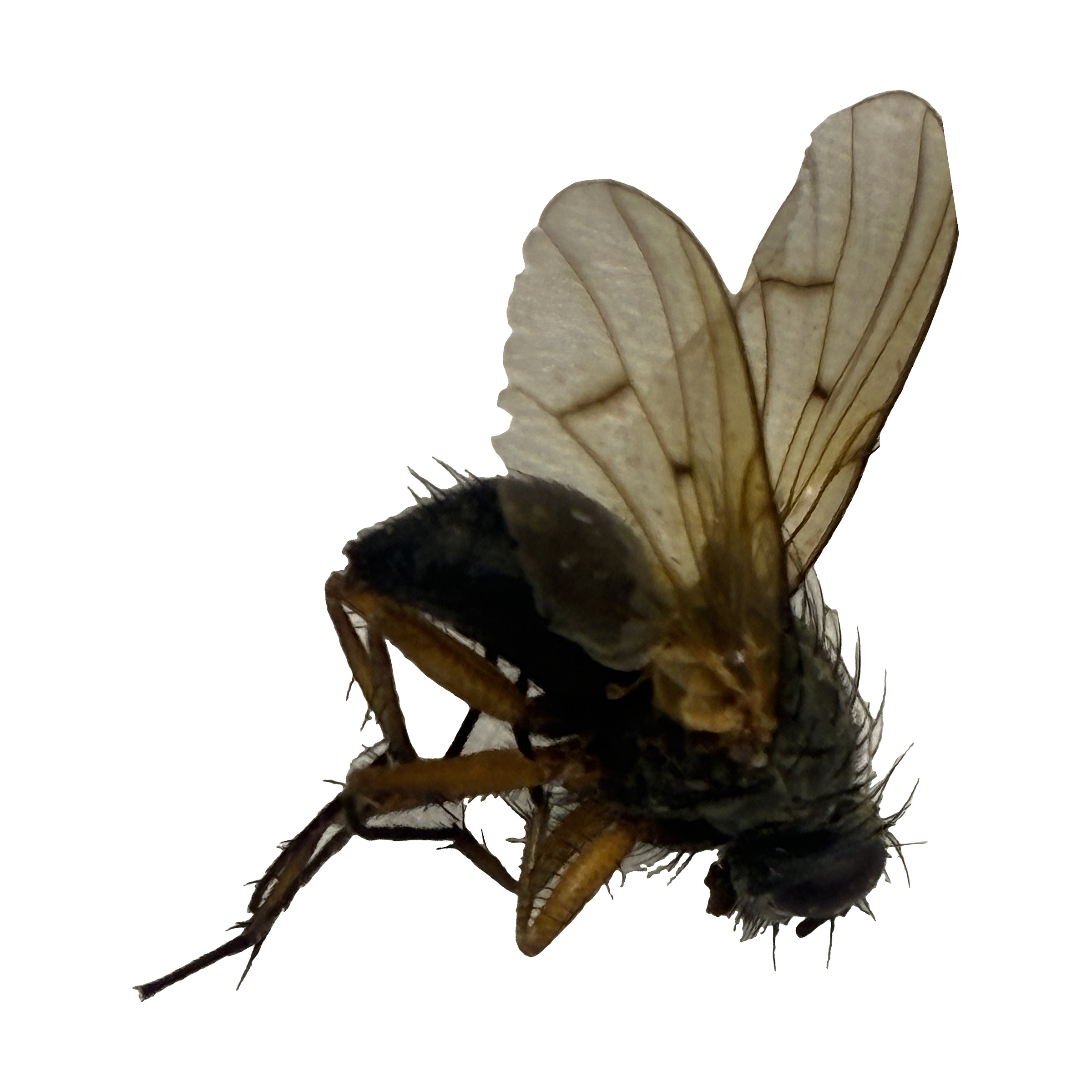
The Dung Fly belongs to the family Scathophagidae, the dung flies. Adults in this family are usually slender to moderately stout flies, often bristly, and typically about 3 to 11 mm long. Color varies widely among the many genera. The well known golden dung fly is fuzzy orange all over. This specimen is about 8 mm long, measured from the head to the tip of the abdomen. It has a dark gray to black body, orange legs, and yellowish, slightly smoky wings. It is not the golden dung fly.
Scathophagidae is found worldwide and throughout North America. Adults are often found in meadows, wetlands, woods, and other open or moist habitats, and some species are common around dung. This specimen was collected in Wisconsin.
Adults of many species are predators of other insects. Some also visit dung, flowers, or vegetation. They do not bite people. The larvae have several ways of life. Some develop in dung, some mine leaves or bore in stems or seed capsules, and some are predators in wet habitats or in water.
Like other true flies, dung flies have complete metamorphosis: egg, larva, pupa, and adult. The larvae feed in dung, in plant tissue, or as predators, then pupate in the soil or in the food material. In much of the range, adults may be collected from spring through fall.
Dung flies are not crop pests and are harmless to people. They do not bite or sting. Species that develop in dung help break down that material, and predatory adults and larvae can feed on other insects. The preserved specimens are used in teaching and collections.
Scathophagidae Robineau-Desvoidy, 1830 belongs to the order Diptera (true flies) and the superfamily Muscoidea. The name is sometimes misspelled Scatophagidae, which is a family of fish. There are about 150 species in almost 40 genera in North America, and more than 400 species in about 60 genera worldwide. The family used to be treated as a subfamily of the house flies or the root-maggot flies. A sure genus or species identification often requires a closer look than a photo can provide, so this specimen is listed at the family level as Scathophagidae.
This preserved specimen educates on dung flies and the family Scathophagidae, suitable for displays or studies.
Check it out on BugGuide! https://bugguide.net/node/view/87/bgimage