
$3.00
 <---
1 in stock
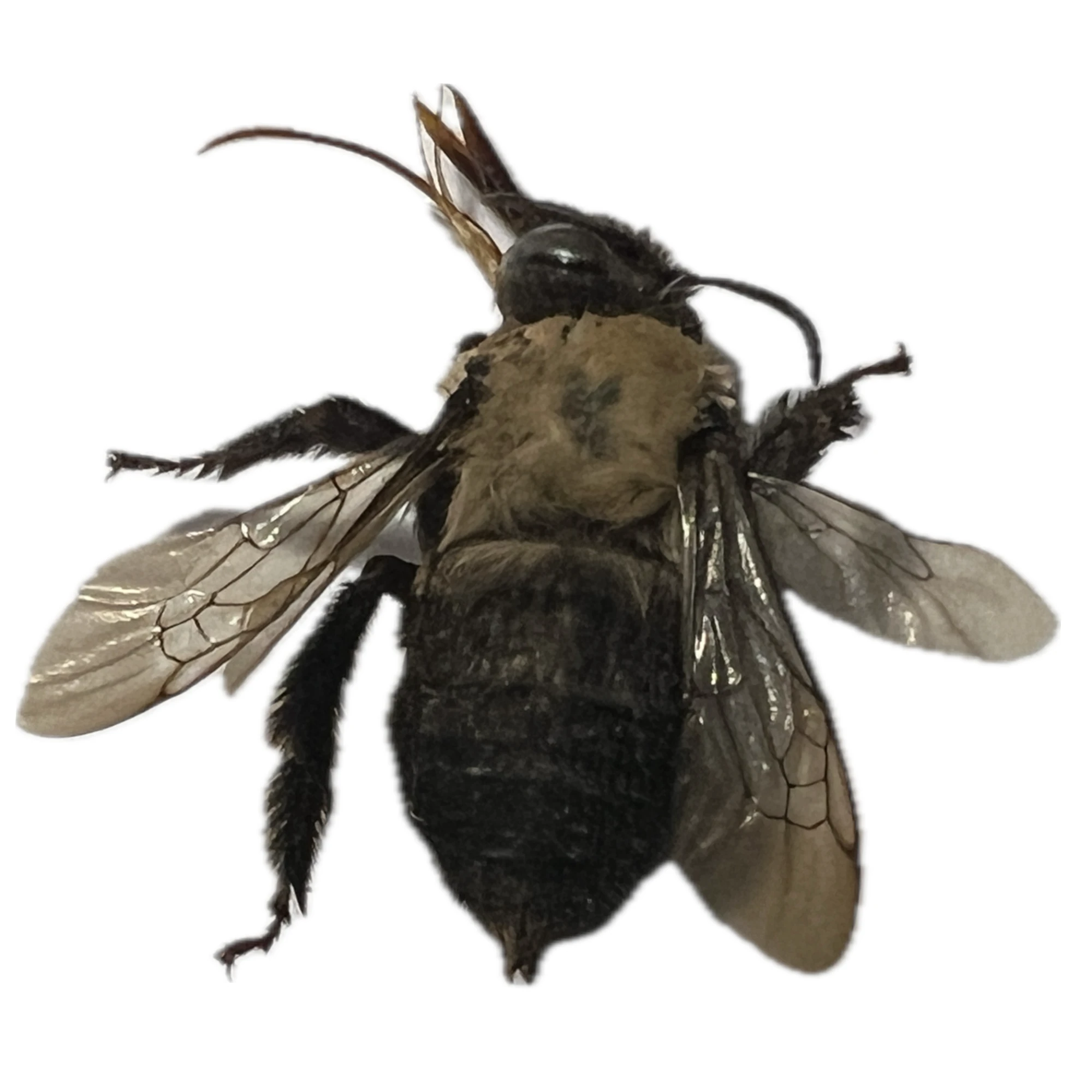
Digger Bees in the genus Anthophora show robust, hairy bodies that often mimic bumblebees. Sizes range from 10 to 20 mm in length. Coloration varies by species, typically featuring black with yellow or white bands. Dense pile covers the thorax for pollen collection. Antennae and legs adapt for digging and foraging.
These bees inhabit diverse environments like meadows, gardens, and woodlands with loose soil for nesting. The genus spans most of the world, excluding Southeast Asia and Australasia. In North America, they occur transcontinentally, favoring sunny spots with floral resources.
Adults forage on nectar and pollen from various flowers, serving as efficient pollinators. Females excavate solitary nests in ground burrows, provisioning cells with pollen-nectar balls. They exhibit fast, darting flight patterns. Males patrol territories to mate. Non-aggressive toward humans.
Females lay eggs in underground cells during spring to summer. Larvae feed on provisions, pupating in cocoons. Adults emerge the following season. One generation per year in temperate areas, with overwintering as prepupae.
Digger Bees hold beneficial status as pollinators. They enhance crop yields in agriculture, especially for fruits and vegetables, without needing managed hives. No pest attributes; they support biodiversity economically.
This preserved specimen highlights the robust hairy form, ideal for pollinator education and displays. Check it out on BugGuide! https://bugguide.net/node/view/45302
| Weight | 0.01 lbs |
|---|
Only logged in customers who have purchased this product may leave a review.
Reviews
There are no reviews yet.