
$3.00
 <–
1 in stock
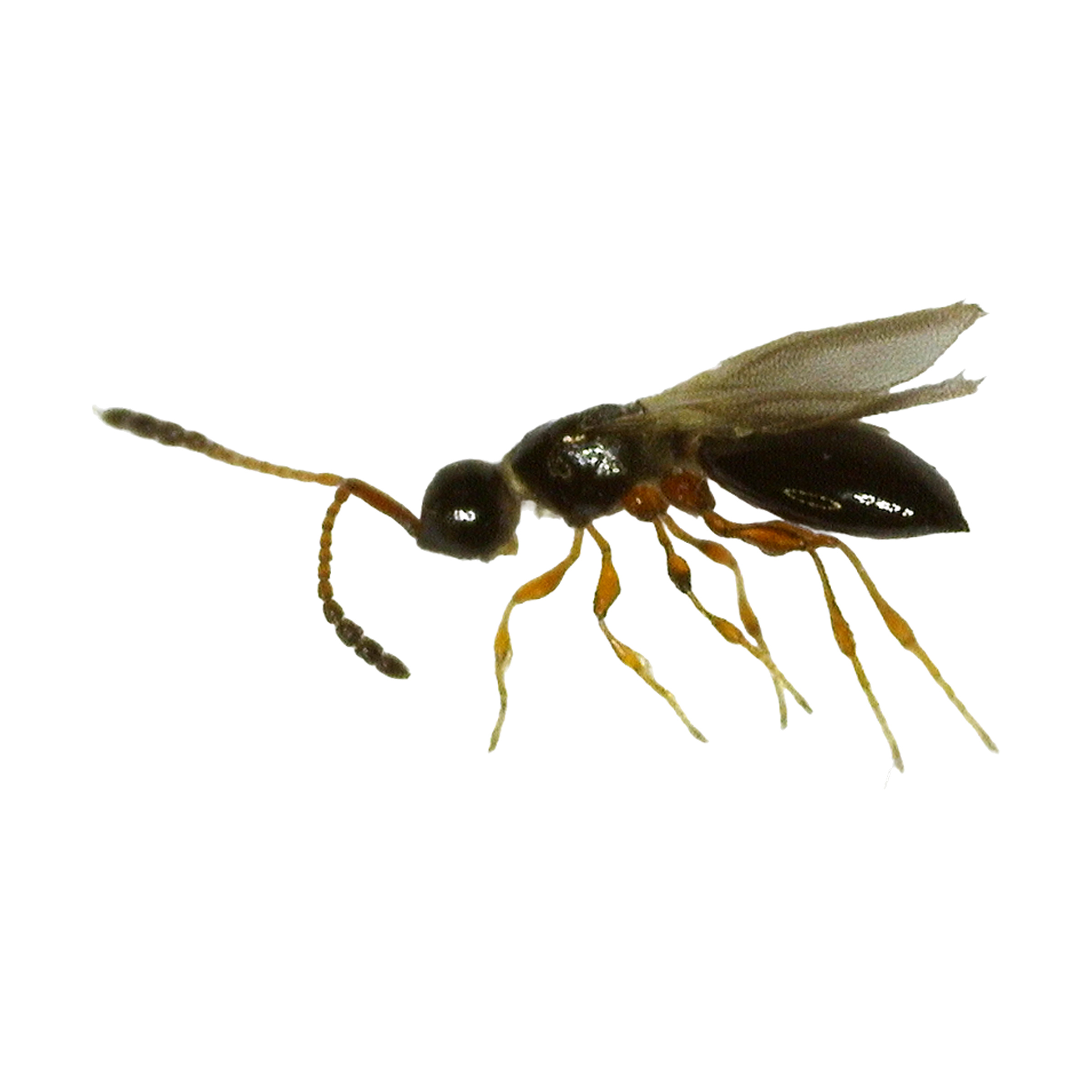
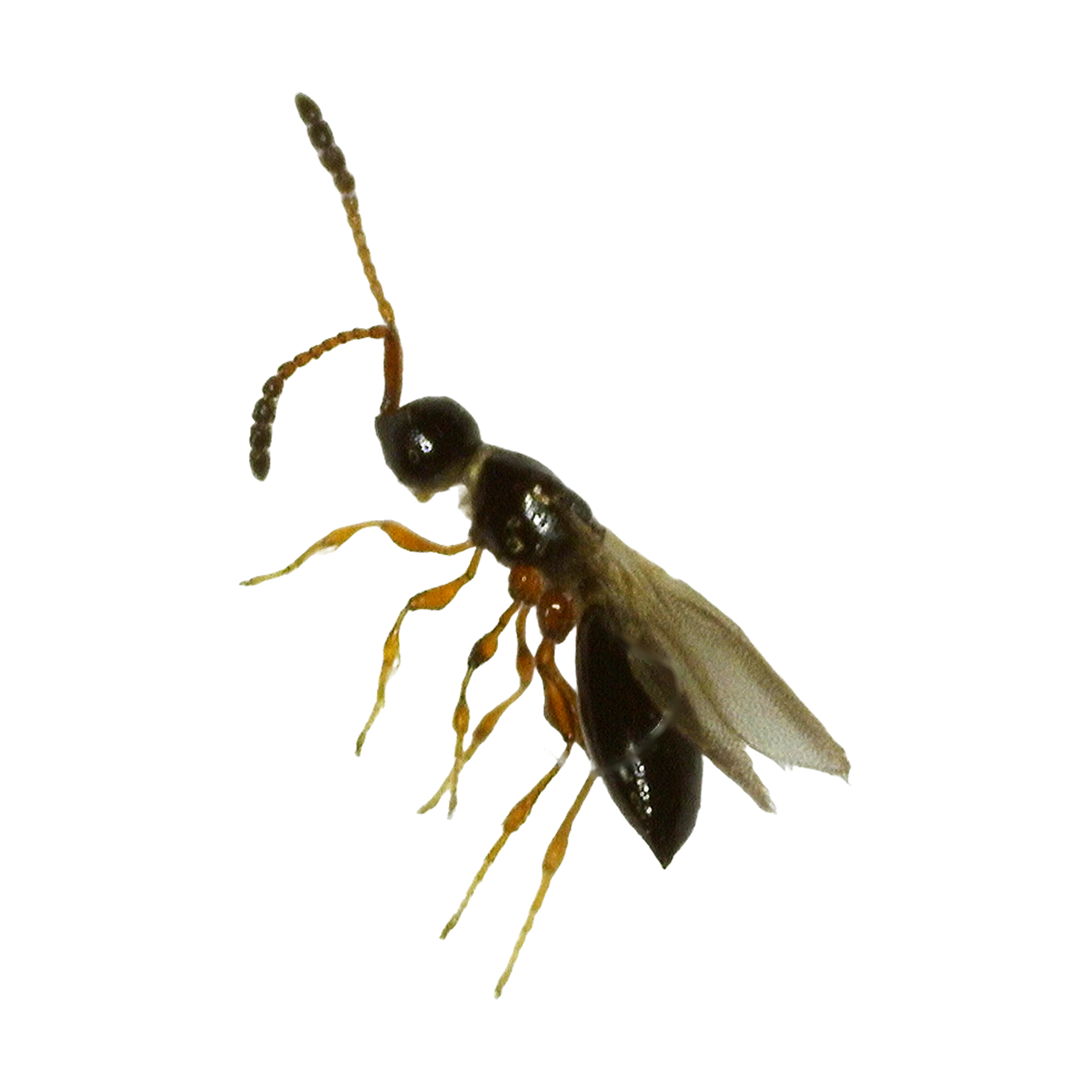
The Diapriid Wasp is a tiny parasitoid wasp in the genus Trichopria, usually about 1 to 3.5 mm long. The body is shiny black and mostly smooth, with a rounded head, a compact thorax, a short petiole (waist), and a large, polished, teardrop-shaped abdomen. The legs, including the coxae, are orange to amber, and the femora are clearly club-shaped toward the tip. The female antennae are long, with a slender basal segment, a string of small bead-like segments, and a darker club of about four beads, the last one largest. The wings are fully developed, clear to slightly smoky, fringed with fine hairs, and have only a few veins near the base. This specimen is a female.
Trichopria occurs worldwide, with many species in North America, including Missouri. These wasps live in moist leaf litter, soil, and low vegetation where flies develop. A few species live in ant nests, and some are aquatic or semiaquatic. Because of their small size they are seldom noticed, but they turn up regularly in leaf litter samples. Our specimen was collected from leaf litter with a Berlese funnel in Phelps County, Missouri, in November 2026.
Adult females search litter, soil, and decaying material for fly pupae to attack. Depending on the species, a female lays a single egg in each host or several eggs in the same host. Hosts recorded for the genus include blow flies, flesh flies, fruit flies, vinegar flies, hover flies, tachinid flies, shore flies, soldier flies, horse flies, leafminer flies, and marsh flies. One species is known to attack water penny beetles instead of flies.
Like other diapriids, Trichopria wasps undergo complete metamorphosis inside their host. The female lays her egg inside a fly pupa within its hard pupal case (puparium). The wasp larva feeds on the developing fly and then pupates inside the same case, and an adult wasp chews its way out instead of a fly. In warm weather the whole cycle can take only a few weeks, so several generations can develop in a season.
Diapriid wasps are beneficial insects, not pests. They are harmless to people and do not damage plants or stored products. By killing fly pupae in soil and leaf litter, Trichopria species help keep fly numbers down. One species, Trichopria drosophilae, is studied and used as a biological control agent against the spotted-wing drosophila (Drosophila suzukii), an invasive fly that damages berries and cherries.
Trichopria Ashmead, 1893 belongs to the family Diapriidae, subfamily Diapriinae, tribe Diapriini, in the superfamily Diaprioidea. It is the largest diapriine genus in the New World. BugGuide lists 58 described species, but most species in the genus have not yet been formally described, so many specimens can only be identified to genus.
This preserved specimen educates on parasitoid wasps and the natural control of flies, suitable for displays or studies.
Check it out on BugGuide! https://bugguide.net/node/view/146313/bgimage