Search for a bug

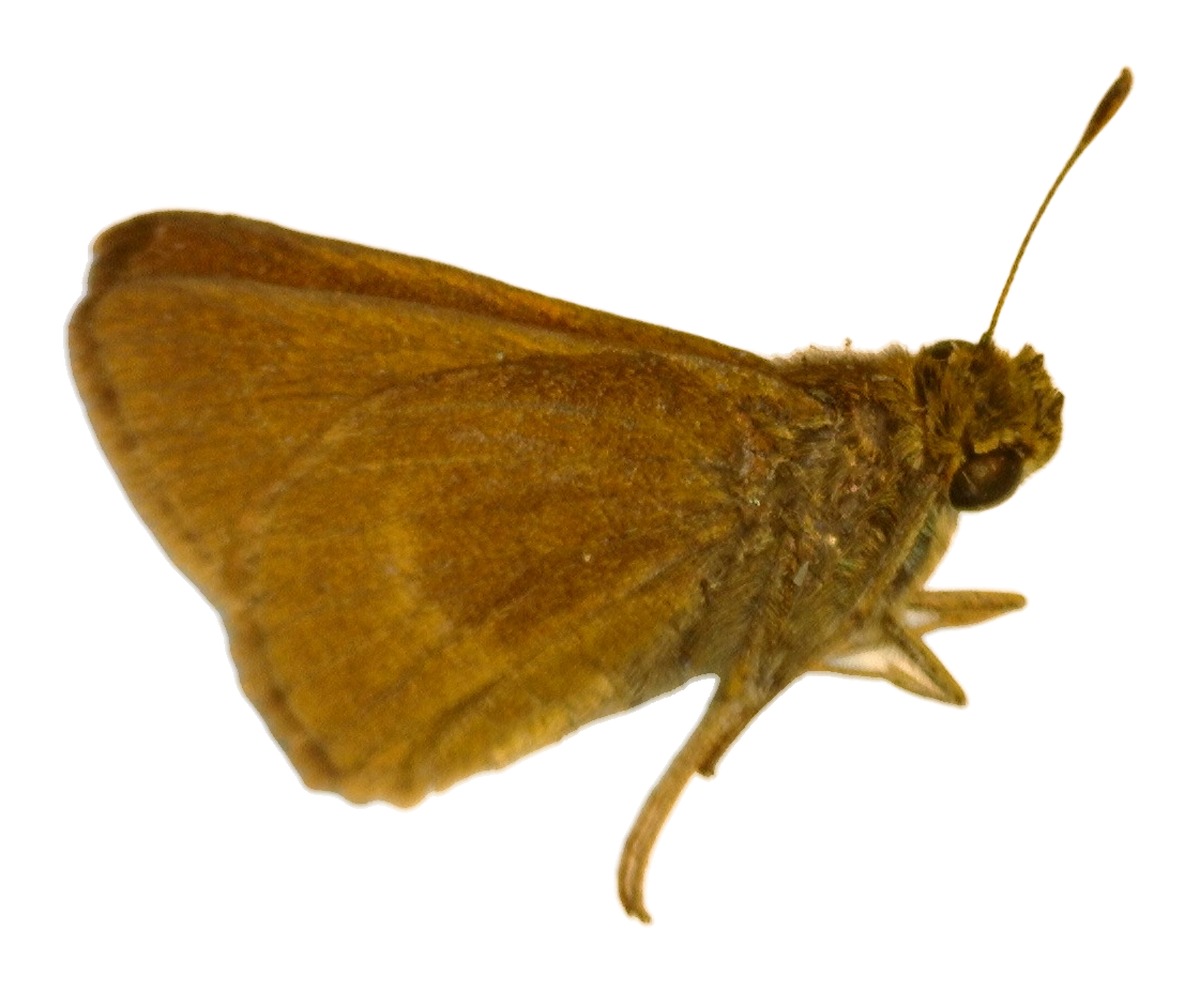
Delaware Skipper (Anatrytone logan)

$5.95

  • bugguide info... <–
    See it in BugGuide
  • Anatrytone logan
  • size wingspan 25-43 mm
  • ALL OUR INSECTS ARE DEAD UNMOUNTED SPECIMENS
  • A.K.A. Delaware Skipper (family Hesperiidae: Hesperiinae)
  • Photo is of the exact specimen you will receive.

2 in stock

Appearance

The Delaware Skipper is a small, bright grass skipper with a wingspan of about 25 to 43 mm (1 to 1 11/16 inches). The upperside is bright yellow orange with black borders and black veins near the edges, and the forewing has a black bar at the end of the cell. Females have wider borders and darker markings than males. The underside is plain orange to orange brown with no spots, sometimes with darker veins.

Habitat and Range

Delaware Skippers live in moist open places such as marshes, wet prairies, fields, roadsides, and yards. They range from southern Maine west across the Great Lakes states and southern Canada to central Montana, and south to Florida, Texas, and Mexico.

Behavior

Males perch low in grassy areas to watch for females. Adults visit pink and white flowers such as milkweeds, thistles, buttonbush, and pickerelweed. In the north there is one brood flying in July and August.

Life Cycle

Complete metamorphosis (egg, larva, pupa, adult). Females lay single eggs on grasses such as Big Bluestem and Switchgrass. The caterpillars eat the leaves and build shelters by tying leaves together with silk.

Our specimen was collected near Hot Springs, South Dakota.

Description

Appearance

The Delaware Skipper is a small, bright grass skipper with a wingspan of about 25 to 43 mm (1 to 1 11/16 inches). The upperside is bright yellow orange with black borders and black veins near the edges, and the forewing has a black bar at the end of the cell. Females have wider borders and darker markings than males. The underside is plain orange to orange brown with no spots, sometimes with darker veins.

Habitat and Range

Delaware Skippers live in moist open places such as marshes, wet prairies, fields, roadsides, and yards. They range from southern Maine west across the Great Lakes states and southern Canada to central Montana, and south to Florida, Texas, and Mexico.

Behavior

Males perch low in grassy areas to watch for females. Adults visit pink and white flowers such as milkweeds, thistles, buttonbush, and pickerelweed. In the north there is one brood flying in July and August.

Life Cycle

Complete metamorphosis (egg, larva, pupa, adult). Females lay single eggs on grasses such as Big Bluestem and Switchgrass. The caterpillars eat the leaves and build shelters by tying leaves together with silk.

Our specimen was collected near Hot Springs, South Dakota.