Appearance
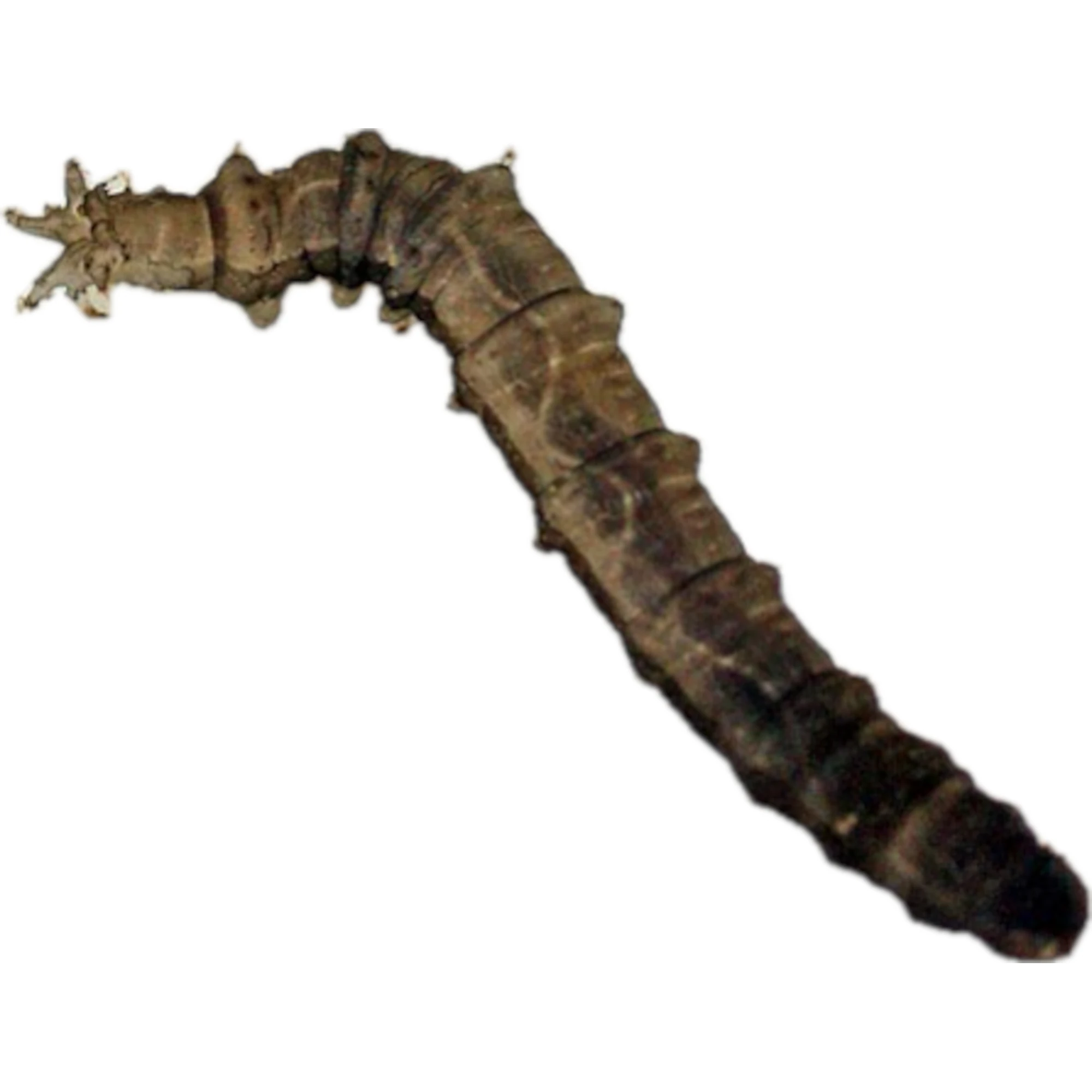
Crane Fly Larvae appear as plump, cylindrical, legless grubs with tough, leathery skin. They grow up to 50 mm long. The head is small and retractable into the body. Coloration ranges from gray to brown or greenish. No true legs present, though some show small fleshy lobes. This “leatherjacket” form allows burrowing in soil or sediment.
Habitat and Range
Larvae inhabit moist soil, leaf litter, decaying wood, lawns, and aquatic environments like streams or ponds. The family spans worldwide with strong presence in North America. They thrive in damp, shaded areas from forests to urban lawns across all regions.
Behavior
Larvae act mainly as detritivores, feeding on decaying plant matter, roots, fungi, or algae. Some aquatic species filter feed. They burrow actively through substrate. When disturbed, they wriggle strongly. Terrestrial larvae may damage grass roots in lawns, while aquatic forms support stream food webs.
Life Cycle
Females lay eggs in soil or water. Larvae develop through four instars over weeks to years, depending on species and climate. Pupation occurs in soil or shallow water. Adults emerge briefly to mate. Multiple generations possible in warm areas; one common northward.
Economic Impact
Some larvae act as minor pests by feeding on grass roots in lawns, golf courses, and pastures, causing patchy damage. Overall neutral to beneficial as they aid decomposition and serve as prey for birds and fish. No major agricultural threat.
This preserved specimen highlights the tough leatherjacket form, ideal for dipteran life cycle education. Check it out on BugGuide! https://bugguide.net/node/view/183

 See it in BugGuide