
$3.00
 <–
1 in stock
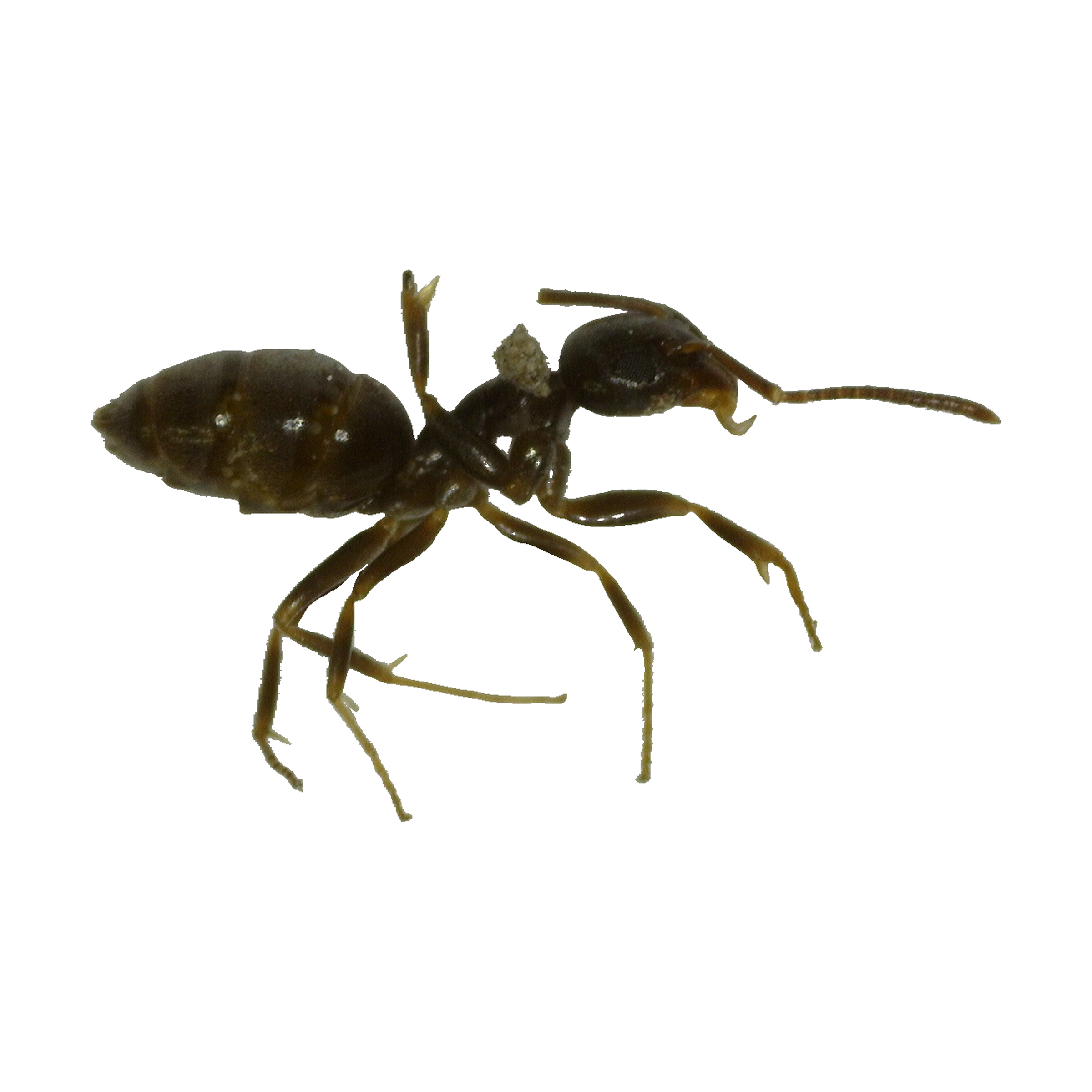
Cornfield Ants are small brown ants in the genus Lasius. Workers of common species are usually about 2.5 to 4 mm long. They have a single-segmented waist with a thin, upright scale, elbowed 12-segmented antennae, and no stinger. Color ranges from yellowish brown to dark brown, often with slightly paler legs. This specimen is a dark brown worker. The name “cornfield ant” is used for several dark Lasius species, and workers in this group can be hard to identify to species from a single habitus photograph, so this specimen is listed as Lasius sp.
Lasius is widespread in the temperate Northern Hemisphere and is common across much of North America, including Missouri. These ants nest in soil, under stones and logs, in lawns and woodland edges, and in leaf litter. Our specimen was collected from leaf litter with a Berlese funnel in Phelps County, Missouri, in November 2026.
Workers of the dark, above-ground species forage on the soil surface and in litter for honeydew, nectar, and small insects. They often tend aphids for honeydew and also scavenge. They cannot sting. Some other Lasius species, the citronella ants, live almost entirely underground and give off a lemon or citronella odor when disturbed. This worker belongs to the darker, surface-foraging group often called cornfield ants, not the yellow citronella ants.
Like other ants, cornfield ants have complete metamorphosis, with egg, larva, pupa, and adult stages. Colonies are usually started by a queen and live in soil or under cover. Workers, queens, and males are produced in season, and winged reproductives leave the nest to mate. This preserved specimen is a worker.
Cornfield ants are native ants and are generally not serious pests. They may nest in lawns or along foundations and sometimes come indoors, but they do not sting, damage wood, or destroy stored products. Their tunneling helps loosen and aerate the soil, and they can be beneficial as predators of small insects and as tenders of honeydew-producing insects.
Lasius Fabricius, 1804 belongs to the ant family Formicidae, subfamily Formicinae. Several species occur in Missouri, including dark surface-foraging forms often called cornfield ants and the yellow, mostly underground citronella ants. This worker is listed as Lasius sp.
This preserved specimen educates on ants and the leaf litter community, suitable for displays or studies.
Check it out on BugGuide! https://bugguide.net/node/view/29186/bgimage