
 <– <–
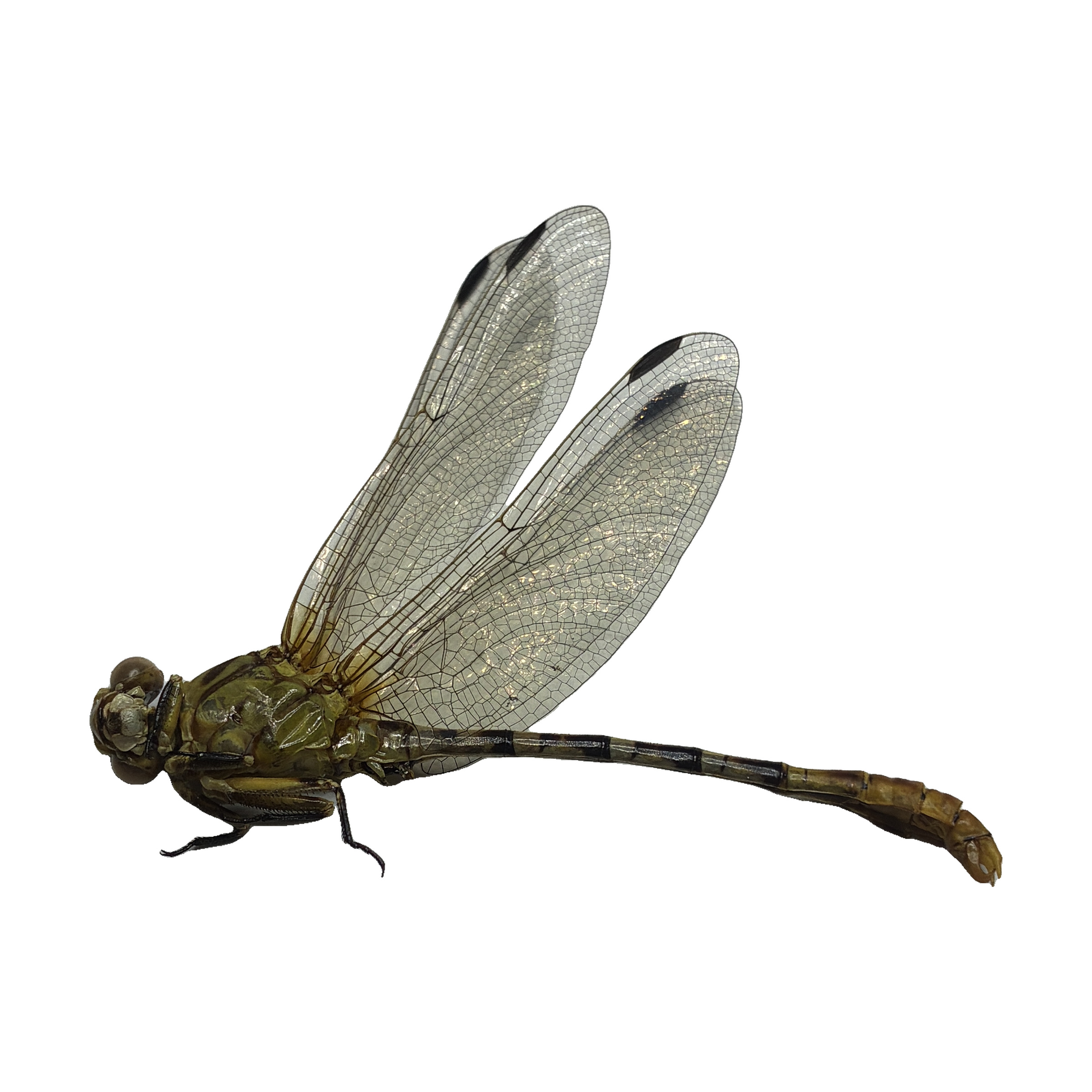
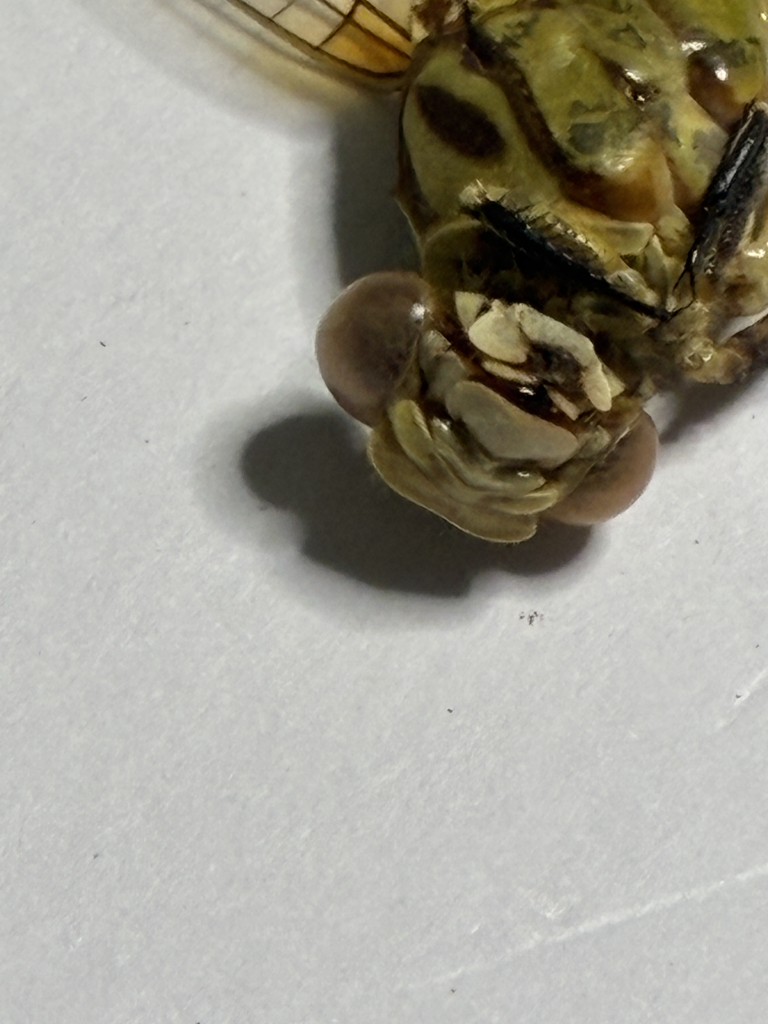
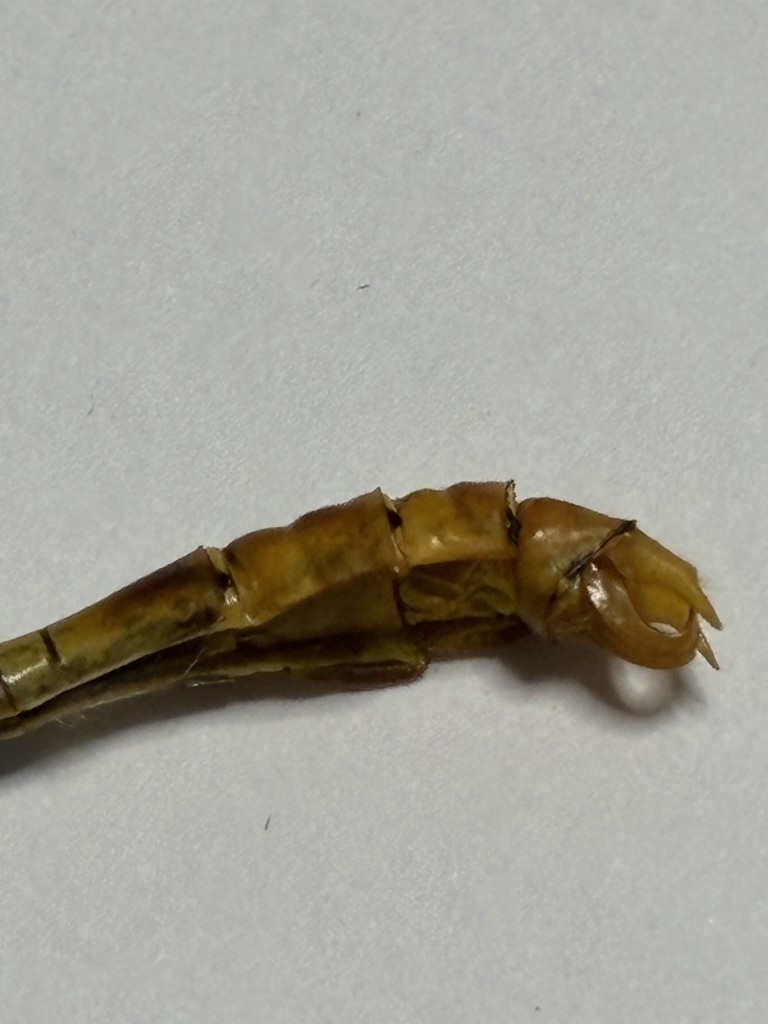
The Common Sanddragon is a medium-sized clubtail, about 47 to 53 mm (1.9 to 2.1 inches) long. It is brown and yellow, with a yellow W-shaped mark on top of the thorax and yellow stripes on the sides. The wings have a small dark spot at the base and a yellow vein along the leading edge. The abdomen is slender, with yellow marks along the top and a modest club at the tip. This listing is for a male. Males have pale yellow appendages at the tip of the abdomen, and their eyes are olive or greenish in life.
Common Sanddragons live at sand-bottomed streams, rivers, and lakes, and they often perch on sandbars and sandy shores. The species is found across the southern Great Plains and the eastern United States. Our specimen was collected in Fall River County, South Dakota, August 2023.
Males often perch on sunny sandy shores or sandbars, sometimes with the abdomen tilted upward. They also make low, fast patrols over the water. Like other dragonflies, they are swift aerial hunters and prey on flying insects.
This species has incomplete metamorphosis, with egg, aquatic naiad, and adult stages. The naiads burrow in sand. Adults fly mainly from late spring into summer.
Common Sanddragons are beneficial predators of mosquitoes and other small insects. They are not pests and have no significant economic impact.
Progomphus obscurus (Rambur, 1842) belongs to the clubtail family Gomphidae, genus Progomphus (sanddragons).
This preserved specimen educates on dragonfly biology and stream insects, suitable for displays or studies.
Check it out on BugGuide! https://bugguide.net/node/view/573/bgimage
<–The Common Sanddragon is a medium-sized clubtail, about 47 to 53 mm (1.9 to 2.1 inches) long. It is brown and yellow, with a yellow W-shaped mark on top of the thorax and yellow stripes on the sides. The wings have a small dark spot at the base and a yellow vein along the leading edge. The abdomen is slender, with yellow marks along the top and a modest club at the tip. This listing is for a male. Males have pale yellow appendages at the tip of the abdomen, and their eyes are olive or greenish in life.
Common Sanddragons live at sand-bottomed streams, rivers, and lakes, and they often perch on sandbars and sandy shores. The species is found across the southern Great Plains and the eastern United States. Our specimen was collected in Fall River County, South Dakota, August 2023.
Males often perch on sunny sandy shores or sandbars, sometimes with the abdomen tilted upward. They also make low, fast patrols over the water. Like other dragonflies, they are swift aerial hunters and prey on flying insects.
This species has incomplete metamorphosis, with egg, aquatic naiad, and adult stages. The naiads burrow in sand. Adults fly mainly from late spring into summer.
Common Sanddragons are beneficial predators of mosquitoes and other small insects. They are not pests and have no significant economic impact.
Progomphus obscurus (Rambur, 1842) belongs to the clubtail family Gomphidae, genus Progomphus (sanddragons).
This preserved specimen educates on dragonfly biology and stream insects, suitable for displays or studies.
Check it out on BugGuide! https://bugguide.net/node/view/573/bgimage