
$7.95

1 in stock
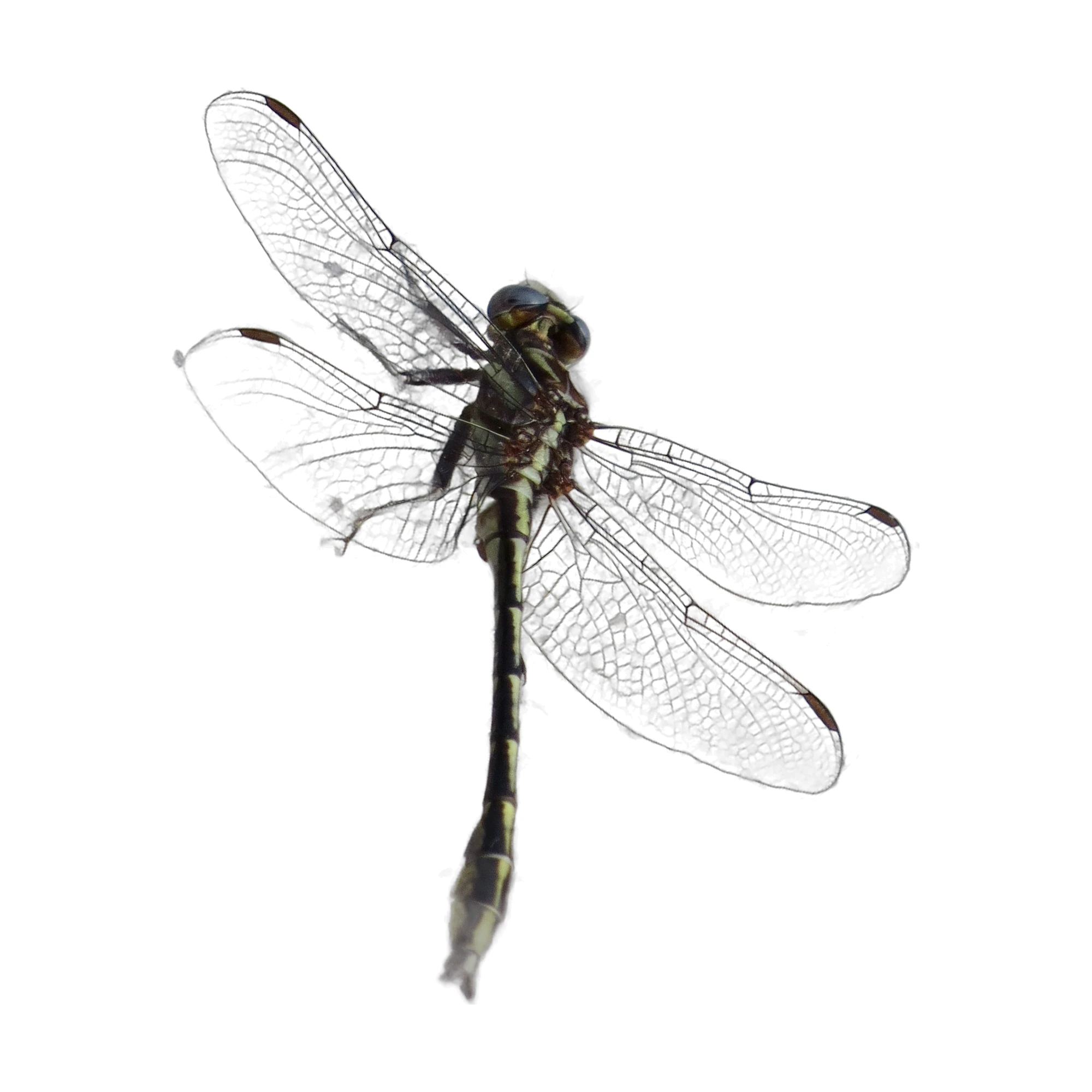
Clubtails (family Gomphidae) are medium to large dragonflies, mostly about 40 to 60 mm long. Most North American species are patterned in brown, black, gray, yellow or green, often with pale stripes on the thorax. Their large compound eyes are widely separated on top of the head, a key feature that sets clubtails apart from most other dragonflies. In many species the end of the abdomen is widened into a “club”, which gives the family its common name. The wings are clear. These are real, US-collected specimens from Phelps County, Missouri.
Clubtails are found worldwide, with close to 100 species in North America. Most live along clean streams and rivers with sandy, gravelly or rocky bottoms, and some use lakes and ponds. Missouri has many species, and its Ozark streams are good clubtail habitat. Adults often rest flat on the ground, on rocks, gravel bars, trails or sunlit leaves.
Adults are agile hunters that catch small flying insects such as flies, mosquitoes and small moths in the air. Unlike many skimmers, clubtails usually perch horizontally on the ground or on low leaves instead of hanging from twigs. Newly emerged adults often leave the water for nearby woods and fields to feed and mature before returning to breed. Females usually lay eggs by tapping the tip of the abdomen on the water surface as they fly.
Clubtails go through incomplete metamorphosis (egg, nymph, adult). The flattened nymphs burrow into sand, silt or gravel on the bottom of streams and lakes and ambush small aquatic animals. Depending on the species, nymphs take one to several years to grow. They then crawl out of the water, often onto a rock or the bank, and the adult emerges. Several Missouri clubtails are among the earliest dragonflies of spring, so an April specimen fits their flight season.
Clubtails are beneficial. Adults and nymphs eat large numbers of other insects, including mosquitoes and biting flies. Because most species need clean, well-oxygenated water, clubtails are useful indicators of stream health. They do not bite people in any harmful way, do not damage crops or homes, and are not pests.
This preserved specimen educates on one of the most distinctive dragonfly families of North American streams, suitable for displays or studies. Check it out on BugGuide! https://bugguide.net/node/view/203