Appearance
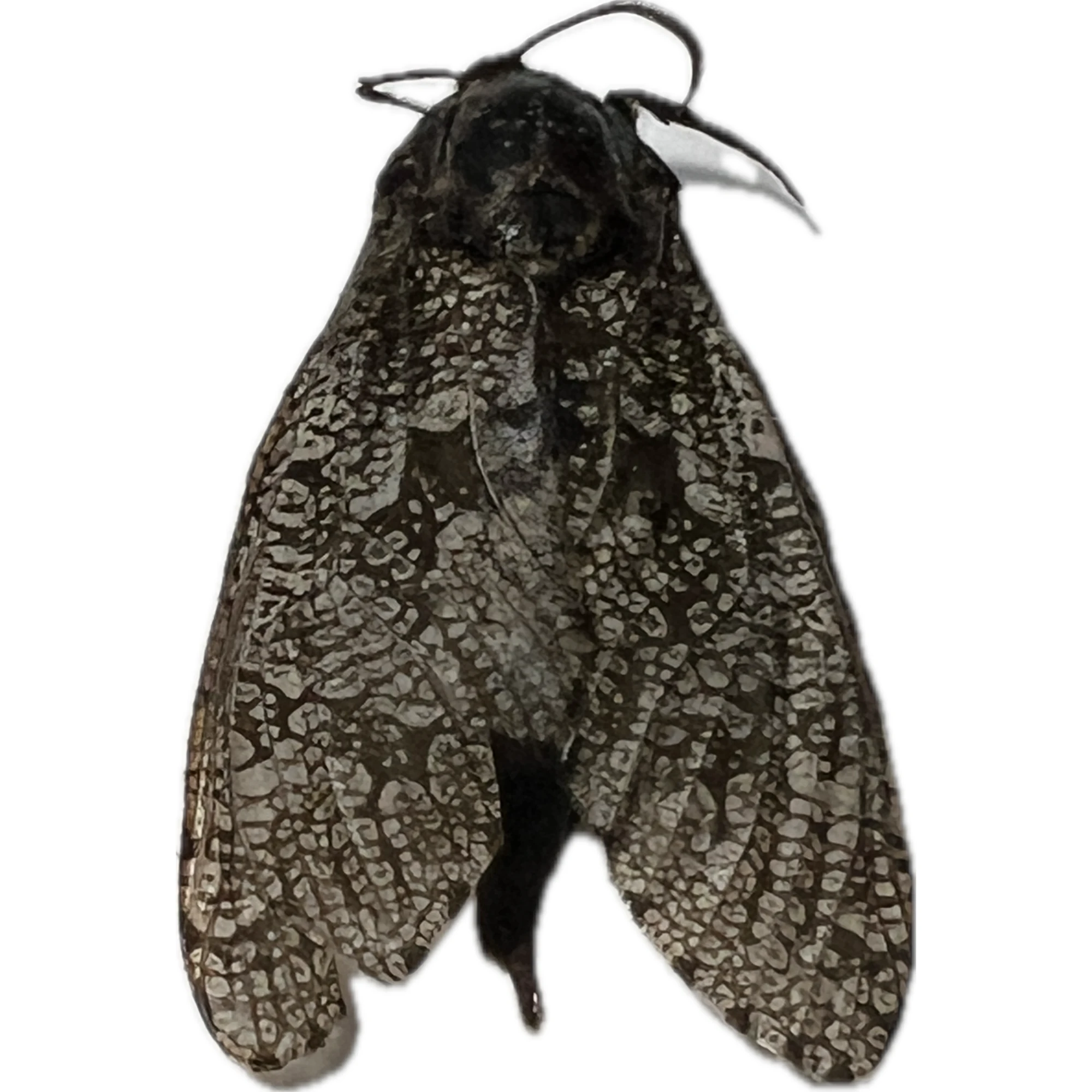
The Carpenterworm Moth adult spans 43-85 mm in wingspan, with females larger than males. Forewings appear mottled gray and blackish, slightly translucent in females. Males feature less sharp mottling on forewings and yellow-orange hindwings with black borders. Females lack yellow on hindwings. The large size often leads to confusion with sphinx moths. Larvae vary from green to reddish with scattered black dots and a dark brown head.
Habitat and Range
This native species ranges throughout North America, including southern Canada and the United States. It inhabits deciduous forests and areas with host trees like oak, ash, maple, willow, poplar, locust, and cottonwood. Adults emerge mostly from March to July in suitable woodlands and urban plantings.
Behavior
Females deposit 450-800 eggs in groups within bark crevices, near wounds, or under lichens and moss. Young larvae feed initially on inner bark before boring into wood. Larvae create upward-angling tunnels in sapwood, then straight in heartwood, keeping them open and lined with silky webs. This boring weakens tree structure over time.
Life Cycle
The life cycle lasts 3 to 4 years in northern areas, shorter in the south. Eggs hatch into larvae that feed and overwinter multiple times. Mature larvae pupate at the tunnel’s upper end in earthen cells. Pupae wriggle to the entrance for adult emergence in spring to summer. Overlapping generations ensure continuous presence.
Economic Impact
As a wood-boring pest, the Carpenterworm Moth larvae devalue hardwood lumber and damage ornamental and fruit trees like oak, ash, maple, poplar, and stone fruits. Tunnels reduce timber quality and weaken trees, incurring losses in forestry, nurseries, and landscapes.
This preserved specimen highlights the large mottled wings and wood-boring adaptations, ideal for pest education and collections. Check it out on BugGuide! https://bugguide.net/node/view/3604

 <—
<—