
$3.00
 <---
1 in stock
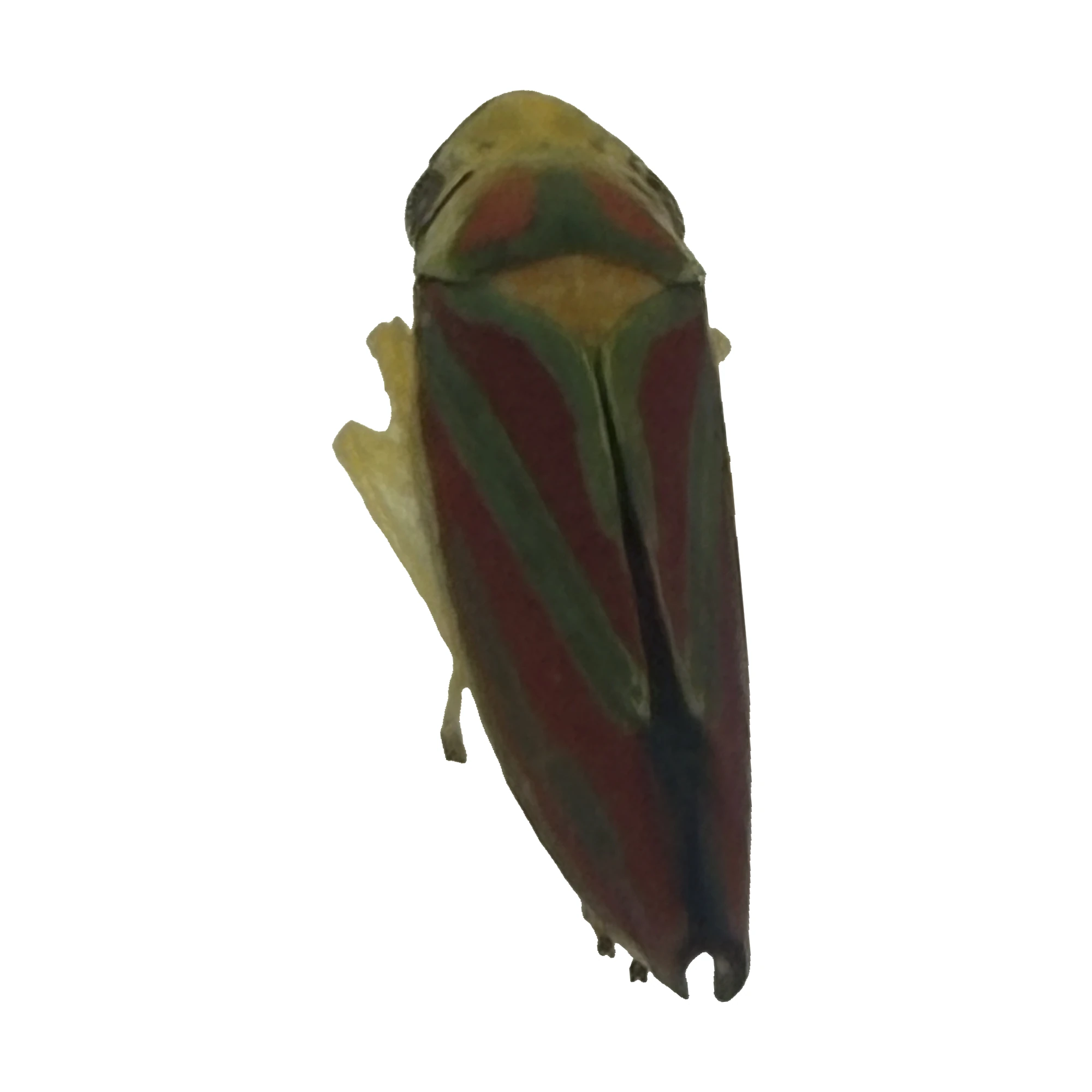
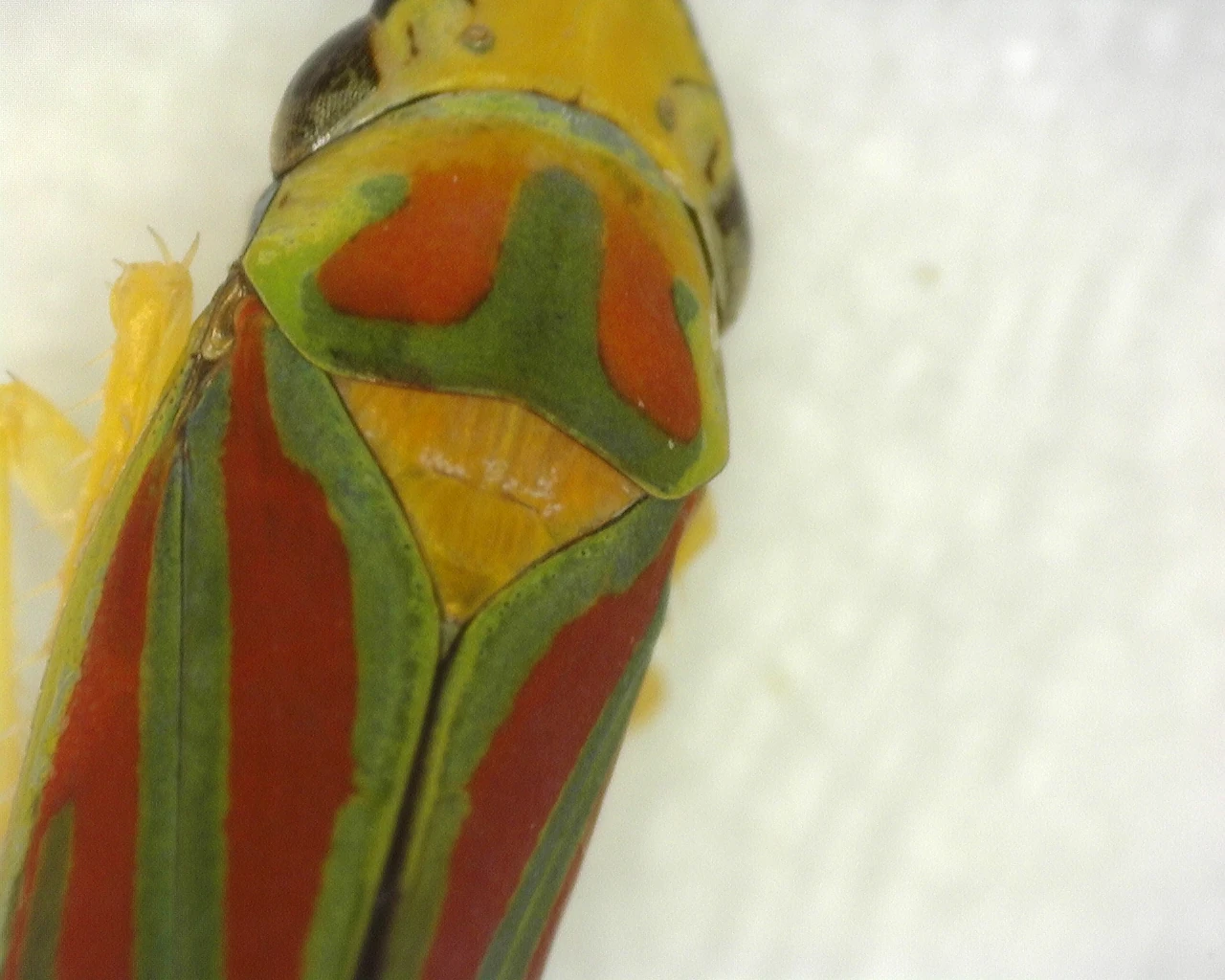
The Candy-striped Leafhopper, Graphocephala coccinea, is also called the Red-banded Leafhopper. It is a brightly marked sharpshooter in the family Cicadellidae. Adults are about 5.7 to 9.1 mm long. The body is usually bright green or blue with two or three red stripes on the forewings and pronotum. The scutellum is often orange, and the head and underside are pale to bright yellow. A bold black stripe runs across the top of the face and past the eyes. Color and stripe width vary, and similar species in this group can look nearly the same. A close-up of the color pattern is included in the gallery.
This species is widespread in eastern North America, from eastern Canada south to the Gulf Coast and into Central America. Inland forms are the ones most often found in places such as Wisconsin. It lives on many kinds of plants in woods, gardens, thickets, and edges, including blackberry, rose, milkweed, goldenrod, and other shrubs and herbs.
Some of our specimens were collected in Douglas County, Wisconsin.
Like other sharpshooter leafhoppers, it feeds on plant sap from the xylem. It can walk, hop, and fly when disturbed. It is most often seen on foliage in warm months. It is highly polyphagous and is not tied to a single host plant.
The life cycle is incomplete metamorphosis: egg, nymph, and adult. Eggs are laid in plant tissue. Nymphs are pale at first and later develop the red striping. They lack the fully developed wings of the adult. There can be more than one generation in a year.
Feeding alone rarely causes serious plant damage. This species belongs to a group of sharpshooters that can carry the bacterium Xylella fastidiosa, which causes Pierce’s disease in grapes and related plant diseases. Transmission by Graphocephala coccinea itself has not been clearly demonstrated, and it is not the main vector in most crop systems. The preserved specimens are useful for teaching about colorful leafhoppers and for comparing them with related species.
This preserved specimen educates on candy-striped leafhoppers in the family Cicadellidae, suitable for displays or studies.
Check it out on BugGuide! https://bugguide.net/node/view/518/bgimage
| Weight | 0.01 lbs |
|---|
Only logged in customers who have purchased this product may leave a review.
Reviews
There are no reviews yet.