Appearance
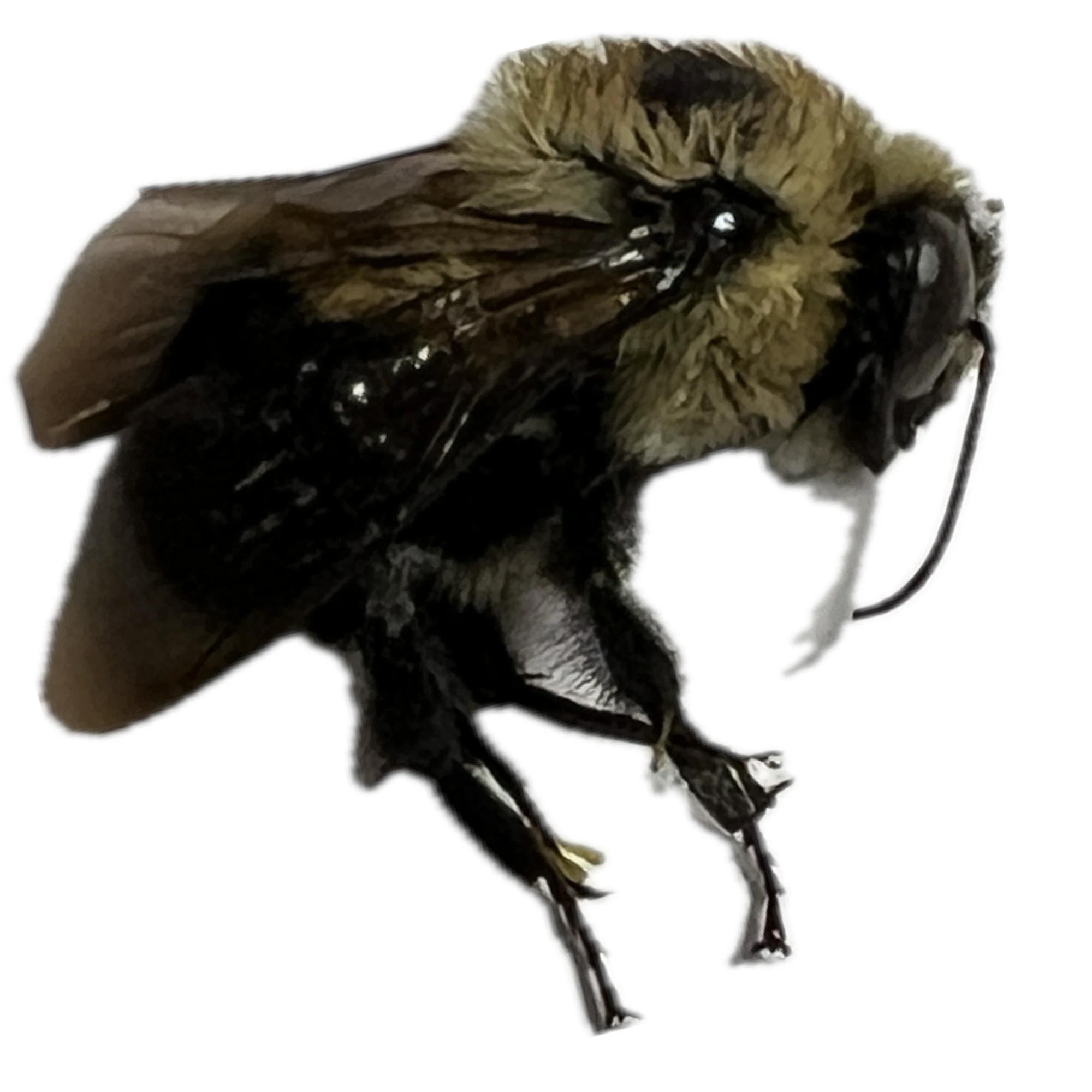
The Brown-belted Bumble Bee, Bombus griseocollis, showcases classic bumble bee traits with distinct markings. Queens measure 21-23 mm, making them notably large for easy identification. Workers range from 9.5-18 mm, while males span 15-19 mm. All castes have black wings and a black head covered in dense hairs. The thorax bears short, dense hairs, often yellowish or pale. The key feature is a belt of contrasting brown hairs at the base of abdominal segment T2, setting it apart from similar species. Males display large eyes and low-positioned ocelli, with a medium-length tongue suited for probing flowers. This combination of size variation and color patterns aids in quick field recognition.
Habitat and Range
This versatile species occupies a broad range of habitats, from natural meadows and woodlands to urban parks and gardens. It thrives across much of North America, particularly the eastern United States where it ranks as the second most common bumble bee after Bombus impatiens. Populations extend westward and northward but become scarce in cooler northern areas, such as around Ithaca, New York. Its adaptability to human-modified landscapes supports its wide distribution.
Behavior
As a eusocial insect, Brown-belted Bumble Bees live in colonies with division of labor among queens, workers, and males. Workers forage actively from April to September, favoring composites like coneflowers (Echinacea) for nectar and pollen. They buzz-pollinate certain flowers, enhancing pollination efficiency. Colonies remain smaller than some relatives, with workers defending the nest aggressively if threatened. This species emerges earlier in spring and winds down sooner in fall compared to B. impatiens, aligning activity with seasonal blooms.
Life Cycle
The annual life cycle begins with a solitary queen overwintering in soil or leaf litter. She emerges in early spring to found a nest, often underground or in rodent burrows, laying her first eggs. These hatch into workers that expand the colony through summer. By late summer, new queens and males develop for mating flights. Fertilized queens hibernate, while the old colony perishes. This cycle ensures generational turnover, with colonies peaking at 50-400 individuals.
This preserved specimen illustrates bumble bee social complexity, ideal for entomology education or displays. Check it out on BugGuide! https://bugguide.net/node/view/3538

 <—
<—