
$3.00
 <--- See it in BugGuide
1 in stock
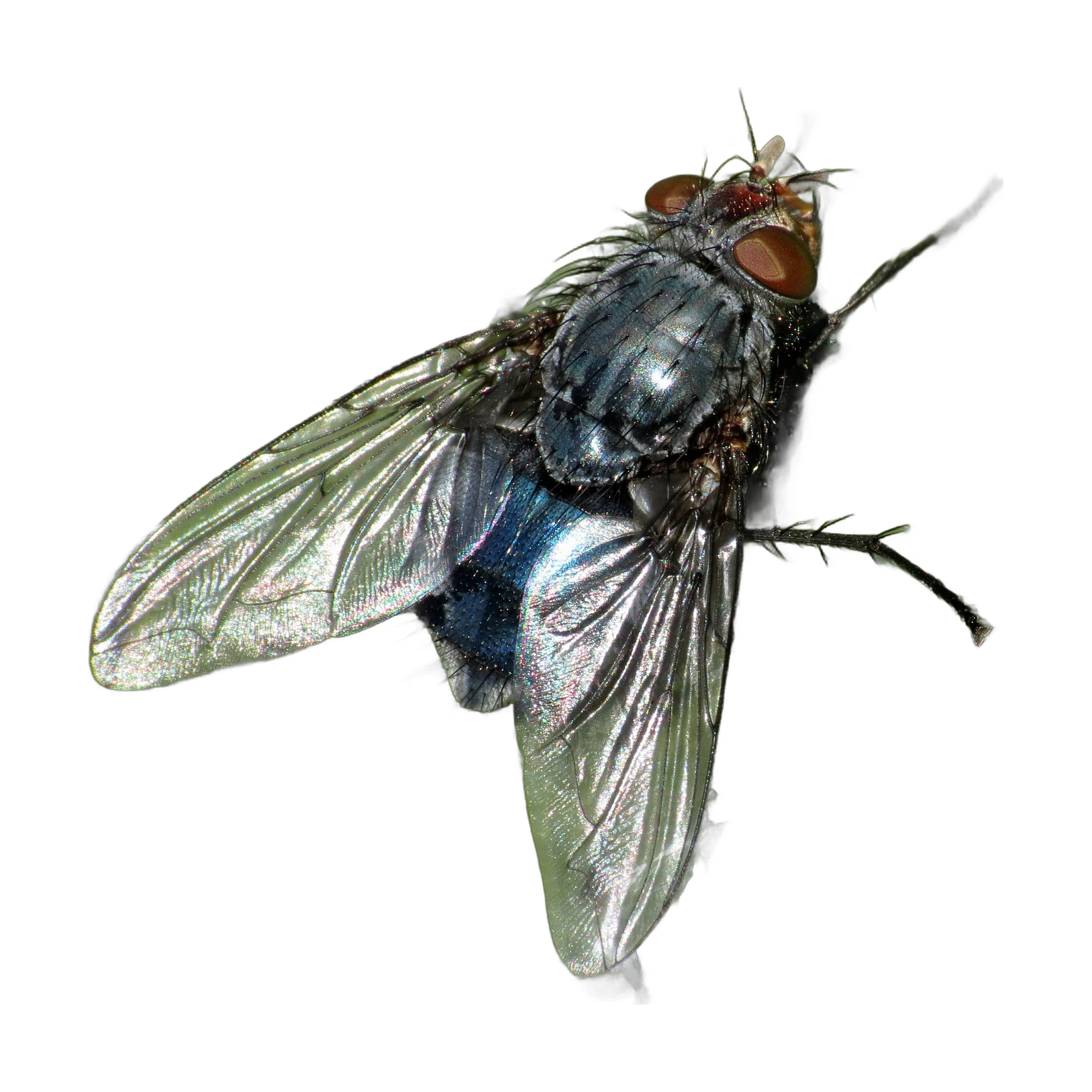
Blue Bottle Flies, genus Calliphora, are large, robust blow flies measuring 7 to 13 mm. They have a dull, dusty gray thorax with dark stripes and a shiny metallic blue abdomen with a checkered silvery sheen. The eyes are large and red, the face often has orange or black cheeks depending on species, and the clear wings are held flat over the back. Their bulky build and loud buzzing make them easy to tell apart from the smaller, brighter green bottle flies (Lucilia).
Calliphora species occur across North America, Europe and much of the world. They favor cooler weather and are often among the first flies active in spring and the last in fall, and they are common around homes, farms, woodlands and anywhere carrion or garbage is found. Some of our specimens were collected near Douglas County, WI.
Adults are strong, noisy fliers that are attracted to dead animals, meat, feces and garbage, where females lay their eggs. They also visit flowers for nectar and sometimes enter houses, especially in cool months. Their keen sense of smell lets them find a carcass within minutes of death.
Blue Bottle Flies undergo complete metamorphosis. Females lay clusters of eggs on carrion or rotting material, and the eggs hatch in about a day. The maggots feed for several days, pass through three instars, then crawl away to pupate in the soil. Adults emerge in one to three weeks depending on temperature, and several generations can occur each year.
Blue Bottle Flies are both pests and beneficial insects. They can spread bacteria to food and cause myiasis in livestock and pets, but they are important decomposers that recycle dead animals, and forensic entomologists use their development to estimate time of death.
This preserved specimen educates on decomposition and forensic entomology, suitable for displays or studies. Check it out on BugGuide! https://bugguide.net/node/view/7177