
$3.00
 <---
1 in stock
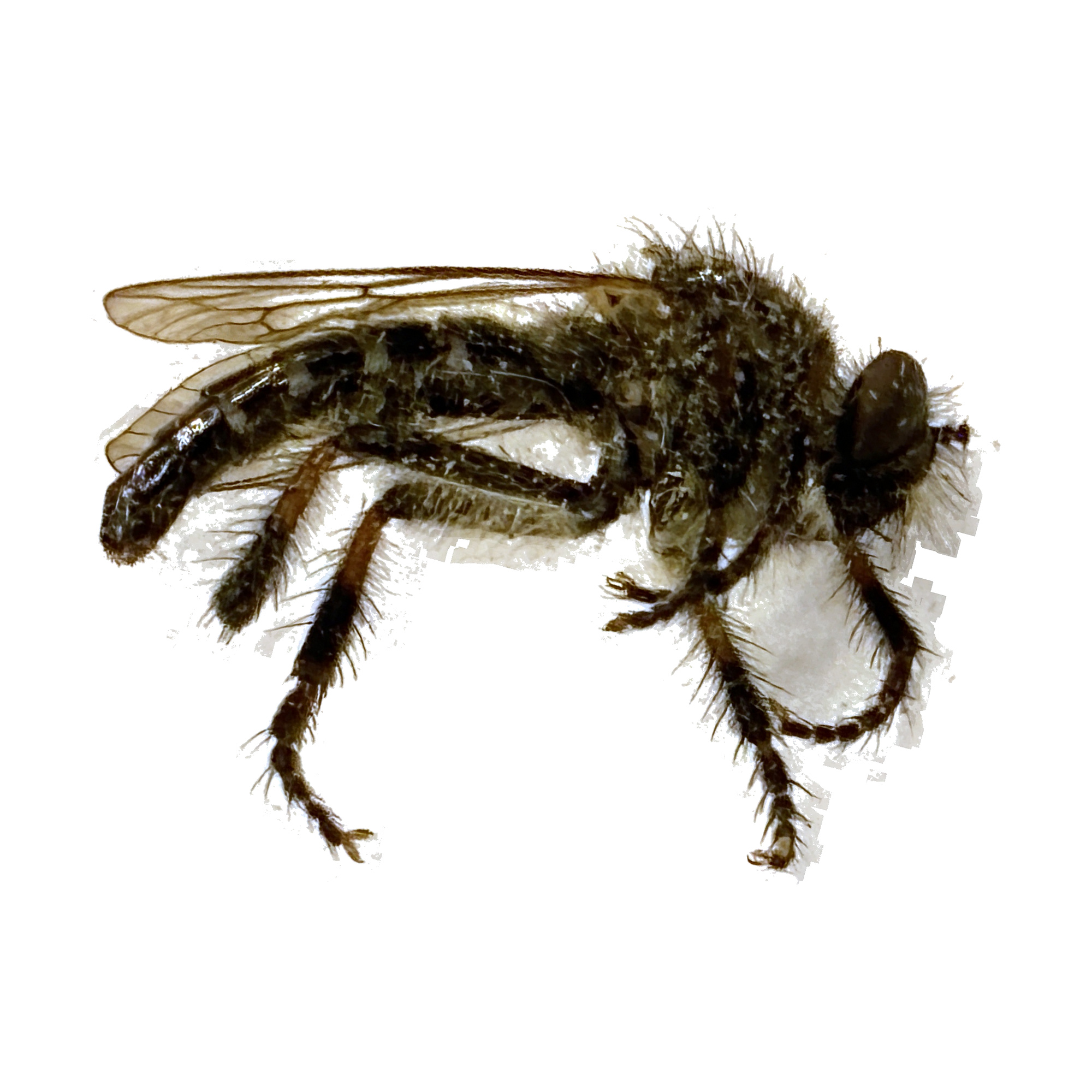
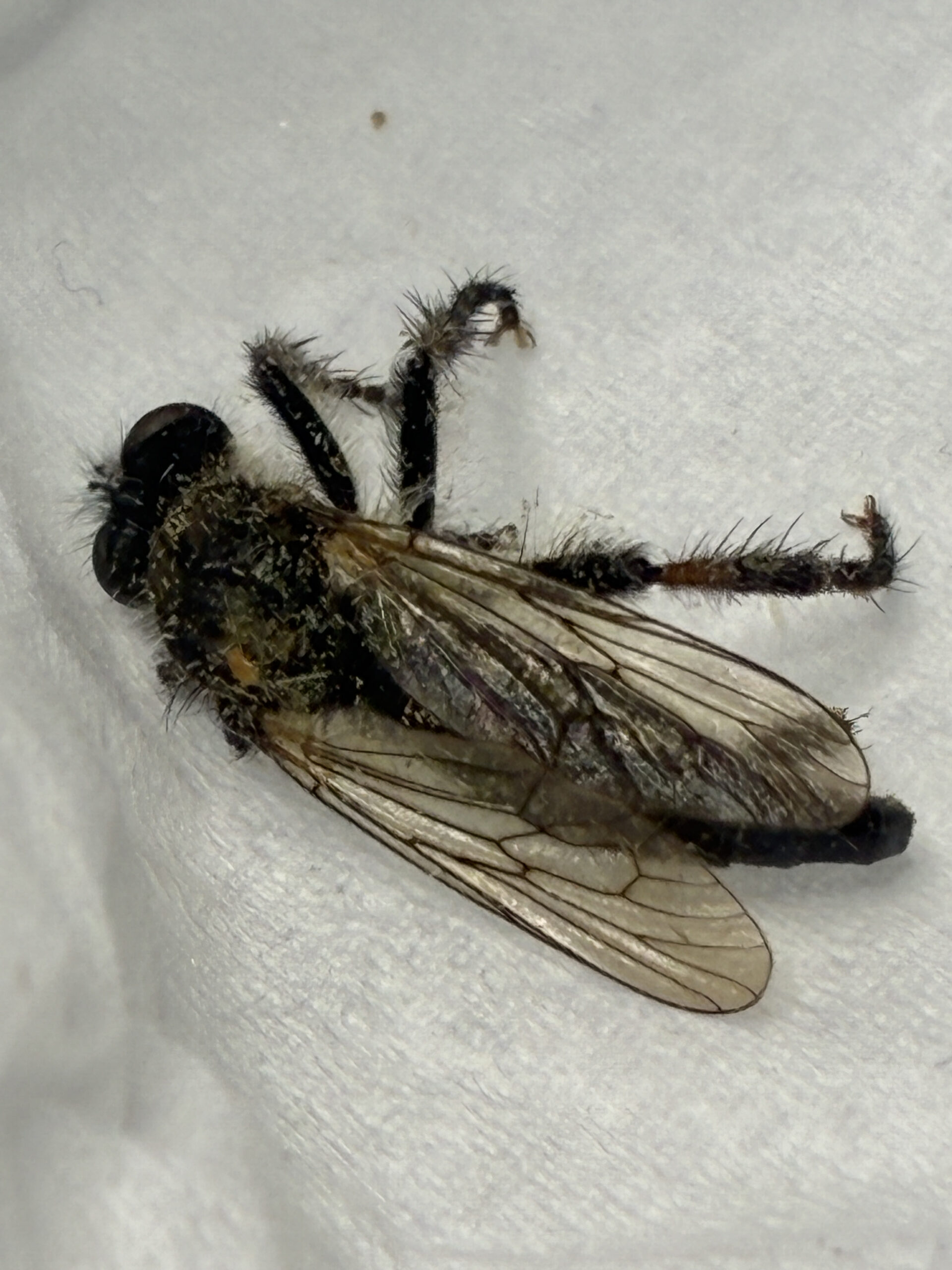
The Bladetail, Machimus sp., is a medium-sized, dark, bristly robber fly in the family Asilidae, about 12 to 20 mm long. The thorax is dark and densely bristly, often with pale frost or hair. The face has a mystax, or beard, and a stout piercing beak. The abdomen is usually shiny black, with pale or silvery hind margins on the segments. The femora are typically black. The tibiae are often partly reddish or orange brown. The wings are clear or lightly tinted, with visible veins. Females have a short, tapered, blade-like ovipositor that gives the genus its common name. Males have claspers at the tip of the abdomen. About 24 species occur in North America, and many can be hard to tell apart. Because the exact species may vary, the specimen you receive may differ slightly from the photo.
Bladetails in the genus Machimus live in woodland edges, openings, fields, and grasslands. Adults often perch on leaves, stems, or the ground. About 24 species occur in our area. They are found across much of North America, and several species are widespread in the East, including Wisconsin. Adults are usually on the wing from late spring through summer, and some species fly later into fall. Some of our specimens were collected in Douglas County, Wisconsin.
Adults are perch-and-attack predators. They wait on a perch, then fly out to catch other insects in the air, including flies, bees, and other small insects. The beak is used to pierce prey and feed on its fluids. They do not sting. Live robber flies can bite if handled, but they do not seek out people.
Like other true flies, bladetails have complete metamorphosis: egg, larva, pupa, and adult. Females use the blade-like ovipositor to lay eggs. The larvae live in the soil and prey on other soil insects. There is typically one generation a year. Adults are usually on the wing in late spring through summer, and some species remain active into fall.
These flies are beneficial. The adults prey on other insects, including some pests of fields and gardens, and the larvae feed on insects in the soil. They are not pests of crops or households. Live robber flies can bite if handled, because of the piercing beak, but they do not seek out people. The preserved specimens are used in teaching and collections, and they are a good example of a bladetail robber fly in the family Asilidae.
This preserved specimen educates on robber flies in the genus Machimus and the family Asilidae, suitable for displays or studies.
Check it out on BugGuide! https://bugguide.net/node/view/11960/bgimage
Only logged in customers who have purchased this product may leave a review.
Reviews
There are no reviews yet.