
$3.00
 <---
1 in stock
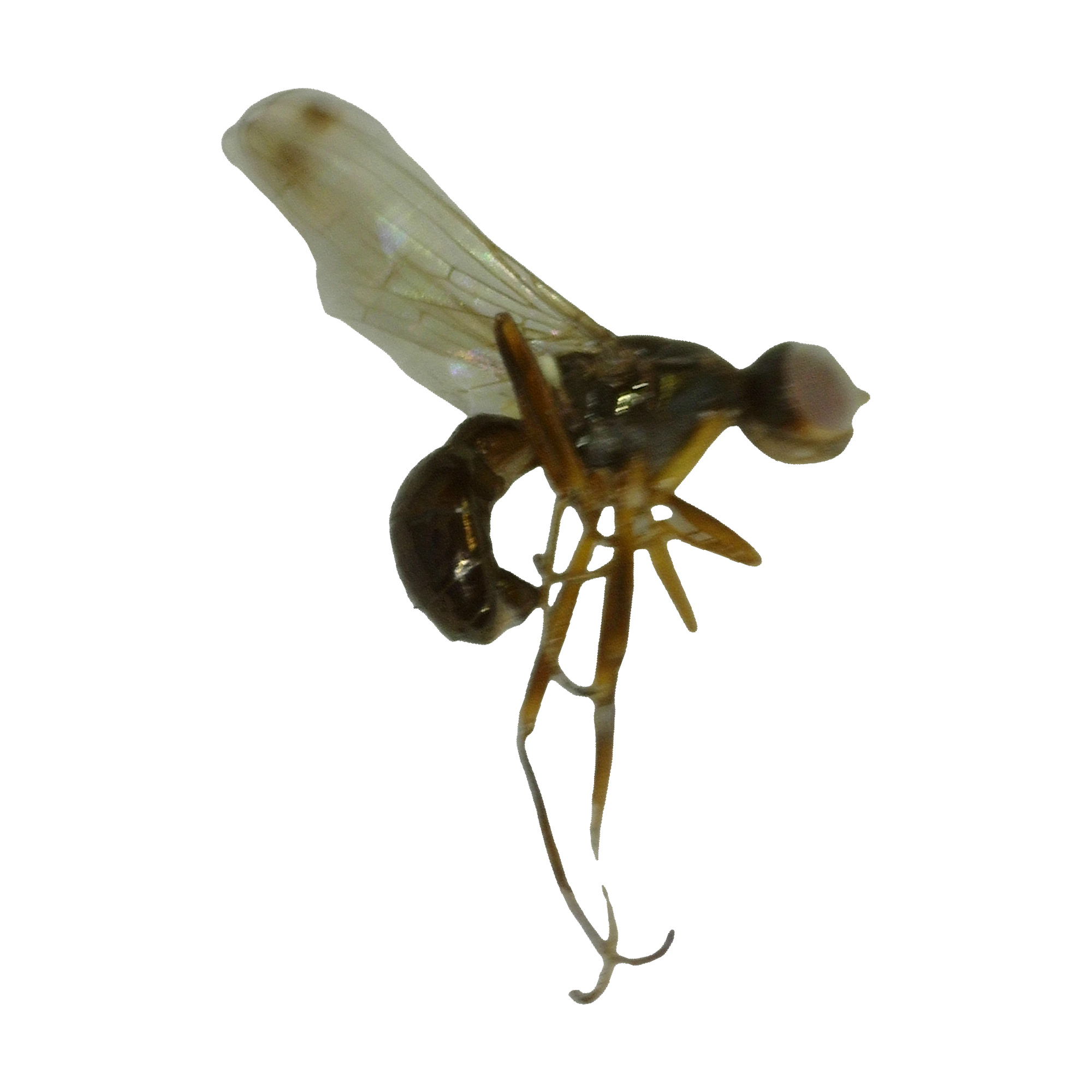
Black scavenger flies in the genus Sepsis are small, shiny, often ant-like flies, typically about 2 to 6 mm long. This specimen is about 3 mm. They have a rounded head, a narrow waist, and a dark body, often with a dark spot near the tip of the wing. The legs are often partly yellowish or reddish. This listing is at the genus level for the specimens we have in stock.
The genus is found throughout North America and in many other parts of the world. Adults are often seen near dung, carrion, or other decaying organic matter, and they may also be found on low vegetation nearby. Some of our specimens were collected in Marion County, Indiana.
Adults walk with a characteristic wing-waving or rowing motion. They do not bite people. The larvae live in excrement and other decaying organic matter.
Like other true flies, they have complete metamorphosis: egg, larva, pupa, and adult. The larvae feed in decaying organic matter, then pupate, and the adults emerge to mate and lay eggs.
Black scavenger flies are not crop pests and do not bite or sting. Their larvae help break down decaying organic matter. The preserved specimens are used in teaching and collections.
This preserved specimen educates on black scavenger flies in the genus Sepsis, family Sepsidae, suitable for displays or studies.
Check it out on BugGuide! https://bugguide.net/node/view/8678/bgimage
| Weight | 0.01 lbs |
|---|
Only logged in customers who have purchased this product may leave a review.
Reviews
There are no reviews yet.