
$3.00
 <–
1 in stock
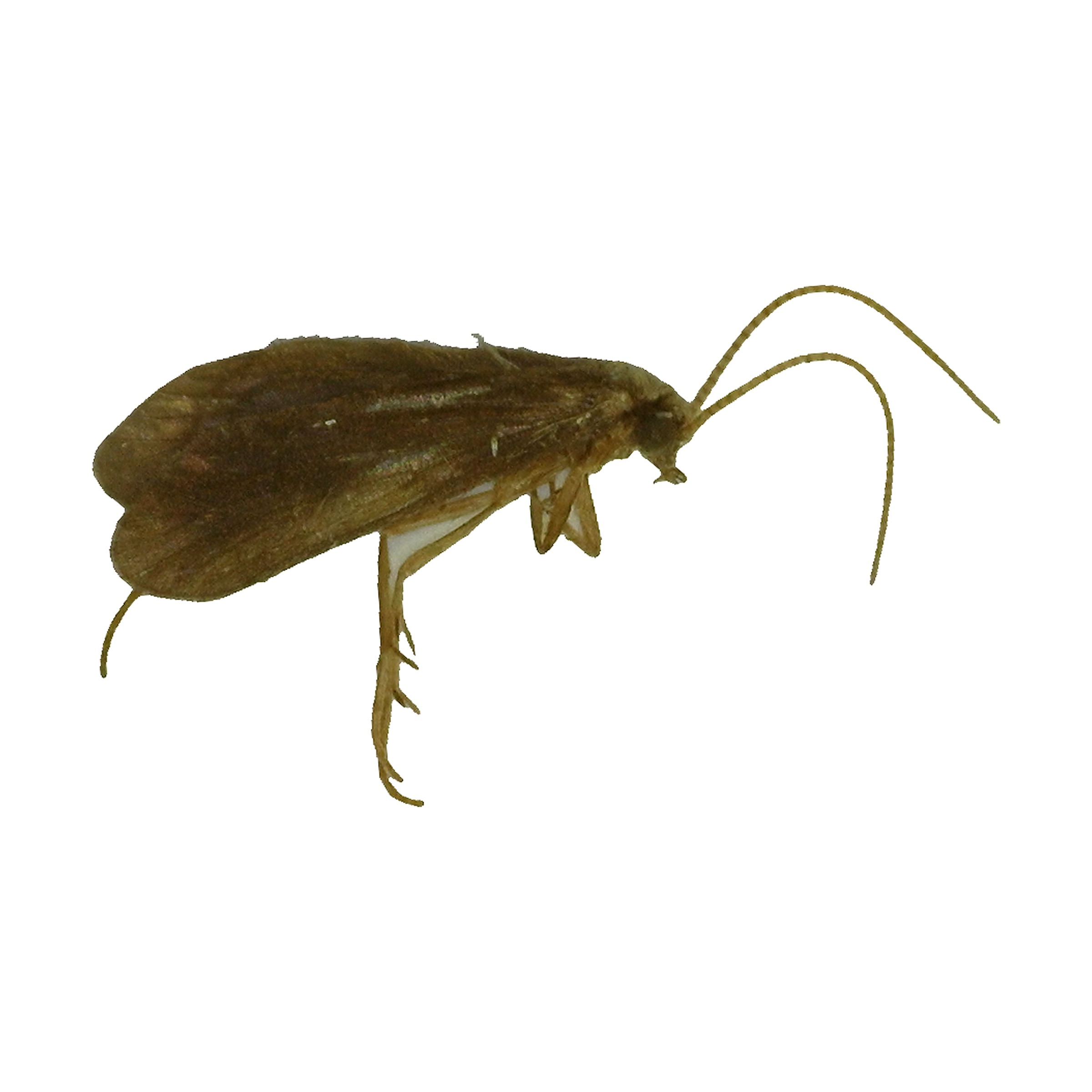
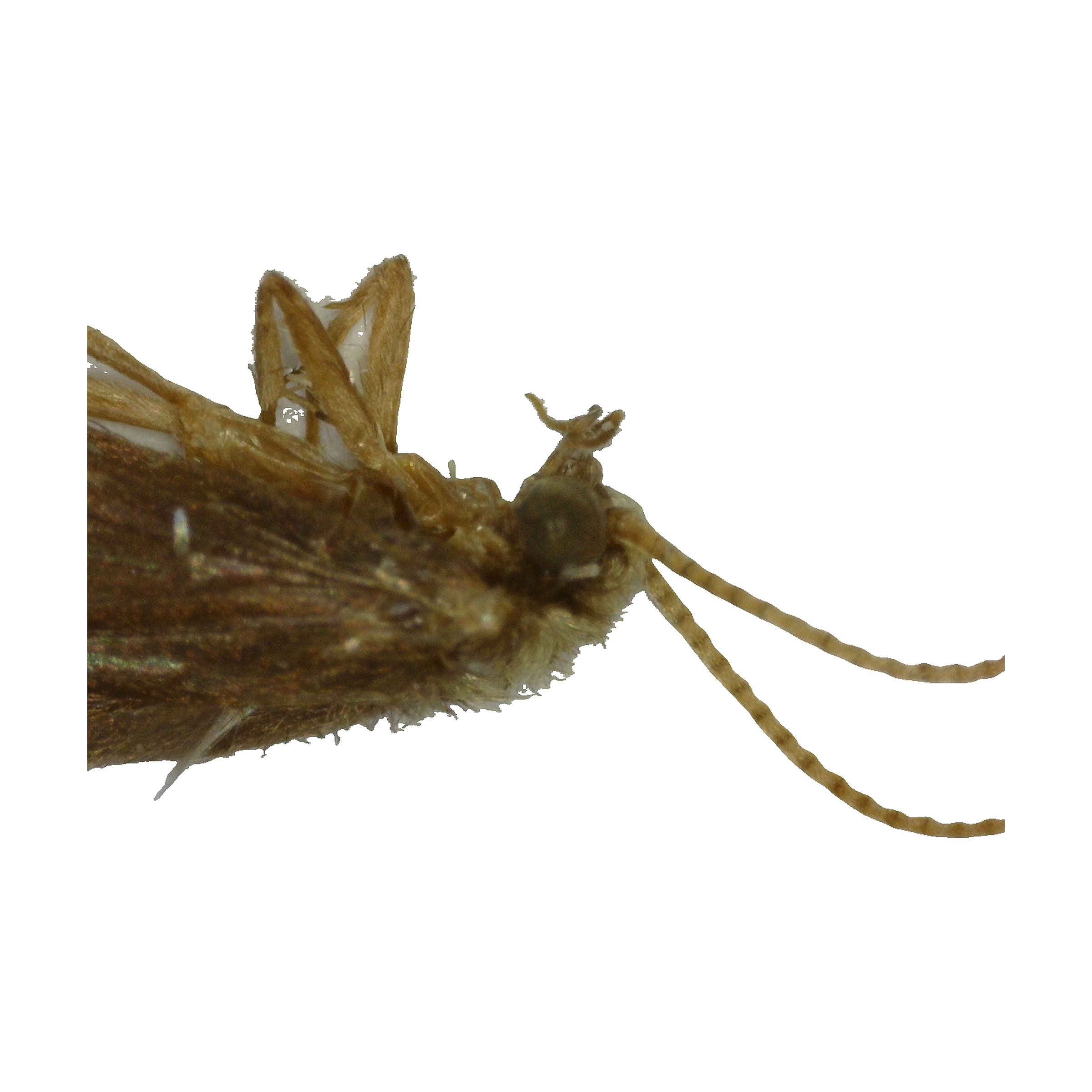
The Bizarre Caddisfly in the genus Lepidostoma is a small brown caddisfly with finely hairy wings held roof-like over the body at rest. The wings are usually brown to tan, sometimes with a slightly mottled look. The antennae are long, slender, and many-segmented. The legs are slender and pale tan to amber, and they bear small spines and spurs. The thorax often has a coat of pale hairs. This specimen is about 6 mm long. Adults of the genus are small, commonly about 6 to 10 mm from head to wing tip, not counting the antennae.
Lepidostoma is the main North American genus of bizarre caddisflies (family Lepidostomatidae). About 71 species occur north of Mexico, and they are found throughout North America. The larvae live in springs, streams, and the slower parts of larger rivers, often in cool headwater water. This specimen was collected in Douglas County, Wisconsin, in June 2012.
Adults are most often seen near the water and will come to lights after dark. Fly fishers know them as little brown sedges. The larvae feed on detritus, the decaying plant material that collects in the stream, and they carry a portable case as they feed. Many species build a four-sided “log cabin” or chimney case from pieces of leaf or bark; some use sand.
Like other caddisflies, Lepidostoma has complete metamorphosis: egg, larva, pupa, and adult. The female lays eggs in or near the water. The larva builds its case and carries it while it feeds. When fully grown it seals the case and pupates inside. The adult later crawls out of the water, sheds the pupal skin, and expands its wings. In much of the range, adults are most often collected from late spring through summer.
Bizarre caddisflies are not pests. They do not damage crops, stored products, or structures, and they are harmless to people. The larvae are a normal part of spring and stream communities and are useful indicators of freshwater habitat. Adults are of interest to fly fishers, who imitate them as little brown sedges, and the preserved specimens are used in teaching and collections.
Lepidostoma Rambur, 1842 belongs to the bizarre caddisfly family Lepidostomatidae, order Trichoptera (caddisflies). The family name comes from the Greek words for scale and mouth, for the scales on part of the mouthparts that helped distinguish the genus. In North America the family has two genera and about 77 species; Lepidostoma includes most of them, and the other Nearctic genus is Theliopsyche. Species can be hard to separate from a dorsal photograph alone, because a sure identification often requires a closer look at the wings or, in males, the genitalia or mouthparts. This specimen is therefore listed as Lepidostoma sp.
This preserved specimen educates on caddisflies and the bizarre caddisfly family, suitable for displays or studies.
Check it out on BugGuide! https://bugguide.net/node/view/118383/bgimage