
$3.00
 <—
3 in stock
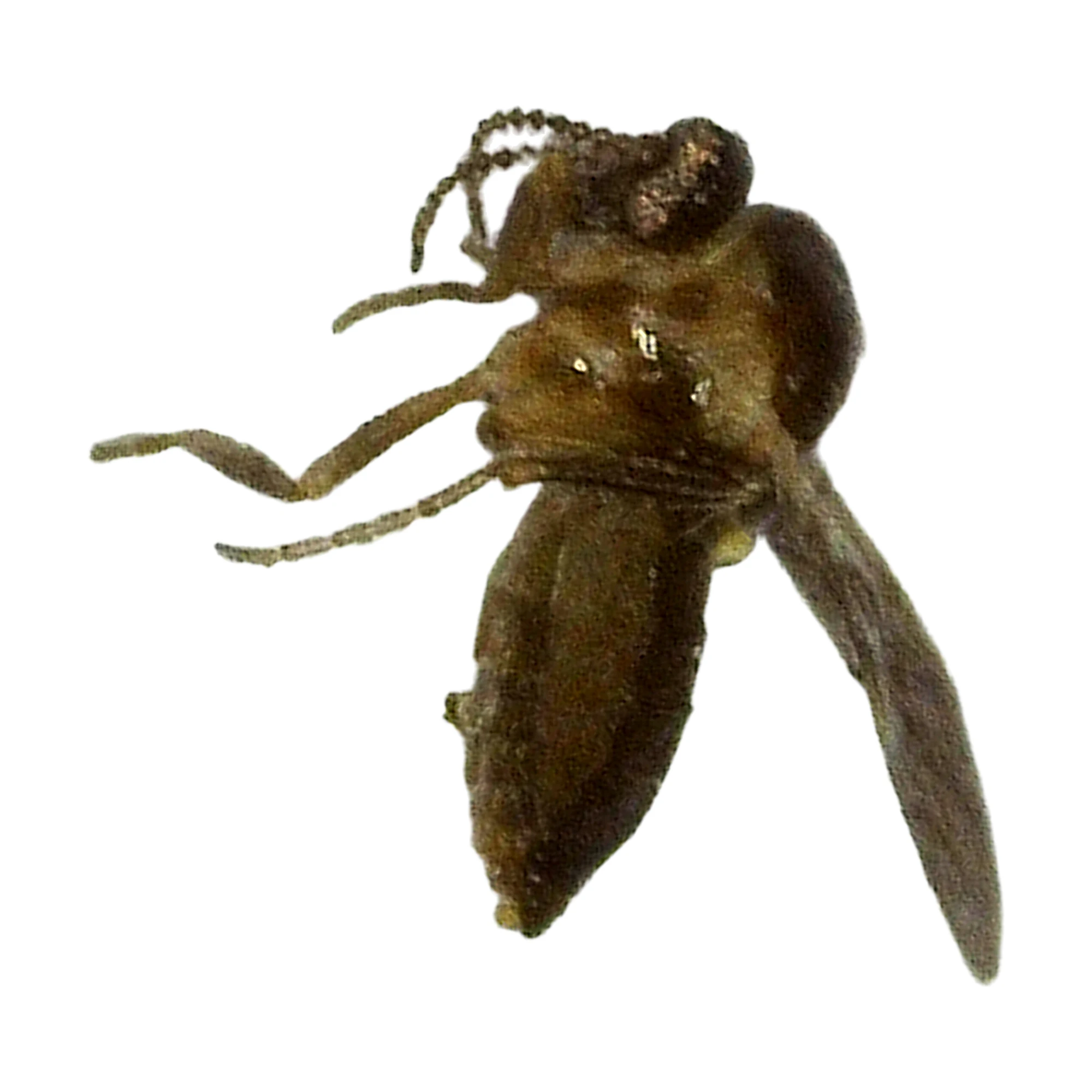
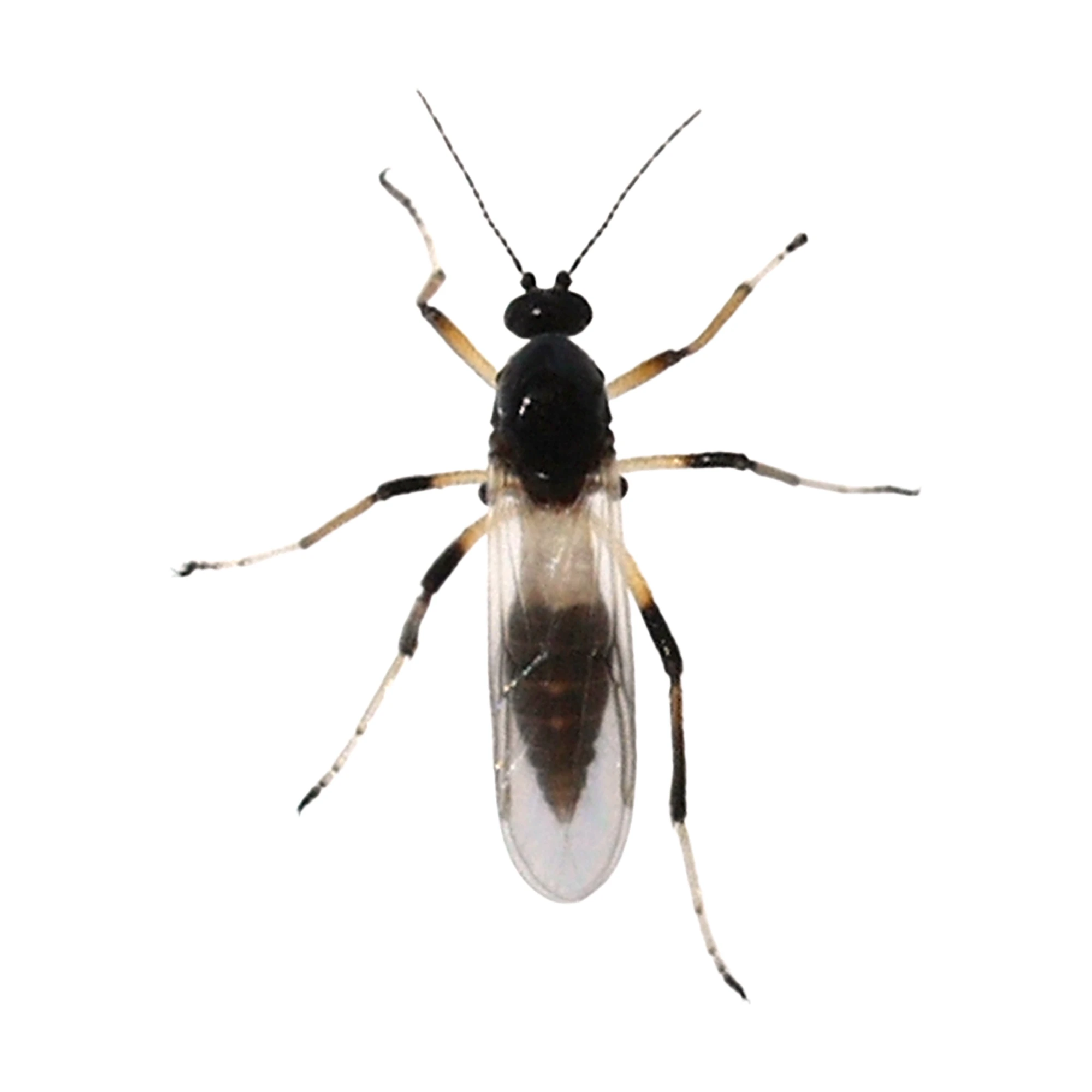
Biting midges, family Ceratopogonidae, are tiny flies, generally only 1 to 3 mm long, and they are so small that most people never see them. They look like a small, stout mosquito or midge, with a rounded head, a humped thorax, short legs, and broad wings that are usually held flat over the back at rest. They have no ocelli (simple eyes), and the wings have prominent veins. The antennae have 13 segments, and the last few are often longer than the others. Males have bushier antennae than females. Biting midges look much like the true midges (Chironomidae) but are stouter, with shorter legs and broader wings, and females of many species have a well-developed biting proboscis.
Biting midges live all over the world and throughout North America, with more than 600 species in 39 genera in the United States and Canada. The adults are found near the wet places where their young grow, including marshes, ponds, streams, rivers, and woodlands, and they are most common in early summer. The larvae live in moist or wet sand, mud, and decaying plant matter, in fresh and salt water, and some are found under the bark of rotting trees. Some even live in the sand of sandbars out in the middle of large rivers. Some of our specimens were collected in Marion County, Indiana.
Adult biting midges, also called no-see-ums or punkies, feed on sugary liquids such as flower nectar, and the males feed only on these. The females of many species, especially in the genus Culicoides, also bite and suck blood from mammals, birds, and reptiles, including people, and the bites are small but itchy and annoying. Other species suck the blood of other insects or catch and eat small insects, and some females do not bite at all. The larvae are slender, pale, worm-like animals that grow to about a quarter inch in some species. They look like tiny silvery worms and move by thrashing back and forth, and they feed on algae, tiny organisms, and small prey in the mud and sand.
Biting midges undergo complete metamorphosis (egg, larva, pupa, adult). The females lay their eggs in damp or wet mud, sand, or decaying plant material, and the larvae hatch and grow in these aquatic or semi-aquatic homes. After going through several larval stages, the larva pupates, and the adult comes out of the pupa and flies away. Depending on the species and the climate, they can have one or several generations a year.
Biting midges are mainly a pest. The bites of the species that feed on blood can ruin outdoor activities near water. Some species also spread diseases to animals. Some biting midges in the genus Culicoides carry the viruses that cause bluetongue disease and epizootic hemorrhagic disease (EHD), which can sicken and kill large numbers of white-tailed deer and also affect livestock such as sheep and cattle. Not all species bite, and many are harmless to people, and the larvae are part of the food web of wet habitats as food for fish and other animals.
This preserved specimen educates on tiny blood-feeding flies and the diseases they can spread, suitable for displays or studies. Check it out on BugGuide! https://www.bugguide.net/node/view/19768
| Weight | 0.01 lbs |
|---|
Only logged in customers who have purchased this product may leave a review.
Reviews
There are no reviews yet.