
$8.95
 <–
3 in stock
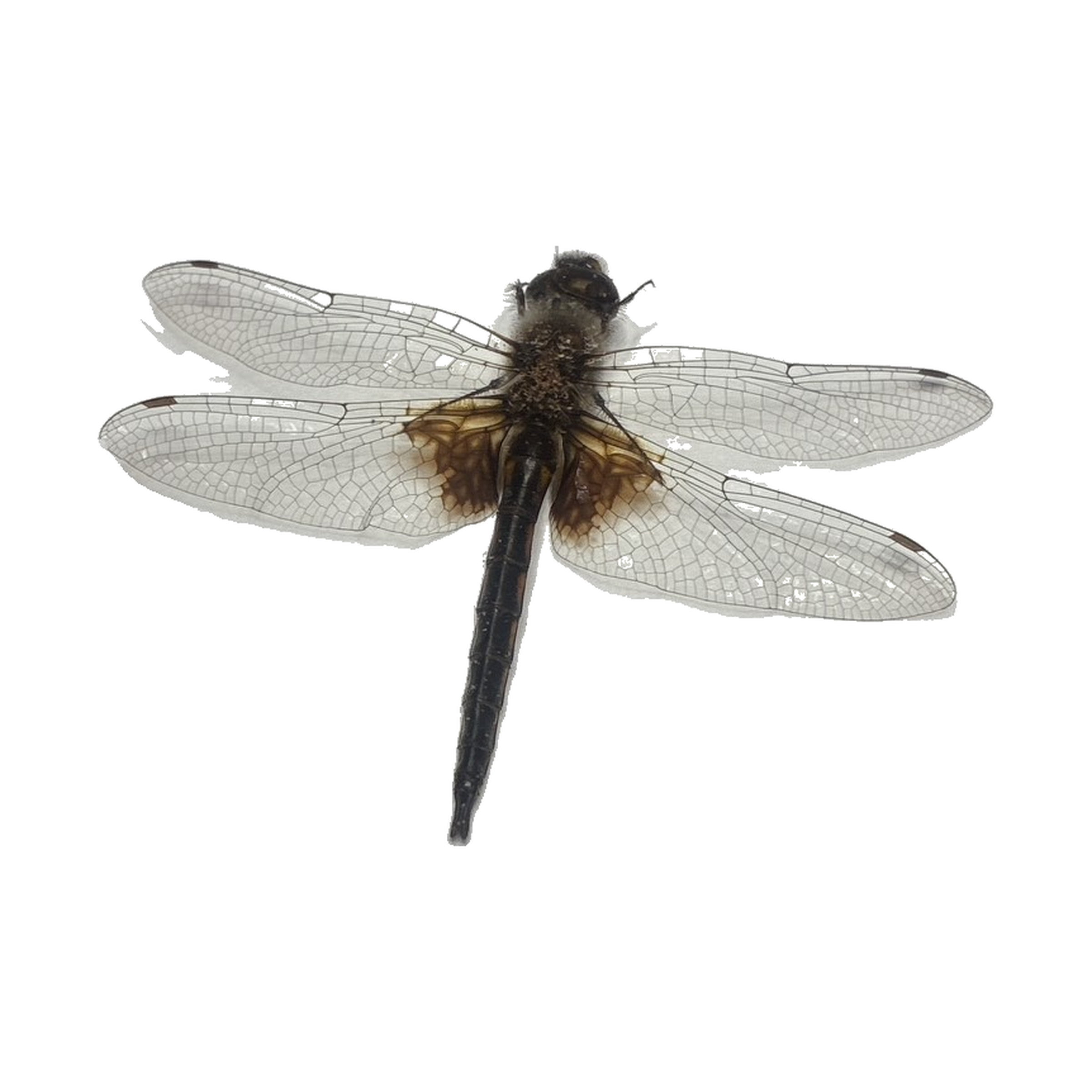
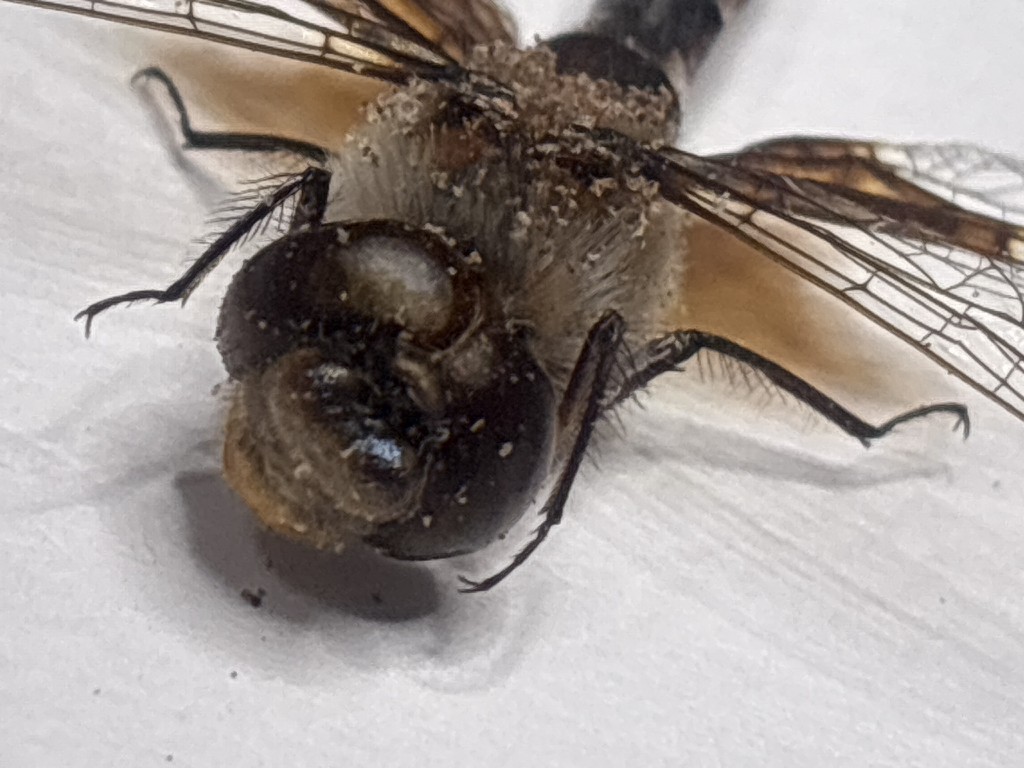
The Belted Whiteface is a small skimmer, about 33 to 36 mm (1.3 to 1.4 inches) long. Like other whitefaces, it has a pale face, a mostly dark body, dark legs, and a small dark patch at the base of each wing. Mature adults have a pale, frosted band at the base of the abdomen, which gives the species its name. The thorax may show red or yellow, and the hindwings often have a brown patch near the base. This species was formerly called the Red-waisted Whiteface.
Belted Whitefaces live at still, often boggy or marshy ponds, lakes, and fens with plenty of aquatic plants, usually in forested country. The species is widespread across northern North America, from Canada and Alaska south into the northern United States, including Wisconsin. Some of our specimens were collected in Douglas County, Wisconsin.
Males often perch on plants over open water or on lily pads and defend small territories near the shore. Adults also forage in nearby forest clearings. Like other dragonflies, they are swift aerial hunters and prey on flying insects.
This species has incomplete metamorphosis, with egg, aquatic naiad, and adult stages. The naiads are aquatic predators and live among water plants. In Wisconsin, adults fly from mid-May to late August.
Belted Whitefaces are beneficial predators of mosquitoes and other small insects. They are not pests and have no significant economic impact.
Leucorrhinia proxima (Calvert, 1890) belongs to the skimmer family Libellulidae, genus Leucorrhinia (whitefaces).
This preserved specimen educates on dragonfly biology and wetland insects, suitable for displays or studies.
Check it out on BugGuide! https://bugguide.net/node/view/17991/bgimage