Short Description
The Beewolf (Philanthus sp.) measures 12-18 mm with the first abdominal segment equal in width to the second. Females hunt bees to provision soil nests. Found across North America. (24 words) Learn more: https://bugguide.net/node/view/4345
Long Description
Appearance
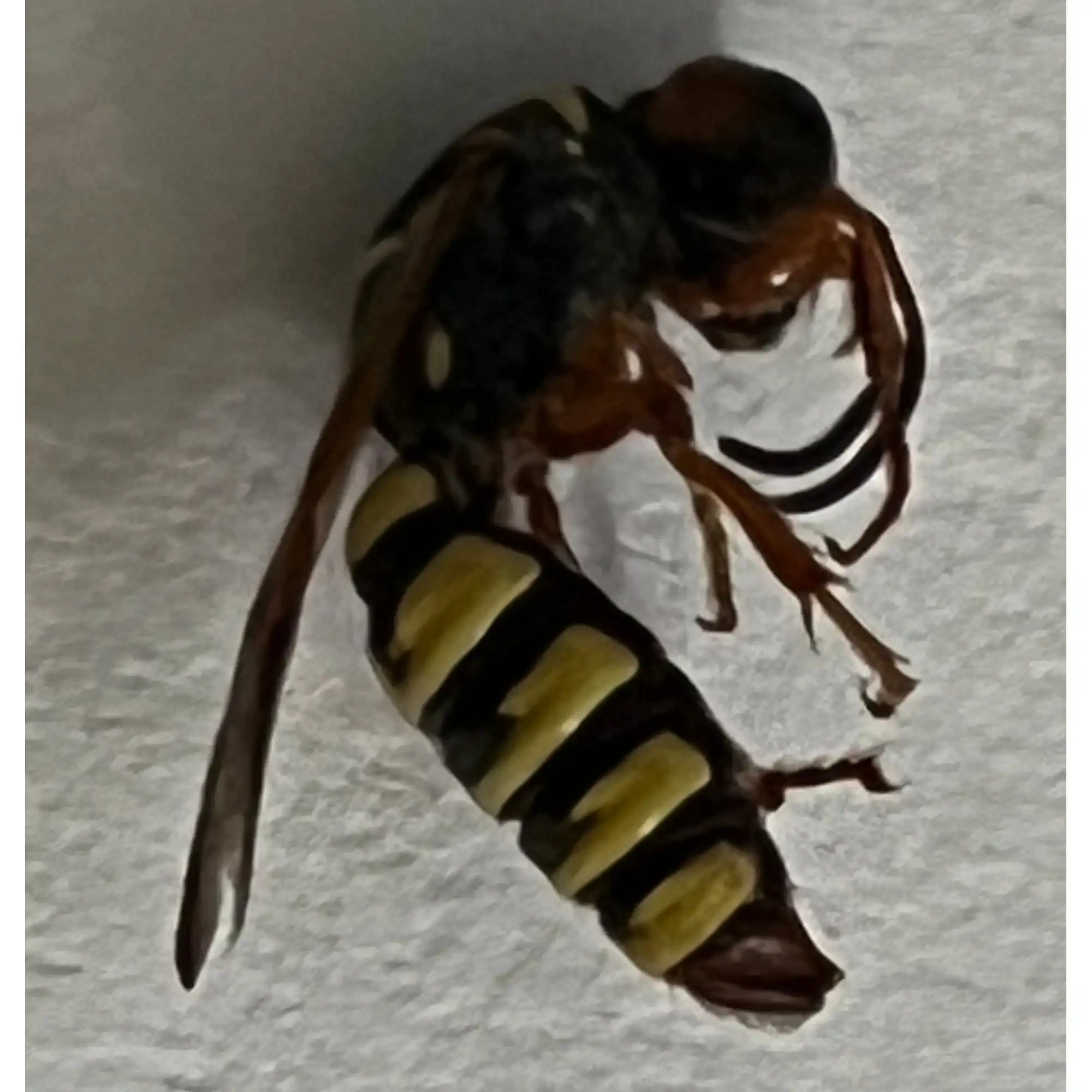
The Beewolf reaches 12 to 18 mm in length. Its body shows a robust form typical of solitary wasps. The first segment of the metasoma equals the width of the second. This feature distinguishes it from similar genera. Coloration often includes black with yellow markings for camouflage.
Habitat and Range
These wasps excavate nests in soil that balances sand and clay for stability. They hunt on flowers, natural bee nests, and apiaries. The range covers North America north of Mexico with 32 species. Worldwide, about 140 species exist in tropical to warm temperate zones.
Behavior
Females hunt bees or wasps, often Halictids, to stock nests for larvae. Adults feed on nectar from various flowers. A unique trait involves cultivating bacteria in antenna bases. They apply this to brood cells to prevent harmful infections. Warm, dry summers boost their abundance in northern areas.
Life Cycle
Females lay eggs on provisioned prey in soil burrows. Larvae consume the paralyzed bees or wasps provided. Pupation occurs within the nest cells. Adults emerge to continue the cycle seasonally. The process depends on prey availability and weather conditions.
Economic Impact
Beewolves prey on bees, including some honeybees in certain species, marking them as potential minor pests to apiculture. Yet, they remain neutral overall by controlling wild bee populations without broad agricultural harm. Their role supports natural ecosystem balance.
This preserved specimen highlights the bee-hunting adaptations, ideal for wasp studies and education. Check it out on BugGuide! https://bugguide.net/node/view/4345

 <—
<—