Appearance
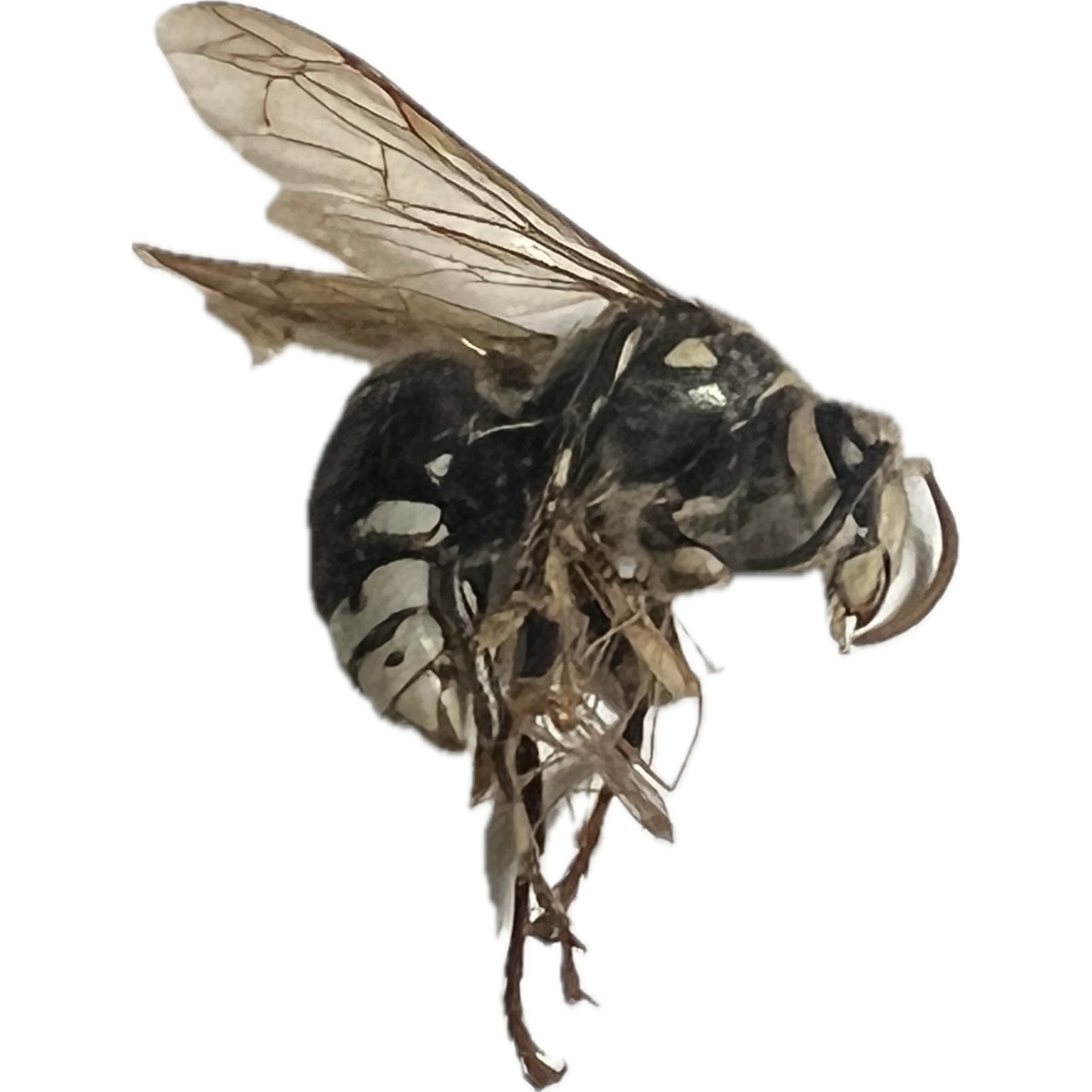
The Bald-faced Hornet features a black body with white markings on the head, thorax, and apical abdominal segments. Queens measure 18-20 mm in body length and 15-18 mm forewing length. Workers span 12-14 mm body length and 11-15 mm forewing length. Males reach 13.5-16 mm body length. Distinctive traits include smoky wings and a large gap between mandible and eye. The first three abdominal tergites stay entirely black, with white patches on segments 4-6 in females and 4-7 in males. Variations may show lateral pale spots on the third segment and pale pronotal stripes.
Habitat and Range
This species occurs throughout North America, excluding the dry Midwest regions. It builds nests above ground in trees, bushes, and protected spots. Mature nests form large oval shapes with entrances low on the side. Early nests appear globular with bottom entrances, sometimes featuring long entrance tubes unique to this hornet.
Behavior
Adults feed on nectar from flowers, fruit, insects, and spiders as omnivores. They chew prey to feed larvae in the nest. The social structure centers on a fertilized queen initiating the nest in spring. Colony growth involves adding tiers of hexagonal cells. Males emerge in fall for mating.
Life Cycle
Fertilized queens overwinter to start new nests in spring. Workers appear from spring through late fall. New queens and males get produced in late summer to fall. In the deep south, colonies may stay active year-round. The cycle repeats annually with overwintering queens.
Economic Impact
As predators of insects and spiders, Bald-faced Hornets hold beneficial status. They aid natural pest control in gardens and forests, reducing harmful populations without chemical needs. No direct economic harm noted, though stings can occur near nests.
This preserved specimen highlights the striking black and white markings, ideal for social insect education. Check it out on BugGuide! https://bugguide.net/node/view/2890

 <—
<—