
$5.95
 <–
39 in stock
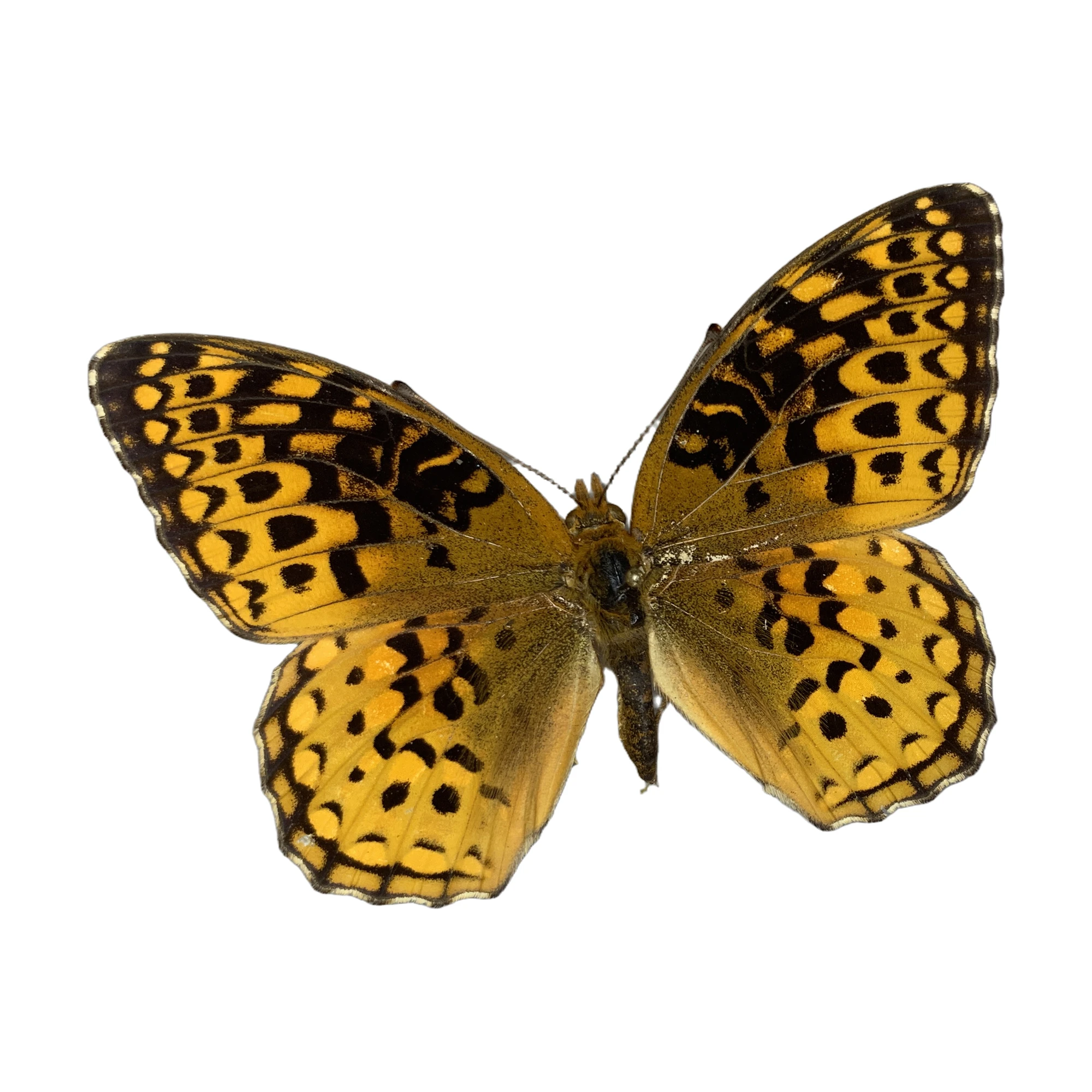
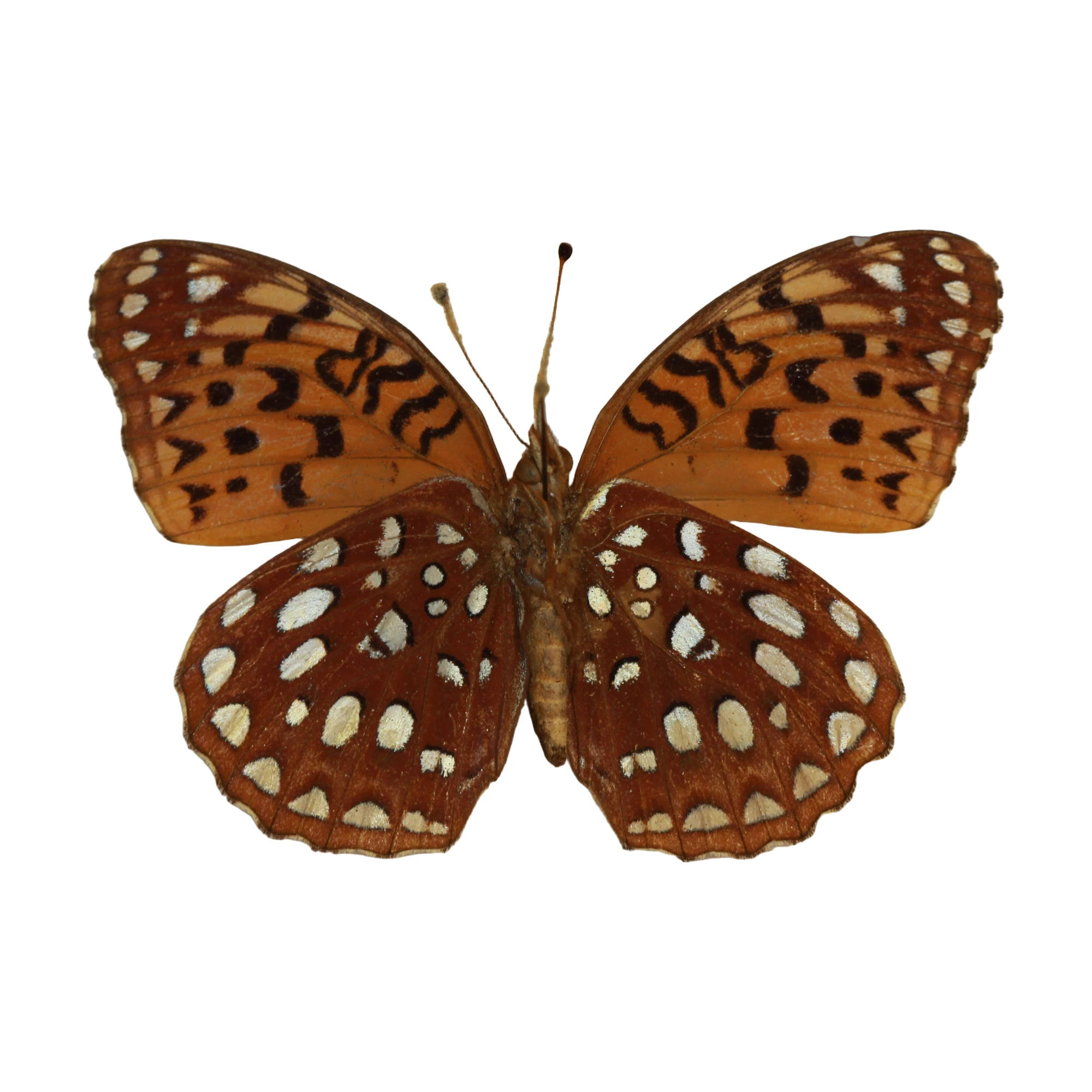
The Aphrodite Fritillary, Speyeria aphrodite, is a large, broad-winged orange butterfly with a wingspan of 63 to 83 mm (about 2 1/2 to 3 1/4 inches). The dorsal wings are reddish orange-brown with rows of black spots and chevrons. On the male, the dorsal forewing has a black spot below the cell and no black scaling along the veins. The ventral hindwing has rows of silvery-white spots, and the pale submarginal band is narrow or missing. In the East it is easily confused with the Great Spangled Fritillary, Speyeria cybele, and the black spot just below the dorsal forewing cell helps tell them apart, though there are exceptions in both species. Our photo shows the dorsal view of a spread specimen.
The Aphrodite Fritillary lives in moist prairies, high mountain meadows, openings in barrens, brushland, dry fields, open oak woods, and bogs. It ranges across Canada south of the taiga from Nova Scotia west through the northern Midwest and Great Plains to the Rocky Mountains, then south in the mountains to east-central Arizona and northern New Mexico, and south in the Appalachians to northern Georgia.
Males patrol for females during the warm hours of the day. Females walk about on the ground and lay single eggs near violets. Adults visit flowers for nectar, including milkweed and viper’s bugloss.
Complete metamorphosis (egg, larva, pupa, adult). There is one brood a year, with adults flying from mid-June to mid-September. The first-stage caterpillars do not feed but overwinter, and in spring they eat the young leaves of violets (Viola), such as northern downy violet and lance-leaved violet.
Not known as a pest. The caterpillars eat only violets, and we found no record of damage to crops or gardens. The adults are pollinators that visit many wildflowers for nectar.
Our specimen was collected by Don Barnhart in Douglas County, Wisconsin.
This damaged specimen is sold at a reduced price. It is a low-cost way to study the orange dorsal wings and silver-spotted ventral wings of a large greater fritillary, suitable for displays, practice mounting, or art projects. Check it out on BugGuide! https://bugguide.net/node/view/12872/bgimage
Photos: dorsal view, University of New Hampshire Collection of Insects and Other Arthropods (UNHC_0064964), CC BY 4.0, via GBIF; ventral view, Davidson College (DCEC00114), CC0, via GBIF. Both cropped, background removed. Photo is a representative example, not the exact insect you will receive.