
$3.00
 <–
2 in stock
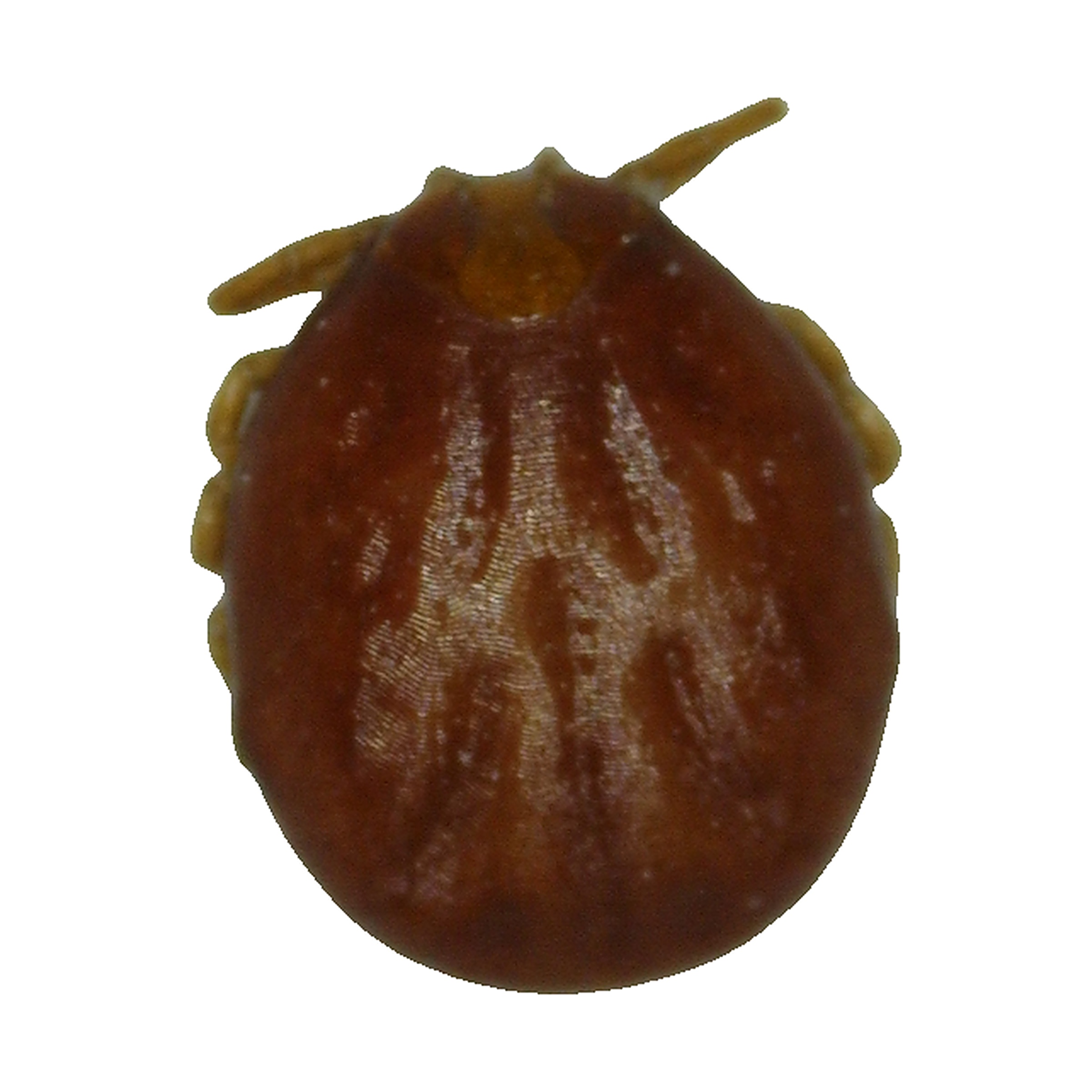
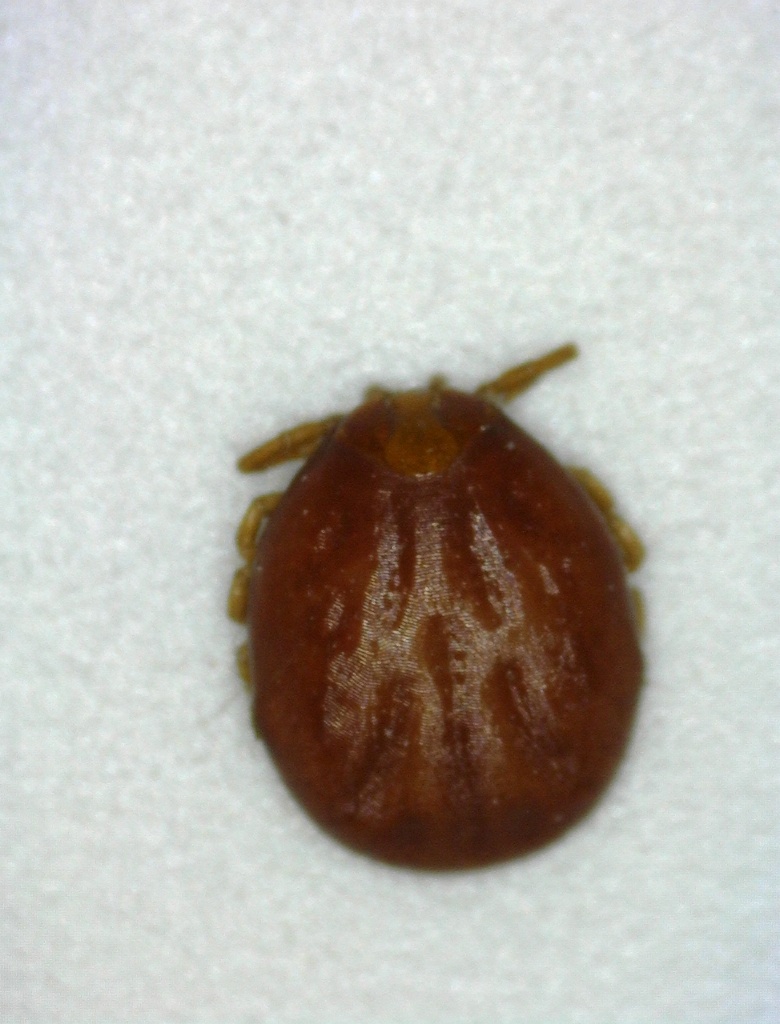
The American Dog Tick, Dermacentor variabilis, is a hard tick in the family Ixodidae. It is an arachnid, not an insect, and adults have eight legs. Unfed adults are about 3.5 to 5 mm long, flat, oval, and reddish brown, with short mouthparts at the front of the body. The shield (scutum) on the back is ornate, with pale silver-white to gray marbling over the brown. In the male the shield covers the whole back and the pale marbling runs over most of it. In the female the shield is a small patch just behind the head, and the rest of the body can stretch as she feeds. Small rectangular grooves called festoons line the rear edge of the body. Females swell to about 12 to 15 mm after a full blood meal. The specimen in the photo is an adult male.
This tick is most common in grassy fields, overgrown meadows, brushy forest edges, and along trails and roadsides, where it waits on tall grass and low plants for a host to pass. Its range covers most of the United States east of the Rocky Mountains, with separate populations along parts of the Pacific Coast, and it reaches into southern Canada. It is one of the most familiar ticks in the central states, including Missouri. Our specimens were collected in Phelps County, Missouri.
American Dog Ticks are ambush hunters. Adults climb to the tips of grass and weeds and hold out their front legs, a behavior called questing, then grab onto a passing animal. They are drawn by carbon dioxide, body heat, and movement, and they often gather along paths and trails used by animals and people. Once aboard, a tick usually crawls to the head, neck, or ears before it attaches. Adults are most active from spring through summer.
The American Dog Tick is a three-host tick with egg, larva, nymph, and adult stages. Each active stage feeds once on a different host and then drops to the ground to molt or lay eggs. Larvae and nymphs feed mainly on mice, voles, and other small rodents, while adults prefer medium and large mammals such as dogs, raccoons, opossums, deer, cattle, horses, and people. Mating takes place on the host. A fed female drops off and lays several thousand eggs on the ground, never on the host, and then dies. The life cycle usually takes one to two years, and unfed adults can survive for many months while they wait for a host.
The American Dog Tick is one of the most important disease carrying ticks in the United States. It is the main vector of Rocky Mountain spotted fever in the eastern and central states, a serious bacterial illness that can be fatal without prompt treatment. It also transmits tularemia. Females feeding for several days, often at the base of the skull, can cause tick paralysis in dogs and people, a rising weakness that usually goes away soon after the tick is removed. It also spreads anaplasmosis to cattle. It is not considered a vector of Lyme disease. Heavy infestations bother dogs, livestock, and wildlife.
This preserved specimen is useful for teaching tick identification, public health displays, and arachnid collections.
Check it out on BugGuide! https://bugguide.net/node/view/15489/bgimage