The Betsy Beetle, scientifically known as Odontotaenius disjunctus, is a fascinating member of the Passalidae family. Often called the Horned Passalid due to its prominent features, this elongate beetle measures 32 to 36 mm in length. It featurs a glossy black body with deeply striated elytra that give it a rugged, textured appearance. Adults produce sound through stridulation by rubbing their abdomen against the wings, while larvae use their shortened hind legs to scratch and create squeaky noises for communication. These traits make it a standout in beetle collections.
Native to deciduous forests, this species thrives in rotting fallen logs where it can be found year-round. Its distribution spans the eastern United States from Texas to Florida, northward to Quebec and Nebraska, and extends into Mexico and South America. Adults occasionally appear at lights during spring and summer evenings, adding to their nocturnal allure in woodland settings.
Behaviorally, Betsy Beetles exhibit rare social tendencies among beetles, living in small colonies within moist wood tunnels. Both male and female adults provide parental care, chewing decaying wood and fungi into a digestible pulp treated with enzymes before feeding it to their young. Larvae, which appear scarabaeiform with only four functional legs, consume this pre-processed material or, in some cases, adult feces rich in nutrients. Stridulation plays a key role in colony interactions, helping members signal distress or coordinate activities. Interestingly, the group may cannibalize injured larvae to maintain colony health. Though capable of flight, adults rarely take to the air except during dusk nuptial flights, where mating occurs both in tunnels and mid-air.
The life cycle extends over more than one year, showcasing resilience in temperate climates. Eggs are laid within the wood galleries, hatching into scarabaeiform larvae that grow slowly under parental supervision. These larvae feed voraciously on the prepared wood pulp, molting through instars before pupating in secure chambers. Emerging adults integrate into the colony, contributing to brood care and tunnel maintenance until the cycle renews.
This preserved specimen highlights the unique social dynamics of this decomposer, making it ideal for educational entomology displays. Check it out on BugGuide! https://bugguide.net/node/view/2864

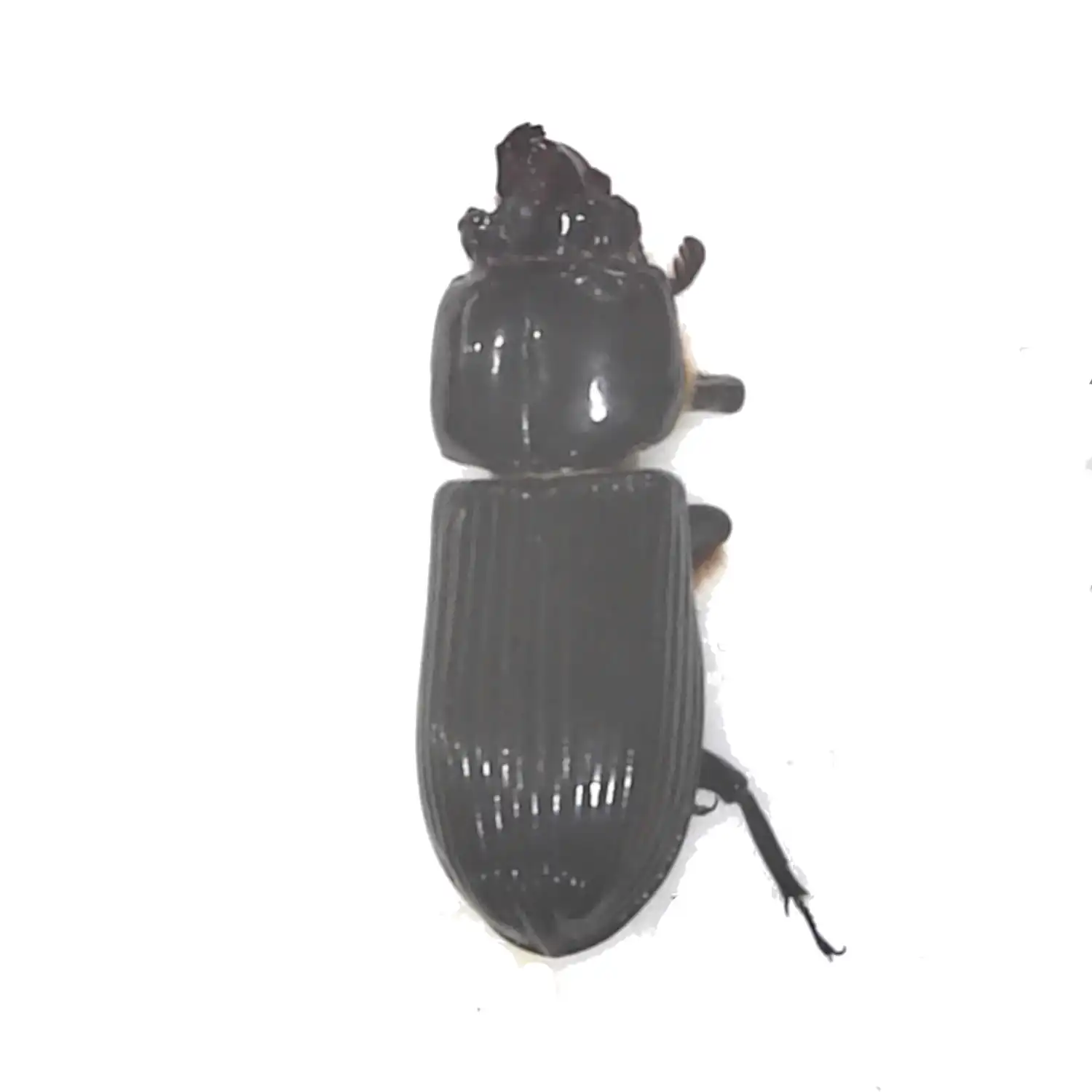
 <— See it in BugGuide