
$6.95
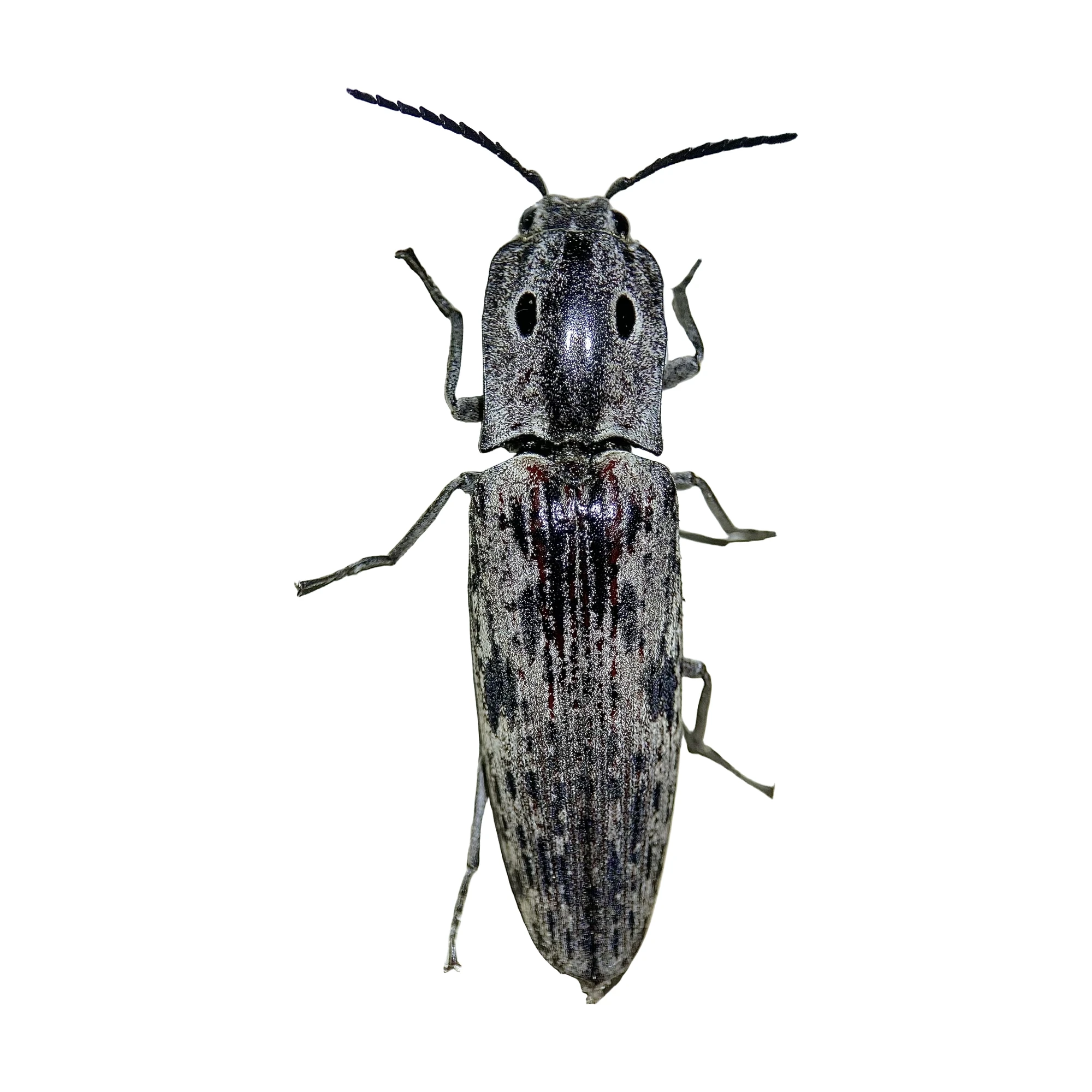
The Blind Click Beetle, Alaus myops, is a large, elongated click beetle measuring about 22 to 43 mm in length. Its body is gray to blackish and speckled with fine pale scales. The pronotum carries two small, oval black eyespots that are smaller than those of the Eyed Click Beetle and lack a pale ring, which is where the name “blind” comes from. The antennae are serrate (saw-toothed), and the elytra taper to a point at the rear.
This species lives in pine and mixed pine-hardwood forests across the eastern United States, especially in the Southeast and along the Atlantic and Gulf coastal plains. Adults turn up on tree trunks, logs and stumps, and at night they often come to lights near wooded areas.
Adults are mostly nocturnal and can flip themselves upright with a loud click by snapping a spine on the prothorax into a groove, which also helps them escape predators. The eyespots are thought to startle or deter predators. The larvae are predatory wireworms that hunt the grubs of wood-boring beetles inside decaying pine logs.
The Blind Click Beetle goes through complete metamorphosis: egg, larva, pupa and adult. Females lay eggs in or near rotting wood. The larvae develop inside decaying logs for several years, feeding on other insect larvae, before pupating in a cell within the wood. Adults emerge in spring and summer.
This beetle is beneficial. Its larvae prey on wood-boring beetle grubs, which helps keep those pests in check. It does no damage to crops or structures.
This preserved specimen educates on click beetle biology and forest insect ecology, suitable for displays or studies. Check it out on BugGuide! https://bugguide.net/node/view/3526
| Weight | 0.01 lbs |
|---|
Only logged in customers who have purchased this product may leave a review.
 <---
Reviews
There are no reviews yet.