Short Description
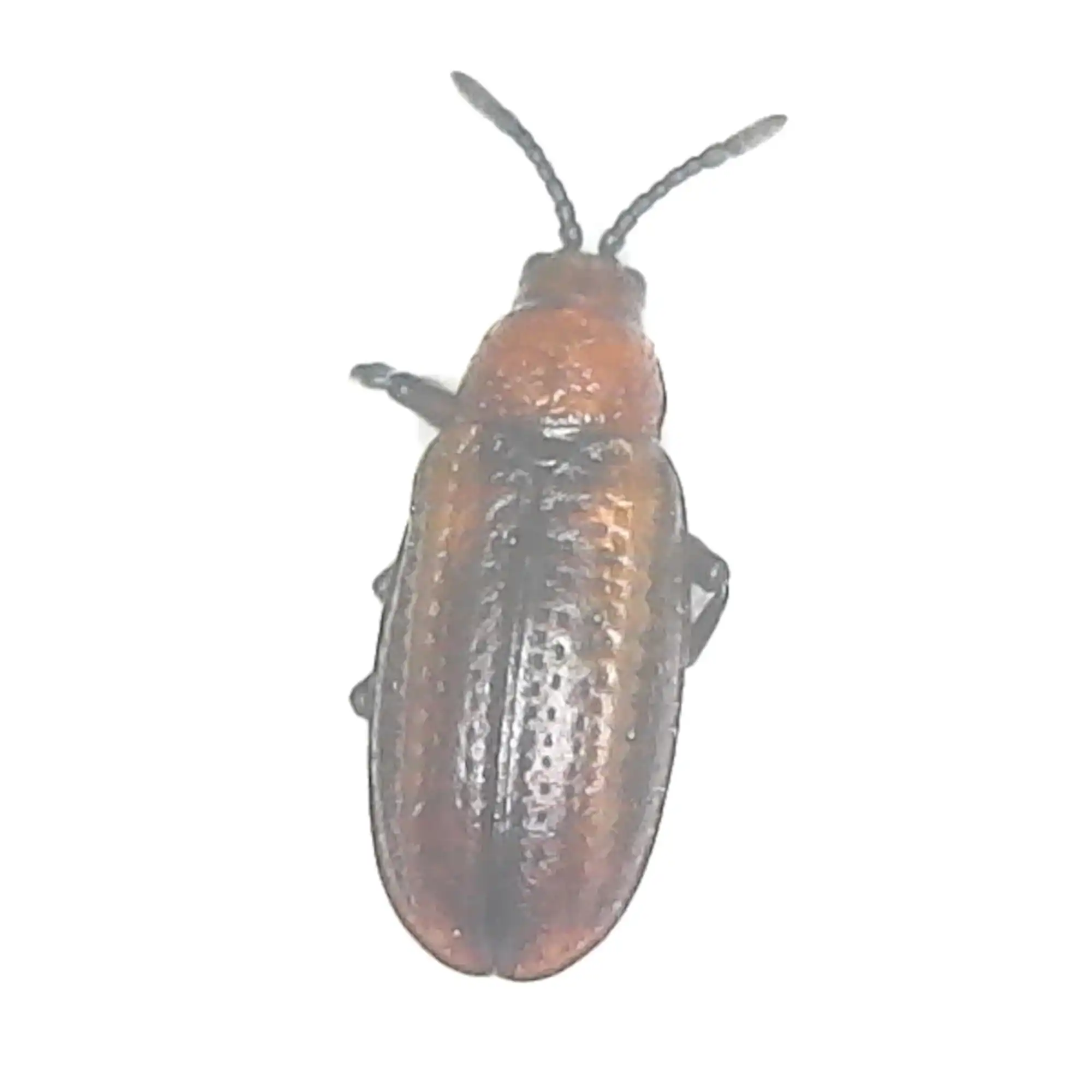
The Goldenrod Leaf Miner (Microrhopala vittata) shows variable dull reddish stripes on elytra with 8-segmented antennae and smooth margins. Feeds on goldenrod leaves across North America. (22 words) Learn more: https://bugguide.net/node/view/40710
Long Description
Appearance
The Goldenrod Leaf Miner displays fairly variable coloration with dull reddish stripes on the elytra. It features 8-segmented antennae for sensory purposes. Elytral margins remain smooth without serrations or teeth. This beetle blends well with host plant foliage through its muted tones.
Habitat and Range
This species spans transcontinentally from British Columbia to New Brunswick and south to California and Georgia. It thrives mostly in eastern North America extending to the Pacific Northwest. Uncommon along the Gulf coast, it inhabits areas rich in goldenrod plants from the Asteraceae family.
Behavior
Adults feed primarily on goldenrod leaves, consuming tissue as leaf miners. They often crawl among the leaves of goldenrod bunch galls created by Rhopalomyia solidaginis. This association suggests a preference for galled plants, possibly for protection or additional resources.
Life Cycle
Details on stages remain limited in records. Larvae likely mine within goldenrod leaves, developing through typical beetle instars. Adults emerge to feed and mate on host plants. Seasonality aligns with goldenrod growth cycles in temperate regions.
Economic Impact
As a leaf miner on goldenrod, this beetle holds neutral status economically. Goldenrod often grows as a wild plant or weed, with no significant impact on crops or agriculture noted. It contributes to natural ecosystem dynamics without notable costs.
This preserved specimen highlights the variable striped elytra, ideal for beetle collections and education. Check it out on BugGuide! https://bugguide.net/node/view/40710

 <—
<—