
$3.00
 <---
Out of stock
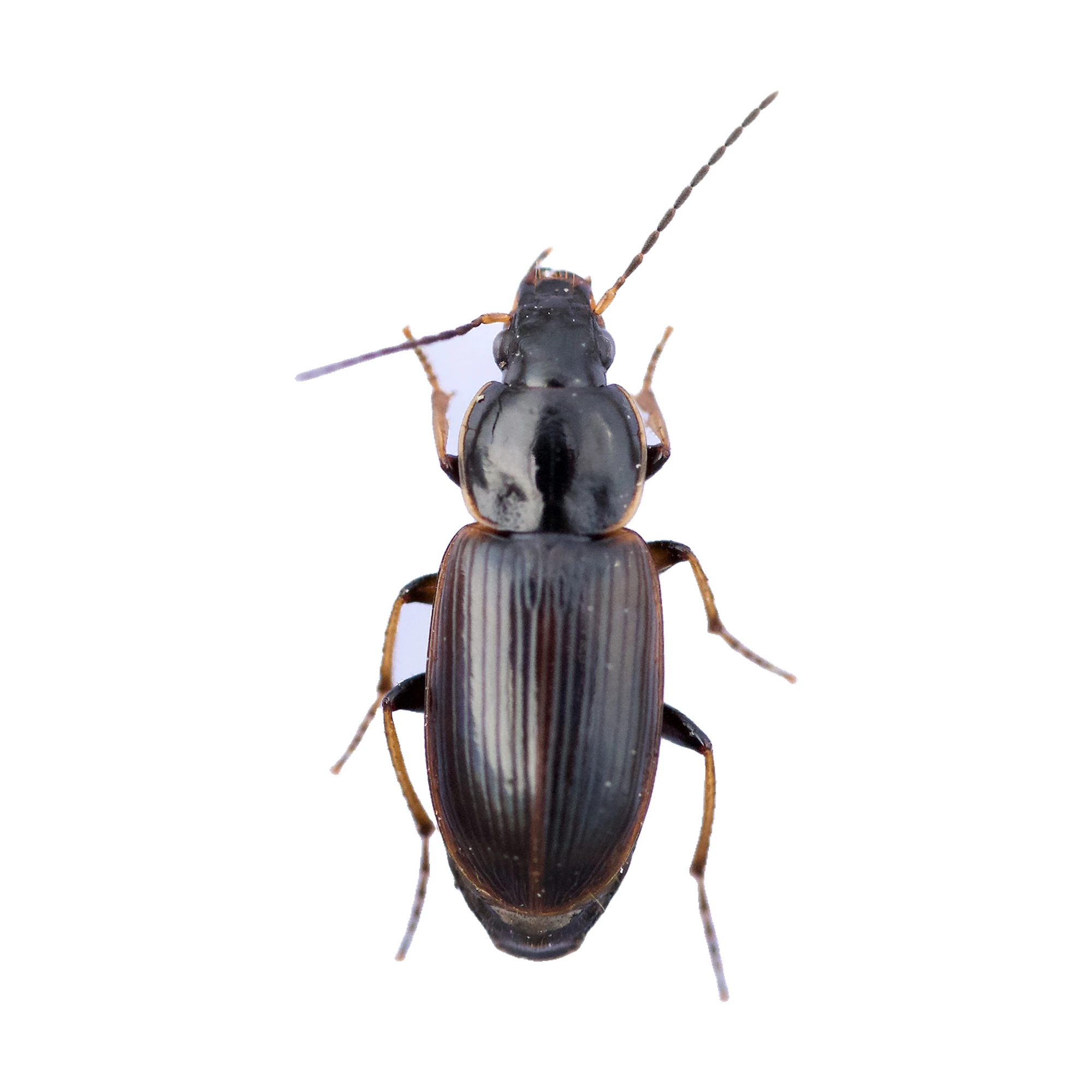
Ground beetles in the family Carabidae are a large and varied group. North American species are about 2 to 35 mm long, depending on the species. Most have a hard, oval to elongate body, threadlike antennae, and long legs built for running. Many have grooved wing covers. This specimen is a small, dark reddish-brown ground beetle. Because it has not been identified past the family, this listing is sold as Carabidae sp.
The family is found worldwide and throughout North America. Ground beetles live in nearly every terrestrial habitat, including fields, forests, gardens, wetlands, and shorelines. Most species live on the ground among leaf litter, soil, or plants.
Some of our specimens were collected near Saint James, Missouri, by sweep net.
Many ground beetles are nocturnal and hide by day under stones, logs, or debris. They run quickly when disturbed, and some species fly. Most are predators or scavengers, feeding on other insects and small invertebrates; some also eat seeds or decaying matter. They do not bite people under ordinary conditions.
Like other beetles, they have complete metamorphosis: egg, larva, pupa, and adult. Eggs are usually laid in the soil. Larvae live on the ground, feed, and later pupate before emerging as adults. The number of generations in a year varies with the species.
Many ground beetles are beneficial because they prey on insect pests in fields, gardens, and forests. A few species can be minor crop pests. They are not household pests. The preserved specimen is useful for teaching about ground beetles in the family Carabidae and about identification at the family level.
This preserved specimen educates on ground beetles in the family Carabidae, suitable for displays or studies.
Check it out on BugGuide! https://bugguide.net/node/view/141/bgimage
Photo: (c) Owen Strickland, CC BY, via iNaturalist.
Only logged in customers who have purchased this product may leave a review.
Reviews
There are no reviews yet.