
$3.00
 <---
3 in stock
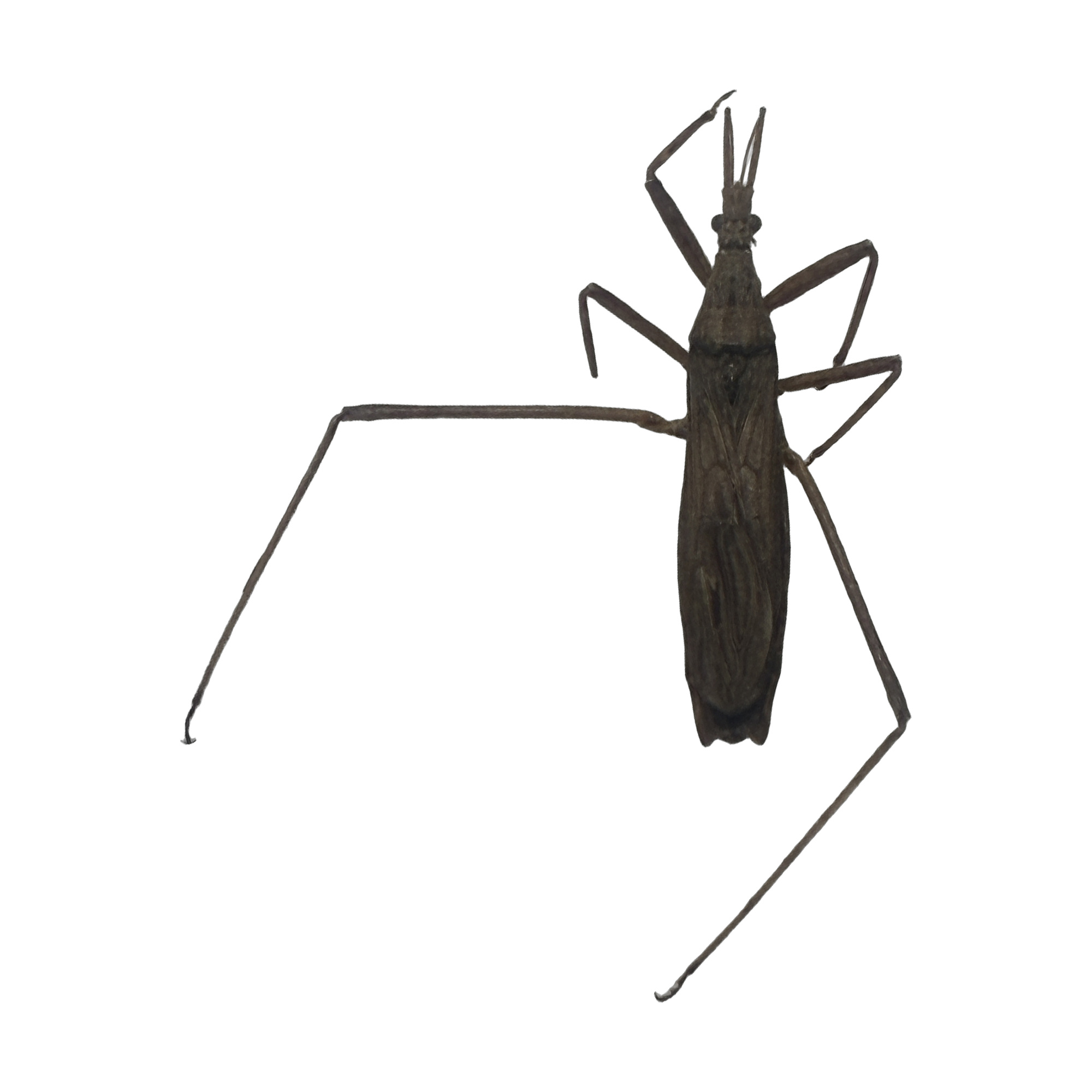
Slender assassin bugs in the genus Pygolampis are elongate, plain brown true bugs, about 13 to 16 mm long, with a narrow granulated head, a slight neck behind the eyes, and very long mid and hind legs. The front legs are slender and not raptorial. The first antennal segment does not end in a spine, which separates this genus from the similar genus Pnirontis. Two species occur in the United States, and they can be hard to tell apart from a photo, so these specimens are listed at genus.
Both North American species are widespread, from Canada south through much of the United States and, for Pygolampis pectoralis, into Mexico and Central America. They are often found in grasses, weedy places, and leaf litter, and adults sometimes come to lights. Some of our specimens were collected near Saint James, Missouri.
Like other assassin bugs, they are predators. They use a three-segmented beak to pierce other insects, inject digestive saliva, and suck up the liquefied tissues. The beak can fold back into a groove on the underside of the chest. They walk and fly well, and they can deliver a painful bite if handled, so they should be treated with care.
They have incomplete metamorphosis: egg, nymph, and adult. Nymphs resemble the adults but lack fully developed wings and pass through several instars before the final molt. Adults of both species have been collected from spring into early fall, and some have been taken at lights.
These bugs are beneficial predators of other insects and are not treated as pests. They are useful teaching specimens for the slender, long-legged assassin bugs in the subfamily Stenopodainae.
This preserved specimen educates on slender assassin bugs in the family Reduviidae, suitable for displays or studies.
Check it out on BugGuide! https://bugguide.net/node/view/87441/bgimage
| Weight | 0.01 lbs |
|---|
Only logged in customers who have purchased this product may leave a review.
Reviews
There are no reviews yet.