
$3.00
 <---
1 in stock
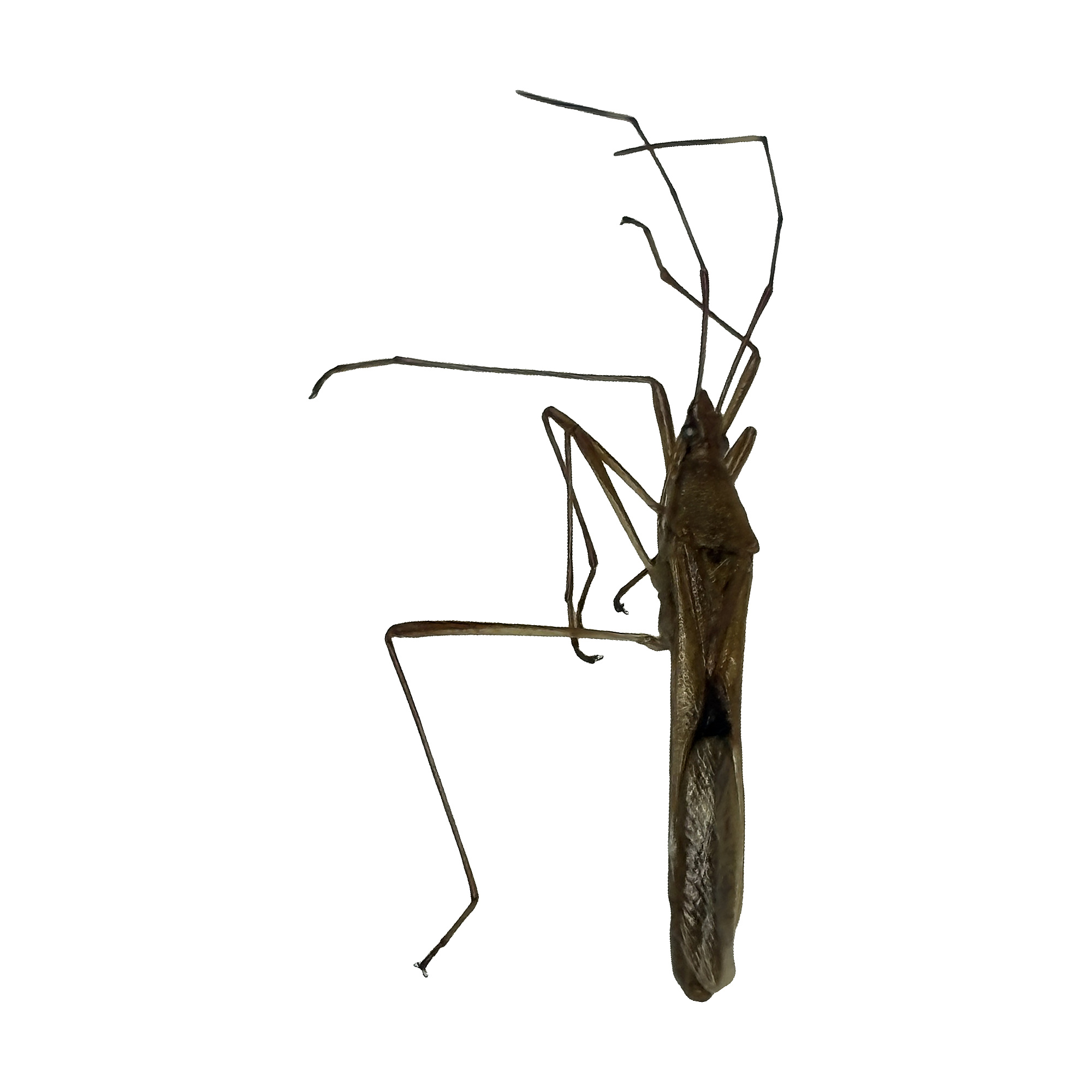
Rice bugs in the genus Stenocoris are very slender, tan to yellowish brown true bugs, about 13 to 16 mm long. They have a narrow head, long thin legs and antennae, and a many-veined membrane on the forewings. The body is much more elongate than in most other broad-headed bugs (Alydidae). Some individuals have a dark mark on the corium. The front legs are slender and not raptorial. Several similar species occur in the United States, and they can be hard to tell apart from a photo, so these specimens are listed at genus.
This genus occurs in the southeastern United States and south through Mexico into Central and South America, as far as Argentina. The bugs live on grasses and other vegetation, often in moist or weedy places. Some of our specimens were collected near Saint James, Missouri.
Rice bugs feed on grasses and related plants with piercing-sucking mouthparts. They are not predators. Adults are sometimes found on grass stems or at lights.
Like other true bugs, they have incomplete metamorphosis: egg, nymph, and adult. Nymphs also feed on grasses and pass through several instars before becoming adults.
Some tropical rice bugs in this group are pests of rice. The Stenocoris species found in the United States are not usually treated as major crop pests. The preserved specimen is useful for teaching about slender grass-feeding bugs in the family Alydidae.
This preserved specimen educates on rice bugs in the family Alydidae, suitable for displays or studies.
Check it out on BugGuide! https://bugguide.net/node/view/9170/bgimage
| Weight | 0.01 lbs |
|---|
Only logged in customers who have purchased this product may leave a review.
Reviews
There are no reviews yet.