
$3.00
 <---
1 in stock
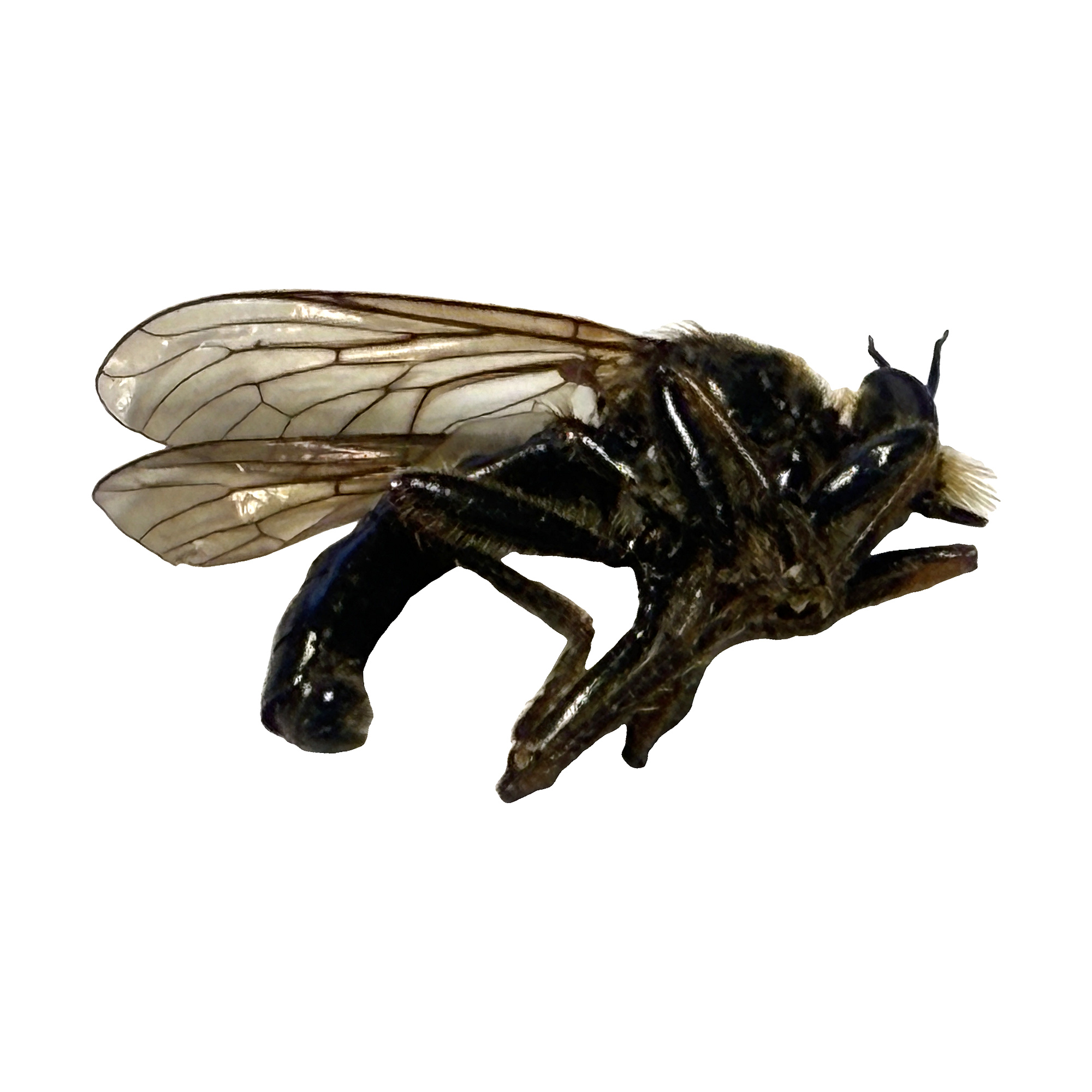
The Bee-like Robber Fly, Laphria index, is a small to medium, dark, bee-like robber fly in the family Asilidae, about 12 to 18 mm long. The thorax is dark, with mixed yellow brown or golden hair and a distinctive golden triangle of hair that is widest at the rear. The face has a mystax, or beard, that is often yellow or golden, and a short, blade-like black beak. The legs are black and hairy. The wings are tinted or smoky, paler toward the base, with dark veins. The abdomen is shiny black. Fresh specimens often have pale to reddish golden hair on the abdomen, but that pile is easily worn, and many specimens show a nearly bare, shiny black abdomen, with paler hair mainly on the sides of the first segments.
This species lives in woodlands, woodland edges, and openings, and it is often seen on tree trunks, logs, or leaves in sunny spots. It has a wide range across northern and eastern North America, from Canada south into the United States, including the northern Plains and South Dakota. Adults are usually on the wing from late spring through midsummer. Some of our specimens were collected in Fall River County, South Dakota.
Adults are perch-and-attack predators. They wait on a perch, then fly out to catch other insects in the air. The short, blade-like beak is used to pierce prey and feed on its fluids. The bee-like look and a loud buzz in flight help them avoid predators. Live robber flies can bite if handled, but they do not seek out people and they do not sting.
Like other true flies, this species has complete metamorphosis: egg, larva, pupa, and adult. The larvae live in decaying wood, where they prey on other insects in the wood. There is typically one generation a year. Adults are usually seen from late spring through midsummer.
These flies are beneficial as predators of other insects. They are not pests of crops or households. They can take other flying insects, including bees, when hunting, but they do not attack people or damage plants. Live robber flies can bite if handled, because of the piercing beak, but they do not seek out people. The preserved specimens are used in teaching and collections, and they are a good example of a bee-like robber fly in the family Asilidae.
This preserved specimen educates on the Bee-like Robber Fly, Laphria index, and robber flies in the family Asilidae, suitable for displays or studies.
Check it out on BugGuide! https://bugguide.net/node/view/22150/bgimage
Only logged in customers who have purchased this product may leave a review.
Reviews
There are no reviews yet.