
$3.00
 <---
3 in stock
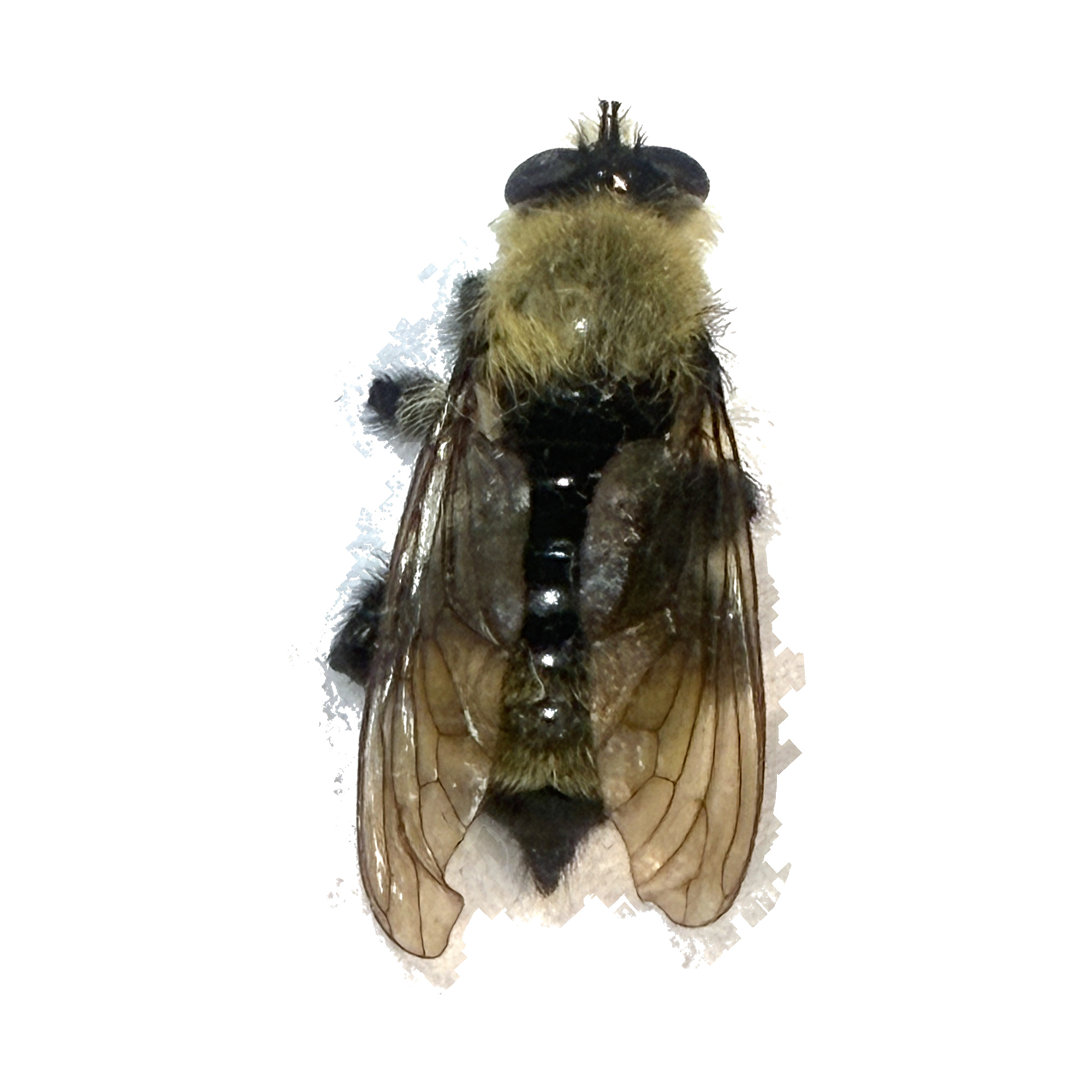
The Eastern Yellow-backed Laphria, Laphria thoracica, is a robust, bee-like robber fly in the family Asilidae, about 15 to 25 mm long. It is one of the most convincing bumble bee mimics in the genus. The thorax is densely covered with long, pale yellow hairs, with a small bare dark spot in the center of the scutum. An arc of yellow hair runs from in front of the wings down below the wing base. The face usually has a mostly black mystax, or beard, sometimes with a few yellow hairs mixed in. The legs are black and hairy, sometimes with a few scattered yellow or orange hairs. The wings are tinted brownish, with dark veins. The abdomen is shiny black. In females the abdomen is black-haired. In males the first abdominal segment is always black, and segments 2 to 4 may be black, yellow, or a mix of both.
This species lives in deciduous woods and woodland edges, where adults perch on sunlit foliage, logs, and low plants. It is widespread in eastern North America, from Quebec and Maine south to Florida and west to South Dakota, Kansas, and Mississippi. Adults are usually on the wing from April or May through July or August. Some of our specimens were collected in Douglas County, Wisconsin.
Adults are perch-and-attack predators. They wait in sunny spots, then fly out to catch other insects in the air, especially bees and beetles. The short, blade-like beak is well suited to piercing beetles between the wing covers. Like other robber flies, they inject enzymes that liquefy the prey and then feed on the fluids. They buzz loudly in flight, much like a bumble bee, and the resemblance helps them avoid predators. Live robber flies can bite if handled, but they do not seek out people and they do not sting.
Like other true flies, this species has complete metamorphosis: egg, larva, pupa, and adult. The larvae live in decaying wood, where they prey on wood-boring beetle larvae and other insects in the wood. There is typically one generation a year. Adults are usually seen from late spring through midsummer.
These flies are beneficial as predators of other insects, including bees, beetles, and wood-boring beetle larvae. They are not pests of crops or households. They can take honey bees when hunting near hives, but they do not attack people or damage plants. Live robber flies can bite if handled, because of the piercing beak, but they do not seek out people. The preserved specimens are used in teaching and collections, and they are a good example of a bee-mimic robber fly in the family Asilidae.
This preserved specimen educates on the Eastern Yellow-backed Laphria, Laphria thoracica, and robber flies in the family Asilidae, suitable for displays or studies.
Check it out on BugGuide! https://bugguide.net/node/view/8955/bgimage
Only logged in customers who have purchased this product may leave a review.
Reviews
There are no reviews yet.