
$3.00
 <---
2 in stock
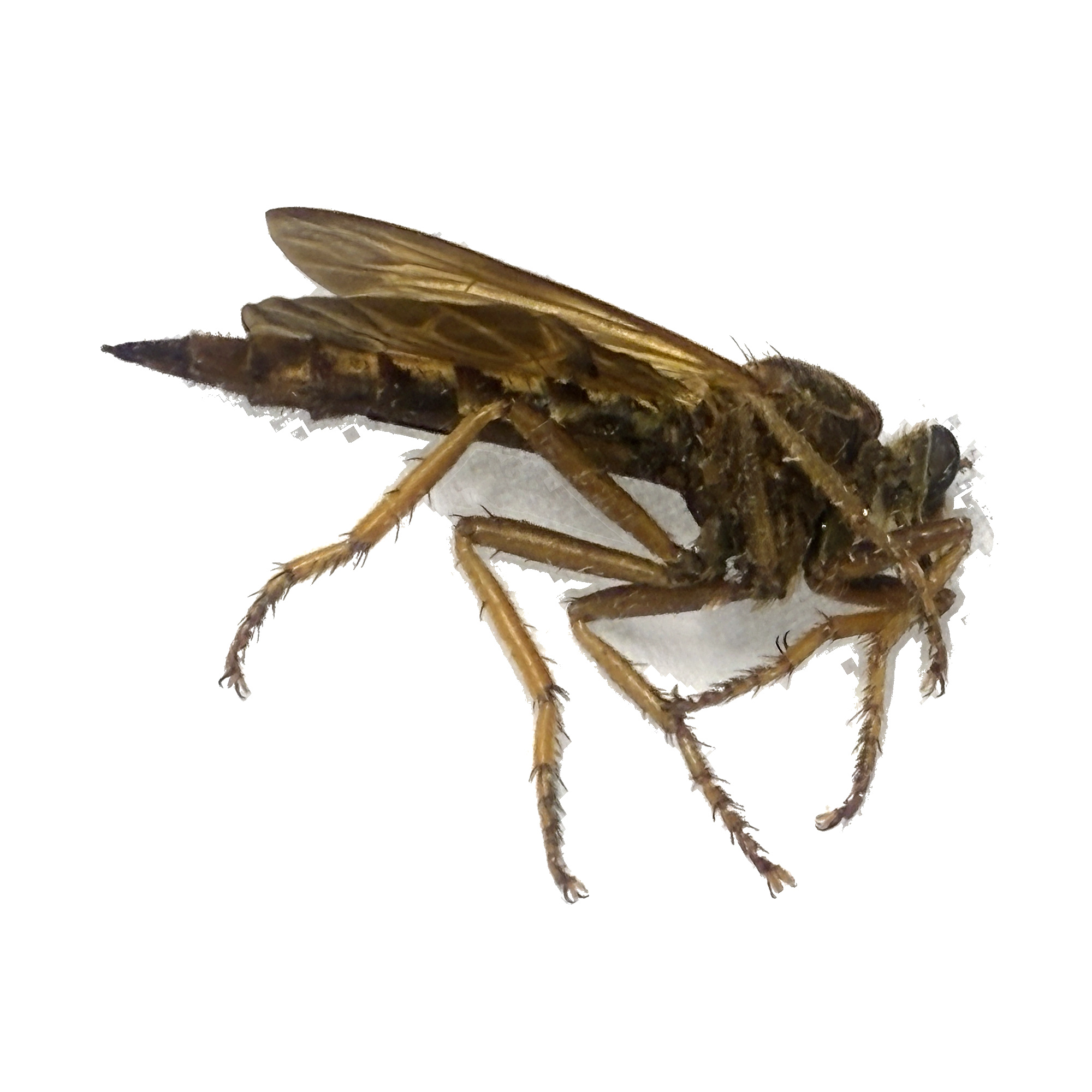
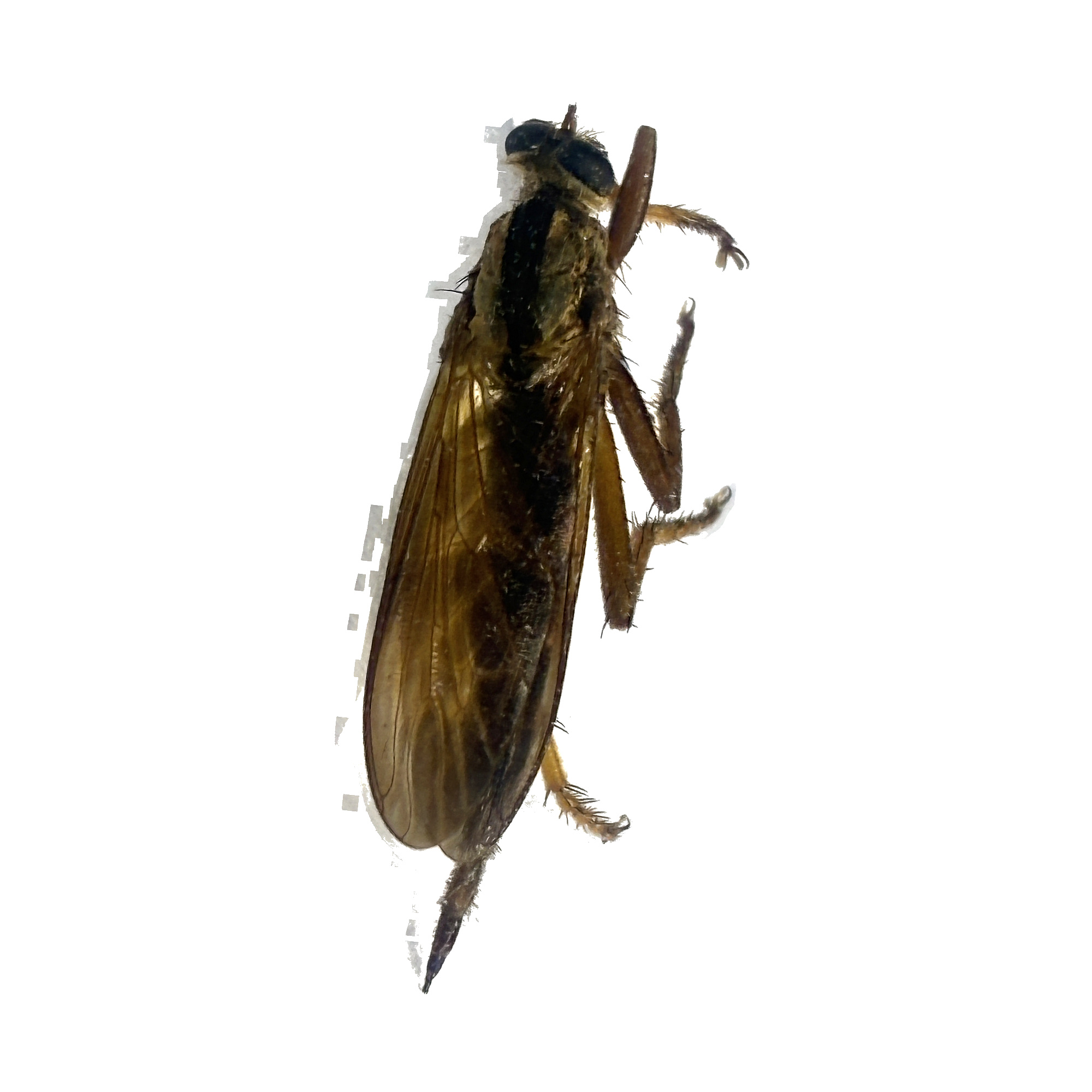
The Prairie Lion Fly, Promachus fitchii, is a large robber fly in the family Asilidae, about 25 to 35 mm long. It is a golden brown to yellowish brown fly. The face has a dense yellow mystax, or beard, and a stout piercing beak. The thorax is yellowish brown and pollinose, with short dark hairs in front and longer dark bristles behind. The legs are yellowish red to orange brown, with pale hairs and dark spines. The abdomen is brown above, with short yellow hairs and golden pollinose bands along the hind margins of the segments. The wings are uniformly pale reddish brown to amber, with visible veins. Males have a tuft of white hair at the tip of the abdomen. Females have a long, tapered ovipositor. Live flies often have reddish, green, or mixed red and green eyes.
This species lives in open, sunny grasslands, including tall-grass prairie, meadows, and similar fields. It is a midwestern species, recorded from Massachusetts and Florida west to South Dakota and Texas. It is not as common as some other Promachus species in the eastern United States. Some of our specimens were collected in Douglas County, Wisconsin.
Adults are perch-and-attack predators. They wait on a perch in open grassy places, then fly out to catch other insects in the air, including bees, flies, and other flying insects. The beak is used to pierce prey and feed on its fluids. They do not sting. They have a loud buzz in flight. Live robber flies can bite if handled, but they do not seek out people.
Like other true flies, prairie lion flies have complete metamorphosis: egg, larva, pupa, and adult. Females use the long ovipositor to lay eggs on vegetation. The larvae live in the soil and prey on other soil insects. There is typically one generation a year. Adults are usually on the wing from June through August.
These flies are beneficial as predators of other insects, including bees, flies, and other flying insects. They are not pests of crops or households. They can take honey bees when hunting near hives, but they do not attack people or damage plants. Live robber flies can bite if handled, because of the piercing beak, but they do not seek out people. The preserved specimens are used in teaching and collections, and they are a good example of a giant robber fly in the family Asilidae.
This preserved specimen educates on the Prairie Lion Fly, Promachus fitchii, and robber flies in the family Asilidae, suitable for displays or studies.
Check it out on BugGuide! https://bugguide.net/node/view/95585/bgimage
Only logged in customers who have purchased this product may leave a review.
Reviews
There are no reviews yet.