
$3.00
 <---
15 in stock
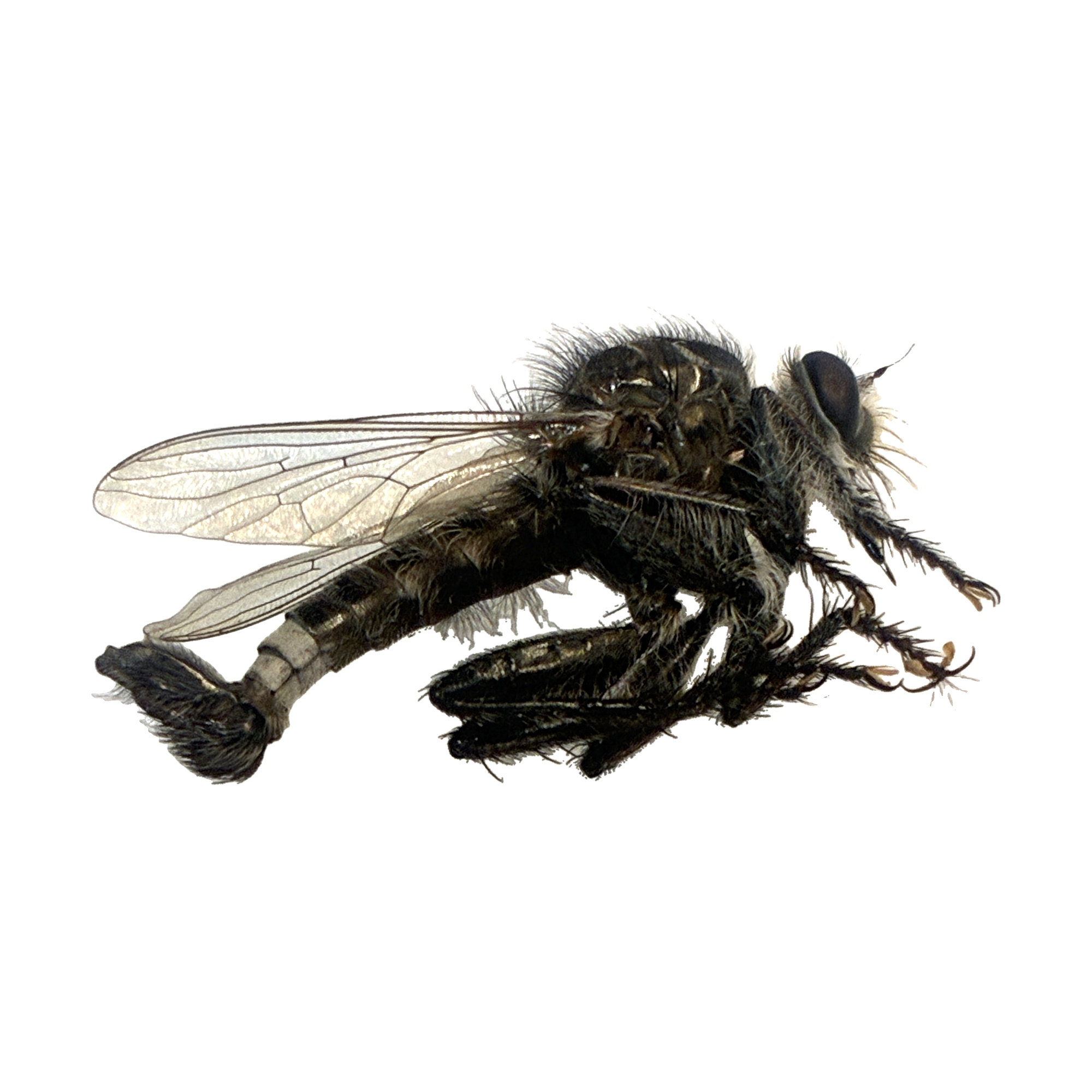
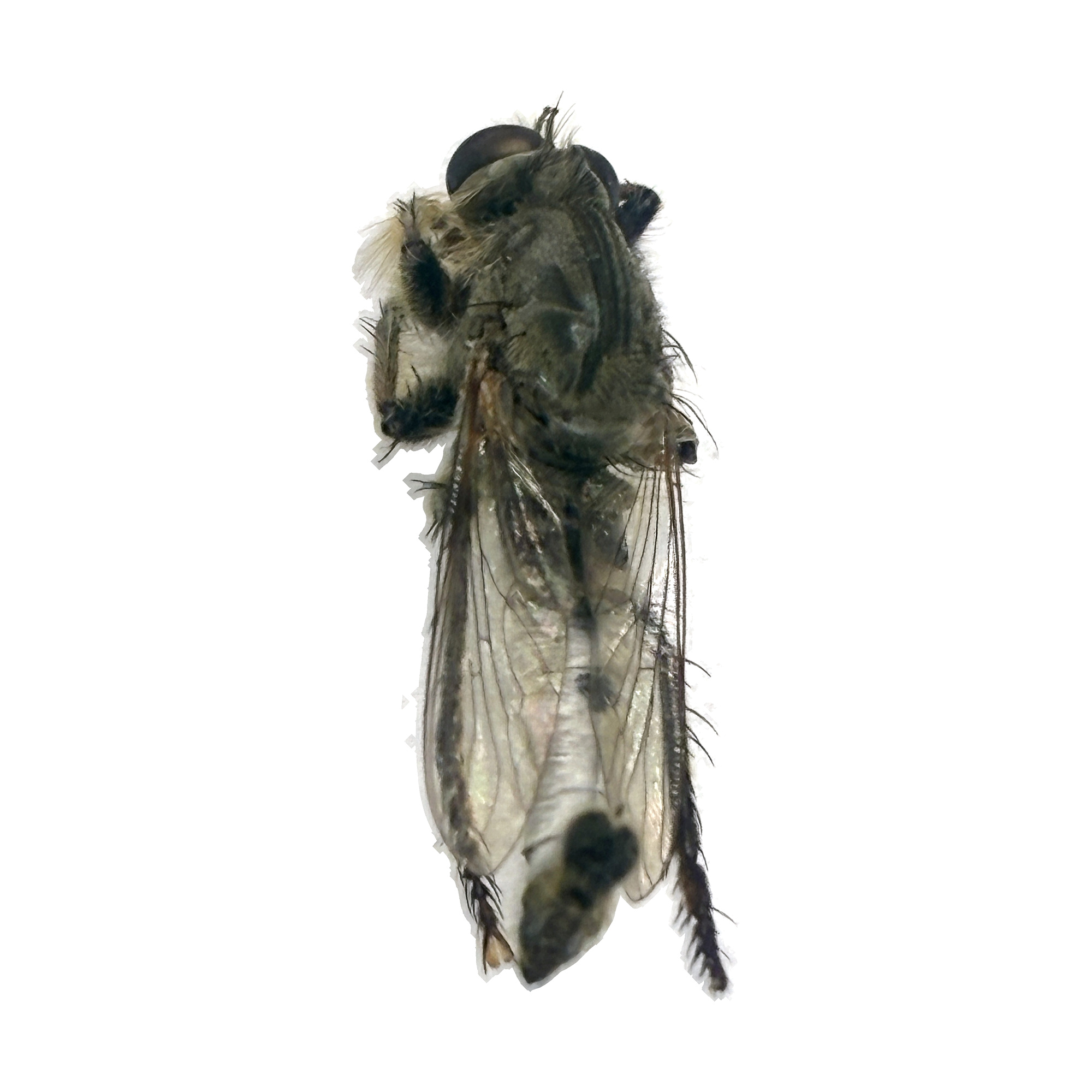
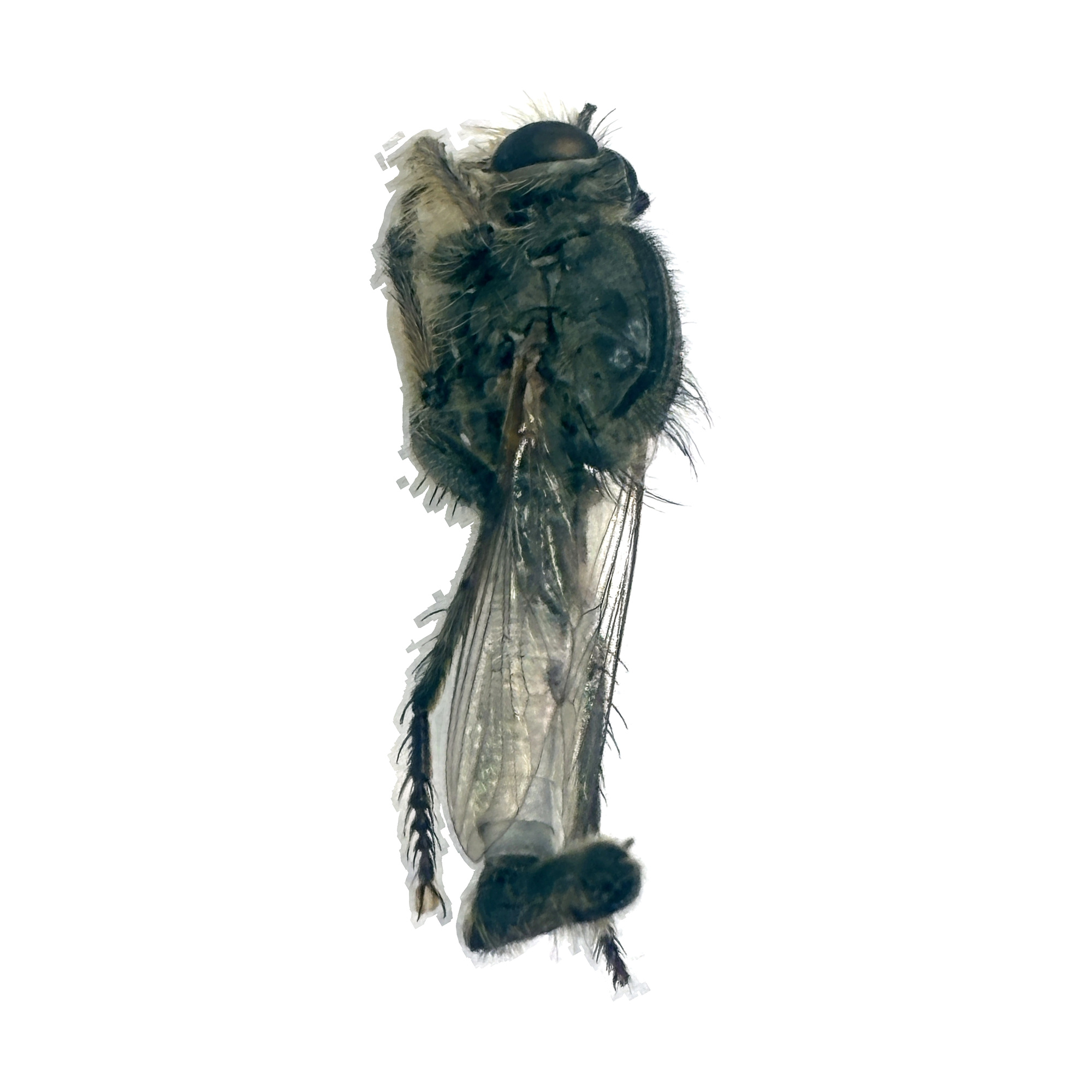
The Eastern Hammertail, Efferia aestuans, is a medium-sized robber fly in the family Asilidae, about 14 to 28 mm long, most often around 19 to 21 mm. The thorax is dark gray to black with contrasting gray pollen stripes and pale hair on the sides. The face has a mystax, or beard, of black or mixed black and pale hairs, and a stout piercing beak. The abdomen is slender. In males, segments 5 to 7 are silvery white, and the tip of the abdomen has a rounded, hammer-like genital bulb that gives the genus its common name. Females have a long, blade-like ovipositor, about 5 to 7 mm. The tibiae are dull reddish brown with black tips, and the tarsi are usually black. The wings are clear or lightly tinted, with visible veins.
This species lives in grasslands, sandy or dry open ground, woodland edges, and areas around human buildings. Adults often perch on tree trunks, larger stems, fences, and posts. It is native to eastern and central North America, from New Hampshire and Ontario south to Florida and west to North Dakota, Wyoming, Utah, and New Mexico. It is one of the most common hammertails in the Northeast. Some of our specimens were collected in Fall River County, South Dakota.
Adults are perch-and-attack predators. They wait on a perch, then fly out to catch other insects in the air, including flies, bees, butterflies, moths, and grasshoppers, sometimes taking prey as large as themselves. The beak is used to pierce prey and feed on its fluids. They do not sting. This species is unusually willing to land on moving objects, including people, and it is often described as the robber fly most likely to land on a person. Live robber flies can bite if handled, but they do not seek out people.
Like other true flies, this robber fly has complete metamorphosis: egg, larva, pupa, and adult. Females use the long ovipositor to lay eggs. The larvae live in the soil, including sandy ground, and prey on other soil insects. There is typically one generation a year. Adults are usually on the wing from May through September, and the season can be longer in the southern part of the range.
This species is beneficial. The adults prey on other insects, including some pests of fields and gardens, and the larvae feed on insects in the soil. It is not a pest of crops or households. Live robber flies can bite if handled, because of the piercing beak, but they do not seek out people. The preserved specimens are used in teaching and collections, and they are a good example of a hammertail in the family Asilidae.
This preserved specimen educates on robber flies in the genus Efferia and the family Asilidae, suitable for displays or studies.
Check it out on BugGuide! https://bugguide.net/node/view/20274
Only logged in customers who have purchased this product may leave a review.
Reviews
There are no reviews yet.