
$3.00
 <---
1 in stock
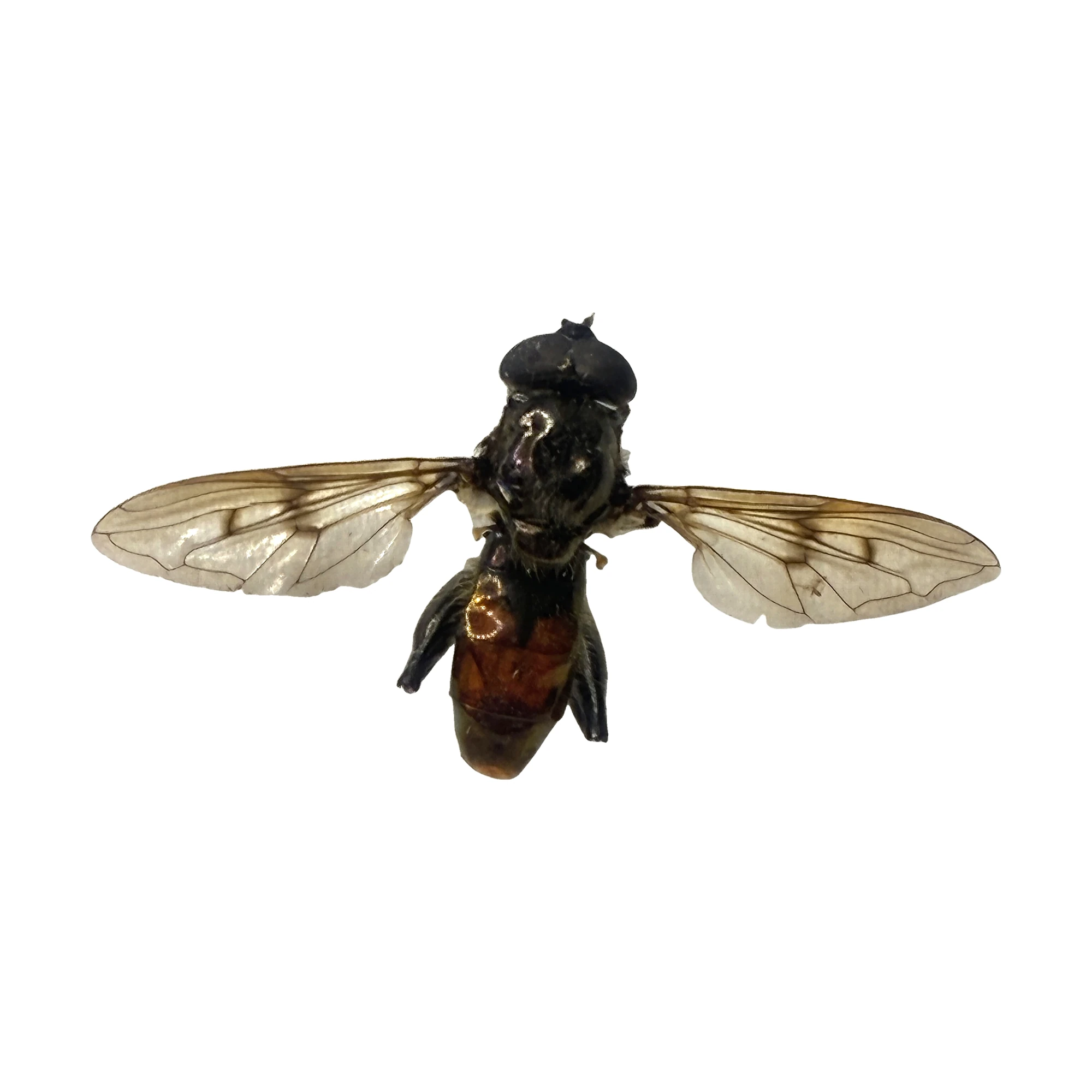
The Hover Fly in this listing belongs to the genus Ferdinandea in the family Syrphidae, the hover flies, also called flower flies. Adults in this genus are typically about 9 to 13 mm long. They are medium-sized hover flies with a shiny, metallic bronze or golden-green thorax that often has gray dusted stripes, and strong black bristles on the thorax and scutellum. The abdomen is often coppery, reddish amber, or metallic, sometimes with darker rear edges on the first few segments. The wings are mostly clear, with brown clouds or spots on the crossveins. The face is often yellowish, with a small bump. The legs are mostly dark. The identification is at the genus level. There are only a few species in North America, and they can be hard to separate, so this specimen is listed as Ferdinandea sp.
The genus is Holarctic. In North America there are three named species. The eastern species is found from the Northeast and Midwest south to Georgia, and the others occur in the west. Adults are usually found in deciduous woods, woodland edges, parks, and other places with mature or wounded trees, often near sap runs. Some of our specimens were collected in Douglas County, Wisconsin.
Adults visit flowers and feed on nectar and pollen. They are also found at sap runs and may rest on tree trunks or on rotting wood near wounded trees. They do not bite or sting. They hover in the manner typical of hover flies.
Like other true flies, these hover flies have complete metamorphosis: egg, larva, pupa, and adult. The larvae live in sap at tree wounds, where they feed on the sap and the microbes in it. They have been recorded from sap runs on trees such as maple, buckeye, and poplar (Acer, Aesculus, Populus).
These hover flies are not pests and are harmless to people. They do not bite or sting. The adults visit flowers and may help with pollination. The larvae live in sap runs on trees and are not considered pests. The preserved specimens are used in teaching and collections, and they are a good example of a sap-feeding hover fly in the genus Ferdinandea.
This preserved specimen educates on hover flies and the genus Ferdinandea, suitable for displays or studies.
Check it out on BugGuide! https://bugguide.net/node/view/90250