
$3.00
 <---
16 in stock
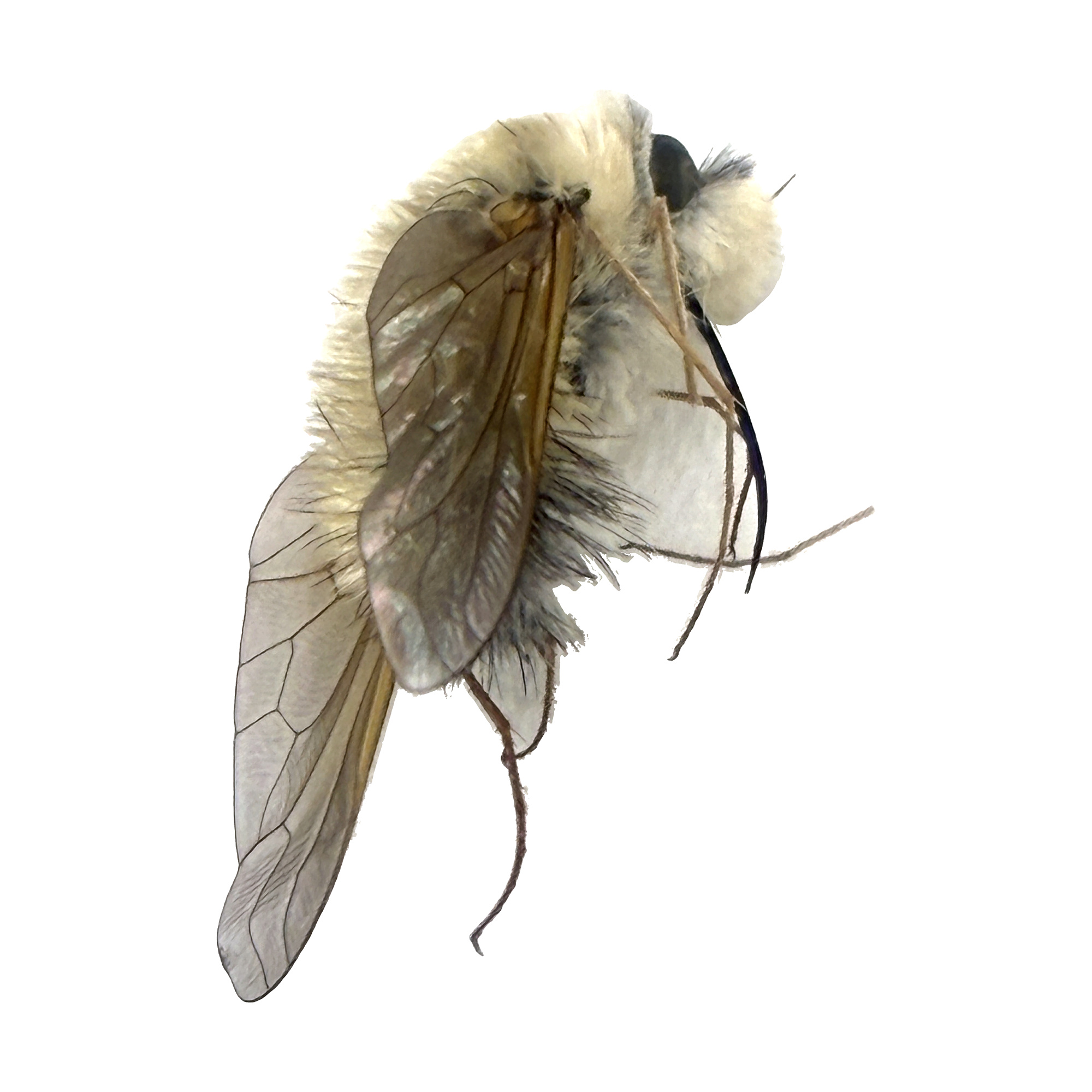
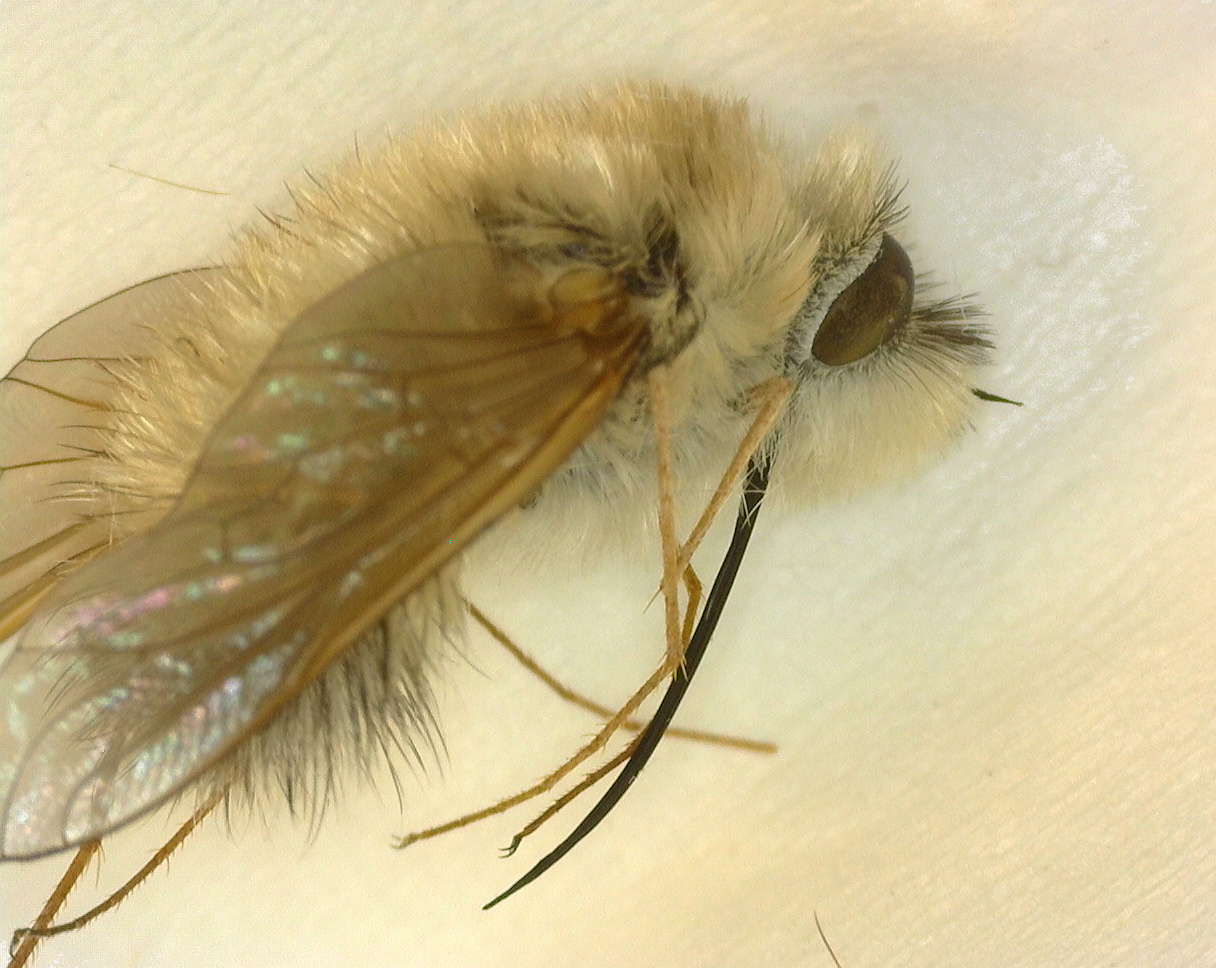
The White Bee Fly in this listing is Systoechus candidulus, a bee fly in the family Bombyliidae. Adults are about 7 to 9 mm long, not counting the long, slender, dark proboscis at the front of the head. The body is densely covered with long white hairs, so the fly looks stout and pale, unlike the yellow pile of the closely related Grasshopper Bee Fly (Systoechus vulgaris). The face has entirely black pile. In S. vulgaris the face has a mix of yellow and black pile. Those two face and body characters are the main way to tell the two species apart. A third possibility is Anastoechus barbatus, another pale bee fly whose larvae also prey on grasshopper egg pods. Anastoechus has a rounded face in side view with dense pile, almost like a beard. Systoechus has a more triangular face in side view, with sparser pile. The wings are clear and may have a yellowish tint, with yellow or brown veins. The legs are long, slender, and mostly rusty yellow.
This species is found across much of North America. It has been recorded from Oregon and Arizona in the west to Michigan and Texas in the east, and it also occurs in southern Canada, though it is not often collected there. Adults are seen in open, sunny places with flowers, including grasslands, meadows, and prairies. Some of our specimens were collected near Hot Springs, SD.
Adults visit flowers for nectar and pollen. They often hover over blossoms or bare ground, and they also settle on flower heads. They do not sting. The long structure at the front of the head is a proboscis used for feeding, not a stinger. Females lay eggs in the soil at sites where grasshoppers lay their egg pods.
Like other true flies, this bee fly has complete metamorphosis: egg, larva, pupa, and adult. The larvae move through the soil and feed on grasshopper egg pods. Adults are usually on the wing from late June through mid August, and there is typically one generation per year.
This species is beneficial. The larvae prey on grasshopper egg pods, which can reduce the numbers of grasshoppers that hatch, including species that damage crops. The adults visit flowers. They are not pests, and they do not sting or bite people. The preserved specimens are used in teaching and collections, and they are a good example of a pale bee fly in the family Bombyliidae.
This preserved specimen educates on pale bee flies and the family Bombyliidae, suitable for displays or studies.
Check it out on BugGuide! https://bugguide.net/node/view/191999
Only logged in customers who have purchased this product may leave a review.
Reviews
There are no reviews yet.