
$3.00
 <–
1 in stock
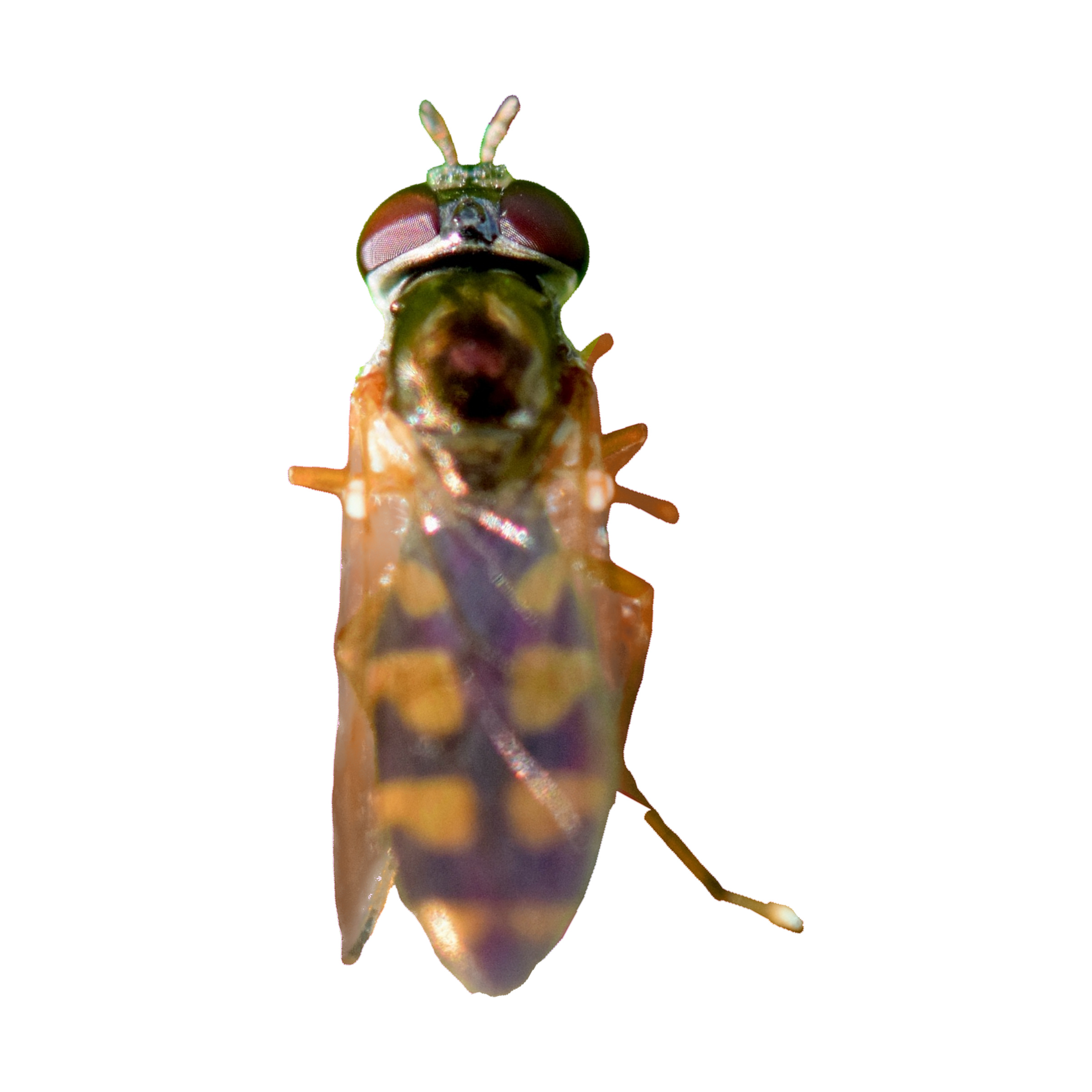
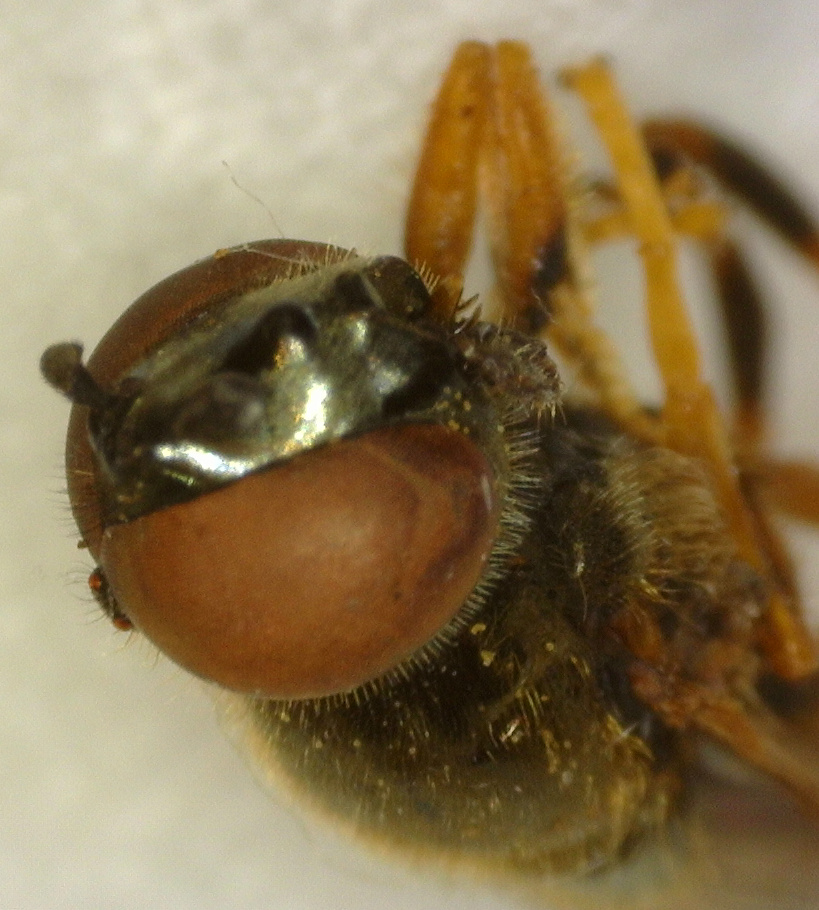
The Hover Fly in this listing belongs to the genus Melanostoma in the family Syrphidae, the hover flies, also called flower flies. Adults in this genus are typically about 5 to 10 mm long. They are small, slender flies in the subfamily Syrphinae. The face is shiny black, with no yellow. The legs are orange. The abdomen is slender and parallel-sided, with orange and black marks that may be faded on dried specimens. The wings are clear, sometimes with a light amber tint, and the vein near the wing tip, vein R4+5, is straight, not deeply looped. Similar small slender hover flies include Platycheirus, whose males have widened front feet, and Sphaerophoria, which often has a yellow face. The specimen in stock is a small, slender hover fly with a shiny black face that has no yellow, orange legs, and a slender orange-and-black abdomen.
The genus is Holarctic. In North America it is widespread, from the northern and eastern states and Canada west to Alaska and the Pacific coast. Adults are usually found in herbaceous vegetation, often in grass-dominated habitats such as grasslands, pastures, woodland clearings, roadsides, farmland, parks, and gardens. They are often collected by sweeping vegetation. Some of our specimens were collected in Missouri.
Adults visit flowers and feed on nectar and pollen. They do not bite or sting. They hover in the manner typical of hover flies. The larvae live in leaf litter and on the ground layer, where they prey on aphids and other small soft-bodied insects.
Like other true flies, these hover flies have complete metamorphosis: egg, larva, pupa, and adult. The larvae are predators of aphids in leaf litter and on the ground layer. Adults are usually seen from late April to early October.
These hover flies are not pests and are harmless to people. They do not bite or sting. The adults visit flowers and may help with pollination. The larvae prey on aphids, including species that damage crops, so they are considered beneficial. The preserved specimens are used in teaching and collections, and they are a good example of a small, slender syrphine hover fly.
Melanostoma Schiner, 1860 belongs to the family Syrphidae (hover flies or flower flies), the subfamily Syrphinae, the tribe Bacchini, and the order Diptera (true flies). There is one named species in North America, Melanostoma mellinum, which is likely an unresolved species complex, and about 63 species worldwide. Because the North American material is not fully resolved, and a sure species identification often requires several close views of the face, the abdomen marks, and sometimes the legs, this specimen is listed at the genus level as Melanostoma sp.
This preserved specimen educates on hover flies and the genus Melanostoma, suitable for displays or studies.
Photo: Bernie Paquette, CC BY 4.0, via iNaturalist. Background removed, cropped, rotated, and resized.
Check it out on BugGuide! https://bugguide.net/node/view/10415/bgimage