
$3.00
 <–
1 in stock
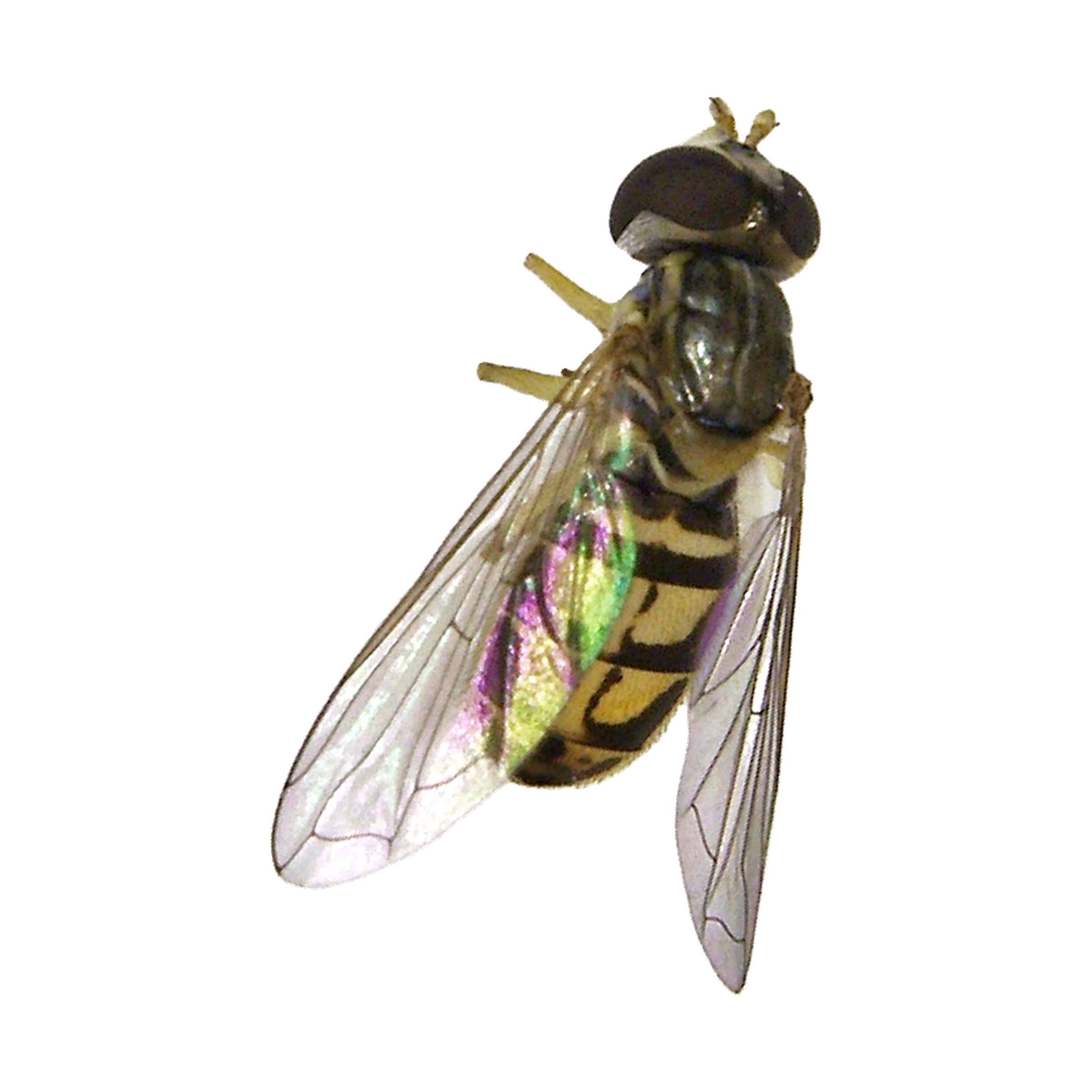
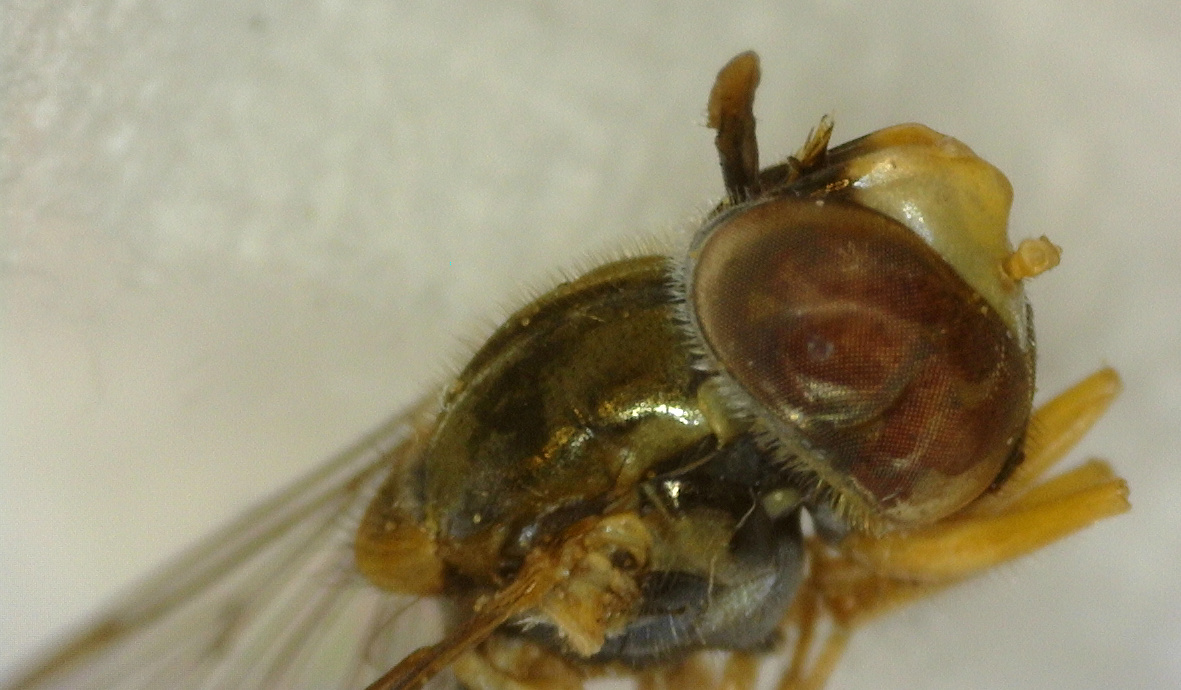
The Calligrapher Fly belongs to the genus Toxomerus in the family Syrphidae, the hover flies, also called flower flies. Adults in this genus are typically about 5 to 13 mm long, so they are among the smaller hover flies. They usually have a shiny bronze or dark thorax with yellow side edges, a pale face, and an abdomen with a yellow or orange pattern and dark marks. A useful genus mark is a notch on the rear margin of the eye. The specimen in stock is about 5 mm long, measured from the head to the tip of the abdomen. It is a male. It has a shiny bronze thorax with yellow side edges, a pale yellow face, and an orange abdomen with dark spots. A sure species identification often requires several close views of the face, the eyes, and the abdomen pattern, so this specimen is listed at the genus level as Toxomerus sp.
The genus occurs in the New World and in tropical Africa. In North America it is widespread, and some species are common. Adults are usually found at flowers, in fields, meadows, and other open habitats. The larvae of most species live on plants and feed on aphids. Some of our specimens were collected in Missouri.
Adults visit flowers and feed on nectar and pollen. They do not bite or sting. They can hold a steady hover in midair, which is how hover flies get their name. Calligrapher flies are often seen in gardens and fields.
Like other true flies, calligrapher flies have complete metamorphosis: egg, larva, pupa, and adult. Eggs are laid singly on plants near aphids. The larvae of most species prey on aphids. Pupation is often in the soil, and adults emerge in summer. In some species the colors of the adult can be lighter or darker depending on the temperature during pupation.
Calligrapher flies are not pests and are harmless to people. They do not bite or sting. The adults visit flowers and may help with pollination. The larvae of most species eat aphids, so they are useful in gardens and crops. The preserved specimens are used in teaching and collections, and they are a good example of the smaller hover flies.
Toxomerus Macquart, 1855 belongs to the family Syrphidae (hover flies or flower flies), the subfamily Syrphinae, the tribe Syrphini, and the order Diptera (true flies). There are about 14 species in North America and hundreds of species in all, mostly in the New World tropics. The genus can be recognized by its small size, the abdominal pattern, and a notch on the rear margin of the eye. A sure species identification often requires several close views of the face, the eyes, and the abdomen pattern, so this specimen is listed at the genus level as Toxomerus sp.
This preserved specimen educates on calligrapher flies and the genus Toxomerus, suitable for displays or studies.
Photo: B. Schoenmakers, CC BY 3.0, via Wikimedia Commons. Background replaced with white, cropped, and resized.
Check it out on BugGuide! https://bugguide.net/node/view/3277/bgimage