
$3.00
 <–
16 in stock
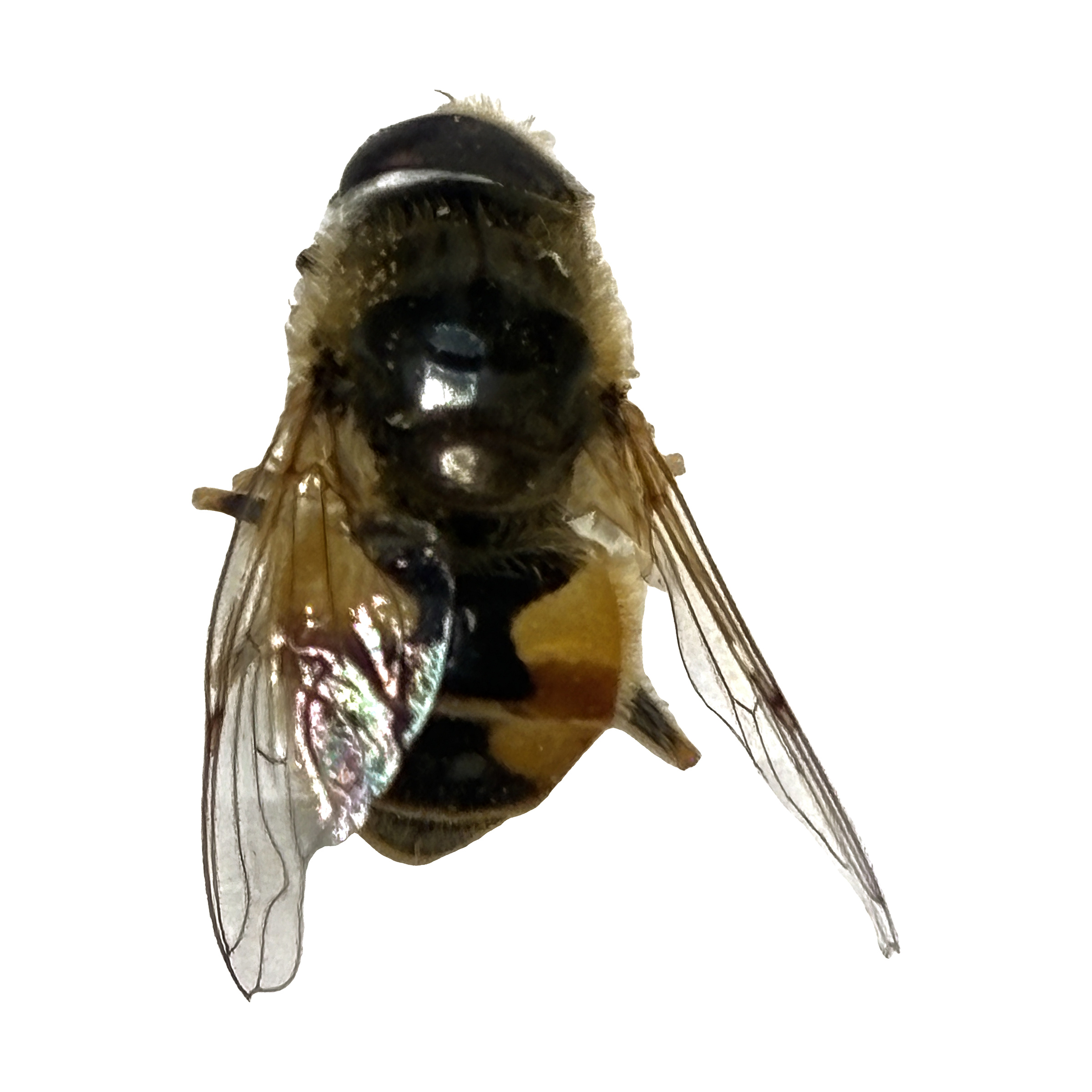
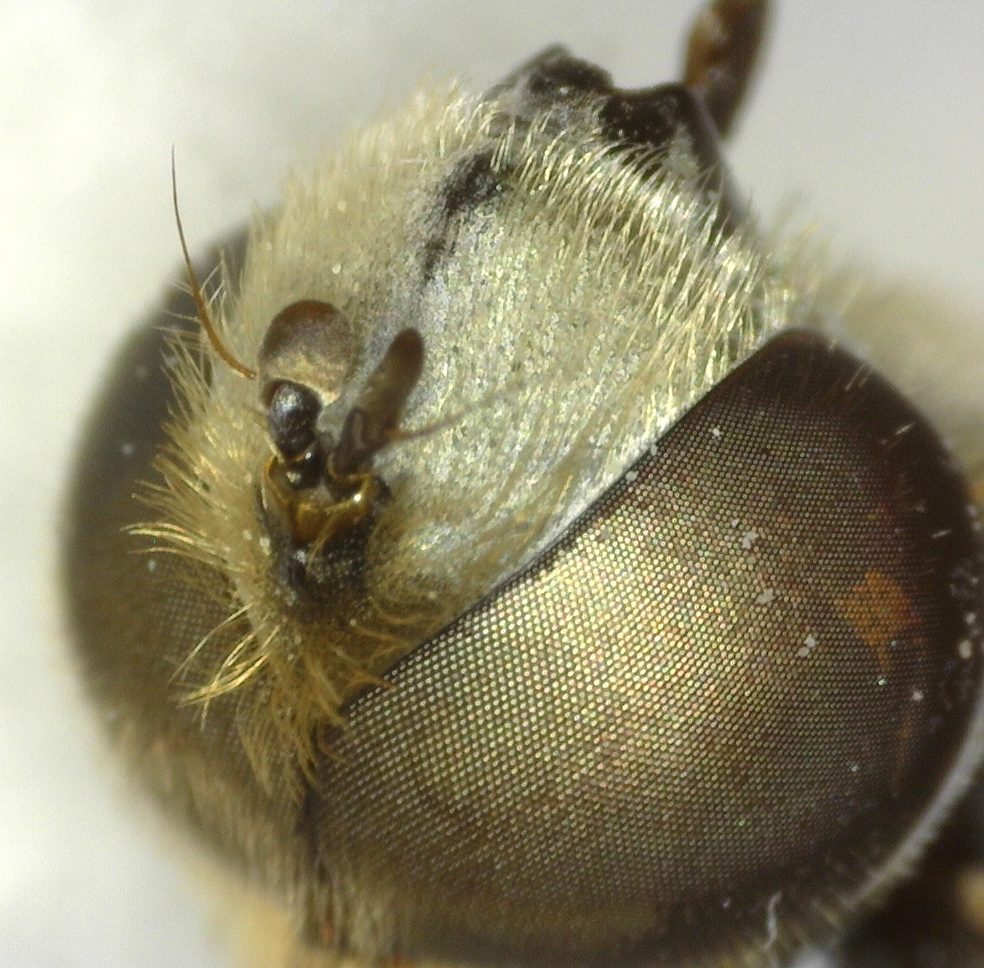
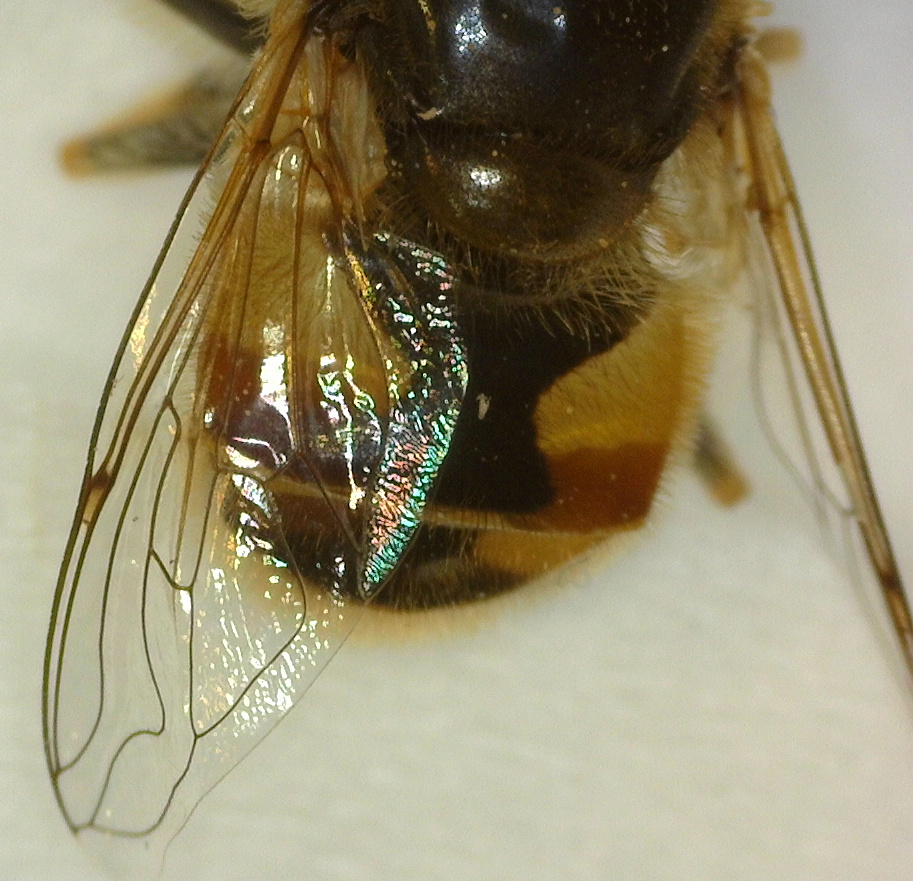
The European Drone Fly is Eristalis arbustorum, a hover fly in the family Syrphidae, also called flower flies. Adults are typically about 10 to 11 mm long, which is small for a drone fly. It is a bee mimic, with a hairy thorax and a black abdomen that has orange side patches. In many specimens those patches leave a dark, hourglass-shaped mark down the middle of the abdomen. The face is pale and dusted, including the stripe down the middle. Many other drone flies, such as the larger Common Drone Fly (Eristalis tenax), have a bare, shiny black stripe there instead. A useful genus mark is the vein near the wing tip, vein R4+5, which loops deeply into the cell below it. The specimens in stock are about 10 to 11 mm long, measured from the head to the tip of the abdomen. They have a hairy thorax, orange side patches on a black abdomen, a pale dusted face, and the deep loop in vein R4+5.
This species is native to Europe and the rest of the Palaearctic region, and it was introduced to North America, where it is now widespread in much of the United States and Canada. Adults are usually found at flowers, from late April to mid October in much of the range. The larvae live in shallow, nutrient-rich standing water, and they are also found in cow dung, silage pits, and compost heaps. Some of our specimens were collected in South Dakota.
Adults visit flowers and feed on nectar and pollen. They do not bite or sting. They are Batesian mimics of honeybee drones: the hair, the body marks, and their hovering flight all add to the resemblance. They can hold a steady hover in midair, which is how hover flies get their name.
Like other true flies, the European Drone Fly has complete metamorphosis: egg, larva, pupa, and adult. The larvae are aquatic rat-tailed maggots, with a long breathing tube at the rear. They live in shallow, organically rich standing water, and also in cow dung, silage, and compost, where they filter microorganisms from the water or wet material. Adults are usually seen from late April to mid October.
The European Drone Fly is not a pest and is harmless to people. They do not bite or sting. The adults visit flowers and may help with pollination. The larvae live in organically rich water and wet waste and feed on microorganisms. The preserved specimens are used in teaching and collections, and they are a good example of bee mimicry in hover flies.
Eristalis arbustorum (Linnaeus, 1758) belongs to the family Syrphidae (hover flies or flower flies), the subfamily Eristalinae, the tribe Eristalini, the subtribe Eristalina, and the order Diptera (true flies). The genus Eristalis, the drone flies, was named by Latreille in 1804. There are about 20 species in North America and about 100 species in all. This species can be confused with the larger Common Drone Fly (Eristalis tenax) and with other Eristalis. The European Drone Fly is smaller, about 10 to 11 mm, and has a pale, dusted face, including the median stripe, rather than a bare, shiny black stripe down the middle of the face.
This preserved specimen educates on the European Drone Fly and bee-mimic hover flies, suitable for displays or studies.
Check it out on BugGuide! https://bugguide.net/node/view/9138/bgimage