
$3.00
 <–
1 in stock
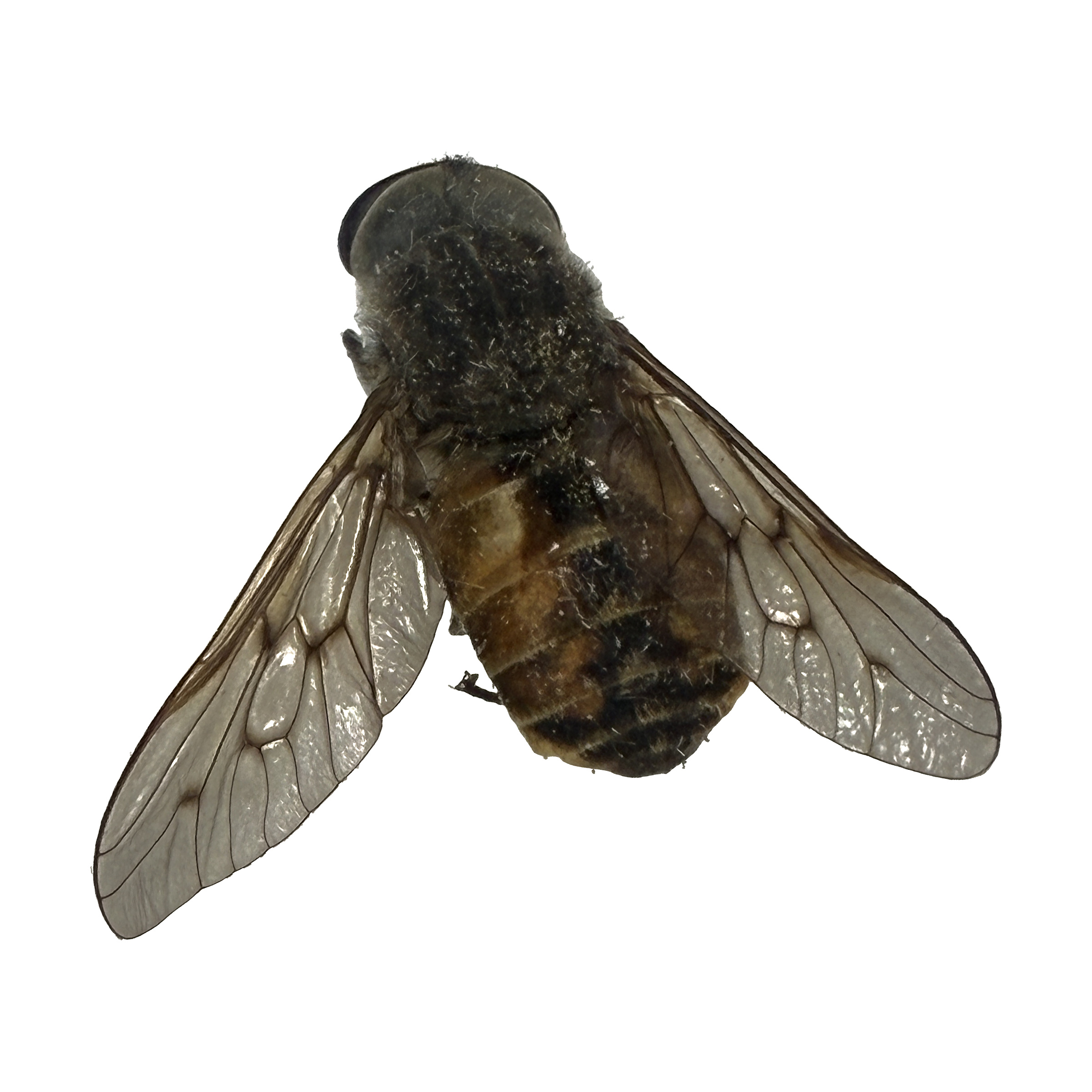
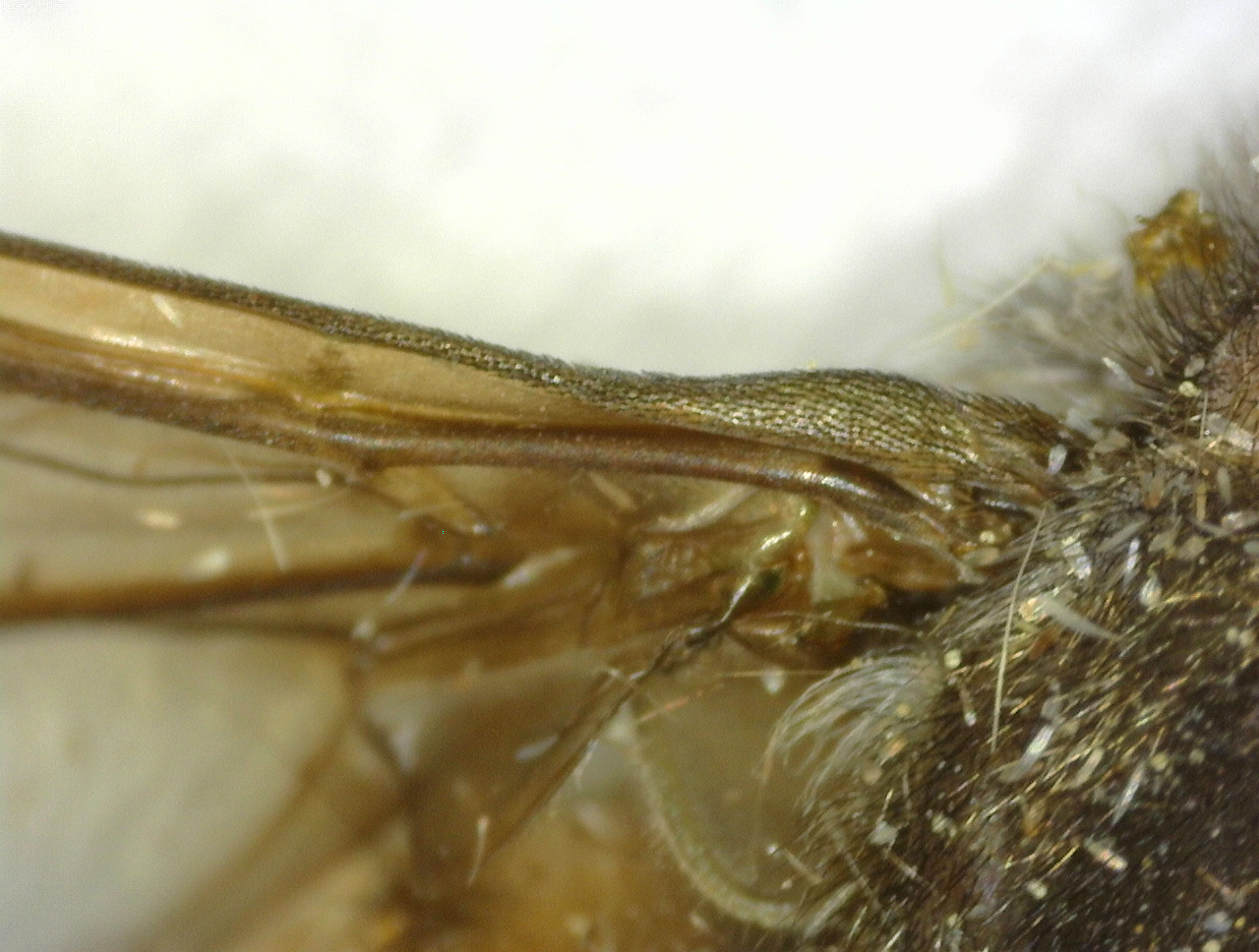
The Horse Fly belongs to the genus Hybomitra in the family Tabanidae, the horse and deer flies. Adults in this genus typically reach about 10 to 20 mm in length. They have a stout, hairy body. The thorax is densely hairy and usually gray or brown. The abdomen is often banded with orange or brown and a darker median area. The wings are clear to slightly smoky, with visible veins. The eyes are large. In males the eyes meet at the top of the head. This specimen is about 10 mm long, measured from the head to the tip of the abdomen. It has a hairy gray-brown thorax, an abdomen with orange-brown bands and a dark midline, slightly smoky wings, and eyes that meet at the top of the head. The genus is separated from Tabanus by a setulose, or bristly, basicosta at the base of the front edge of the wing.
These flies live in moist habitats such as wetlands, bogs, marshes, woods, and the edges of streams or ponds, where the larvae can develop in wet soil or sod. The genus occurs across the northern hemisphere and in parts of Africa. In North America it is most common in the north, and Tabanus is more common farther south. Adults are most often seen in late spring and summer.
Females seek blood meals from mammals, including horses, deer, and people. The bite is painful: they slice the skin and lap the pooled blood. Males feed on nectar and pollen and do not bite. Both sexes may visit flowers. The flies are strong, fast fliers and are often drawn to movement and carbon dioxide. The larvae live in wet soil or marshes and are predators of small invertebrates.
Females lay egg masses on vegetation overhanging water or wet ground. The larvae drop into moist soil or sod, where they feed through several instars. They pupate in drier soil. Adults emerge in late spring or summer to mate and feed. In cooler regions the larval stage may last more than one year, with one generation of adults each year.
Horse flies are pests. The painful bites can make outdoor work and recreation difficult, and they also annoy livestock. They rarely transmit diseases such as tularemia. They do not sting. The preserved specimens are used in teaching and collections.
Hybomitra Enderlein, 1922 belongs to the family Tabanidae (horse and deer flies), the subfamily Tabaninae (horse flies), the tribe Tabanini, and the order Diptera (true flies). There are about 60 species in North America and more than 250 species worldwide. Hybomitra is similar to Tabanus and is not always easy to separate from it. The usual field mark is a setulose basicosta, the small plate at the base of the front edge of the wing, which is bristly in Hybomitra and bare in Tabanus. Head characters are also used. A sure species identification often requires several close views, so this specimen is listed at the genus level as Hybomitra sp.
This preserved specimen educates on horse flies and the genus Hybomitra, suitable for displays or studies.
Check it out on BugGuide! https://bugguide.net/node/view/11494/bgimage