
$3.00
 <–
200 in stock
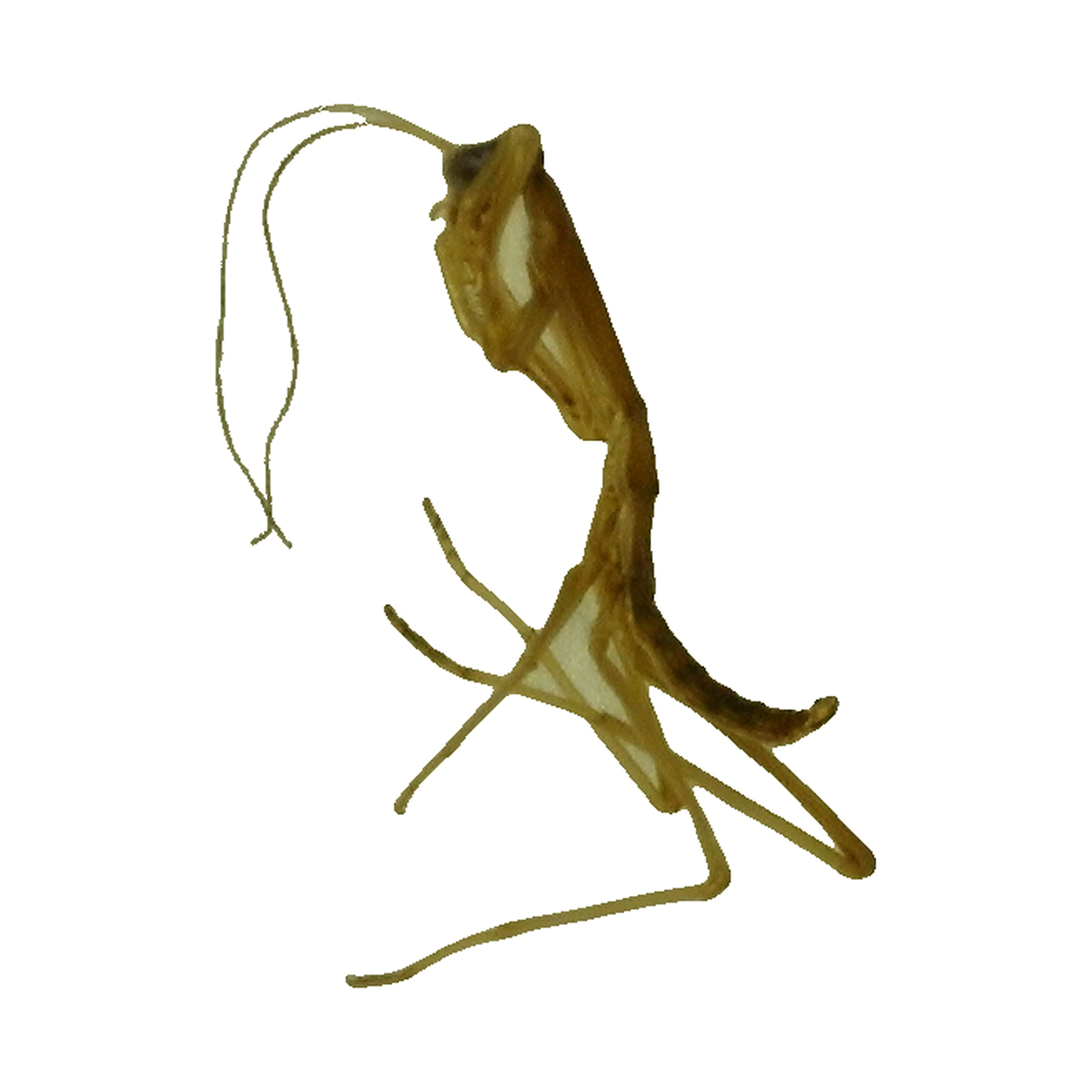
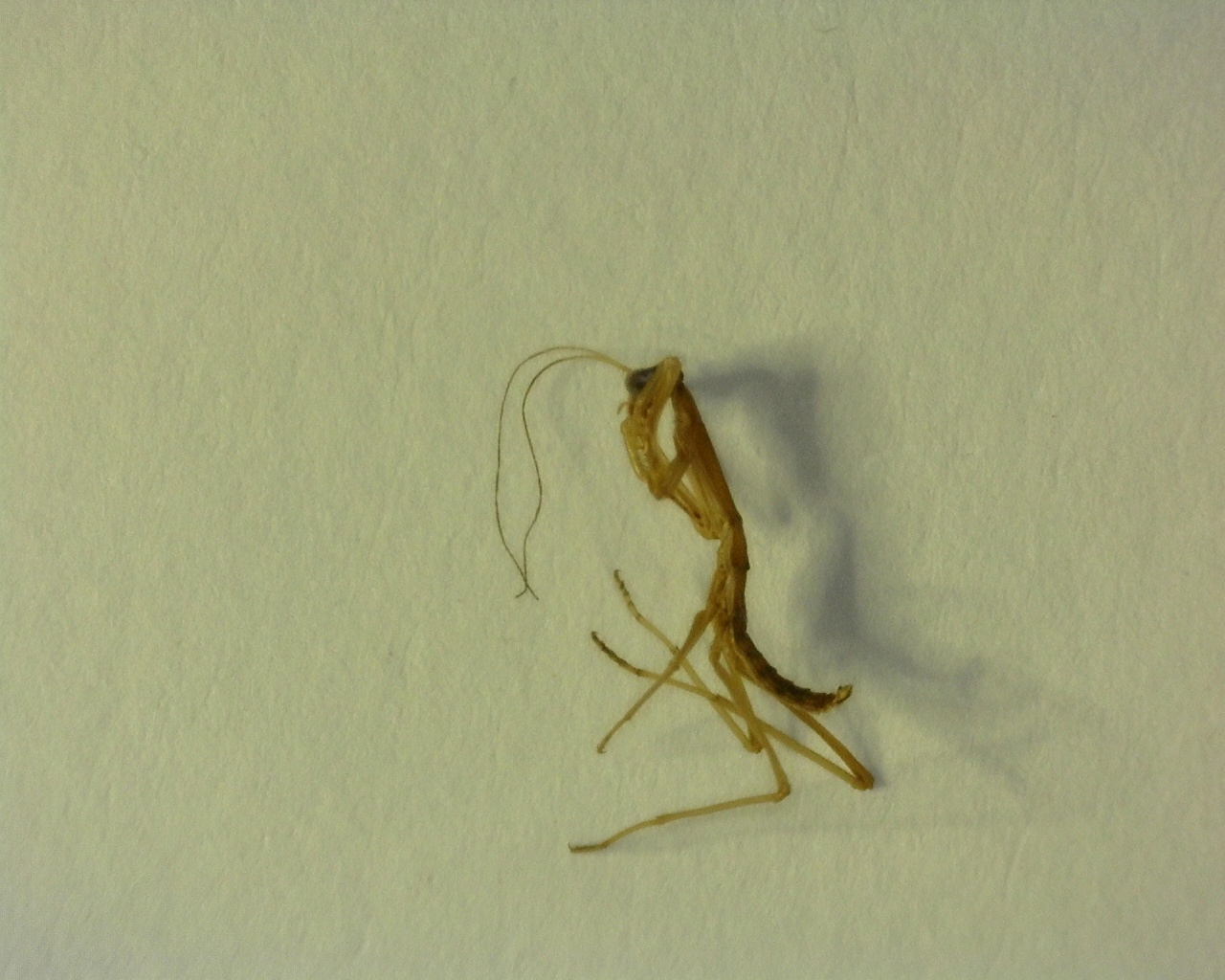
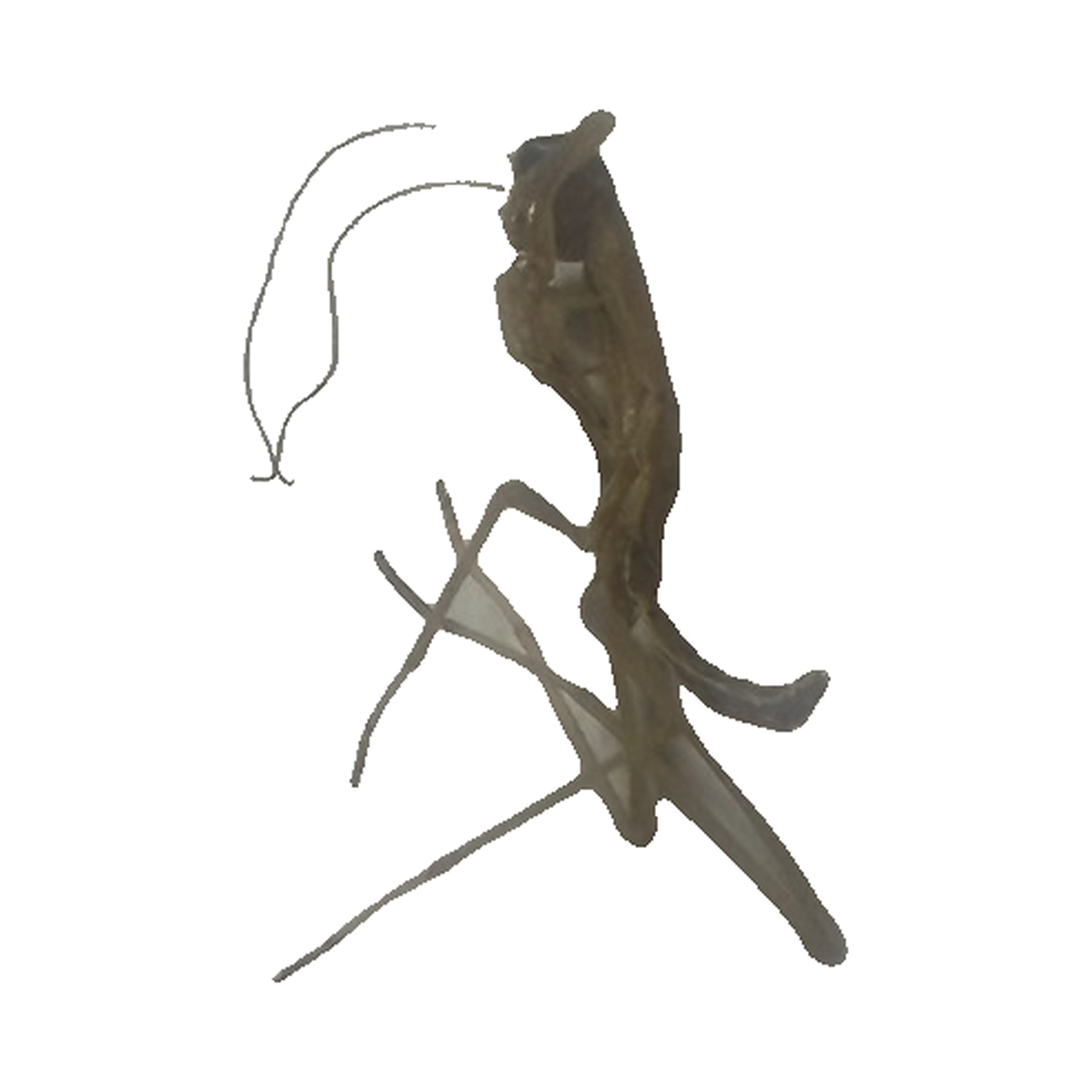
The Chinese Mantis, Tenodera sinensis, is the largest mantis in North America. Adults may reach about 11 cm. These specimens are first-instar nymphs, about 6 to 7 mm long at hatching, not counting the long, threadlike antennae. They look like tiny, wingless versions of the adult: a slender tan to straw-brown body, a long neck-like prothorax, folded raptorial forelegs, and long walking legs. The compound eyes are prominent on the triangular head. Dried nymphs may fade toward pale brown or stay a warmer tan. First-instar nymphs have no wings, only the body form of a young mantis.
This species was introduced from China in 1896 and is now established across much of the eastern and central United States, with scattered records farther west. It lives in fields, gardens, meadows, roadsides, and the edges of woods, where it waits on plants for prey. Our specimens were hatched from an ootheca collected on a homestead in Phelps County, Missouri.
Like other mantids, Chinese Mantises are ambush predators. They hold the spiny forelegs up in the familiar “praying” pose and strike quickly at passing insects. They eat many kinds of insects, including both pests and beneficial species, and large adults are sometimes able to take small vertebrates. Nymphs of this size feed on very small prey, such as aphids and other tiny insects. They rely on camouflage and on remaining still for long periods.
The female lays a foam egg case, the ootheca, on a stem or other plant in fall. The ootheca hardens and the eggs pass the winter inside it. In spring, often around March in a warm indoor hatching or later outdoors, first-instar nymphs emerge, sometimes a hundred or more from one case, and soon scatter. They molt six or seven times before becoming winged adults in late summer or fall. These specimens are first-instar nymphs from an ootheca.
Chinese Mantises do not sting. A larger one can pinch with the forelegs or jaws if handled roughly, but these first-instar nymphs are very small. The species is introduced and can compete with native mantids. These preserved specimens are useful for teaching mantis identification, incomplete metamorphosis, and the first instar that hatches from an ootheca.
Check it out on BugGuide! https://bugguide.net/node/view/12409/bgimage