
$3.00
 <–
1 in stock
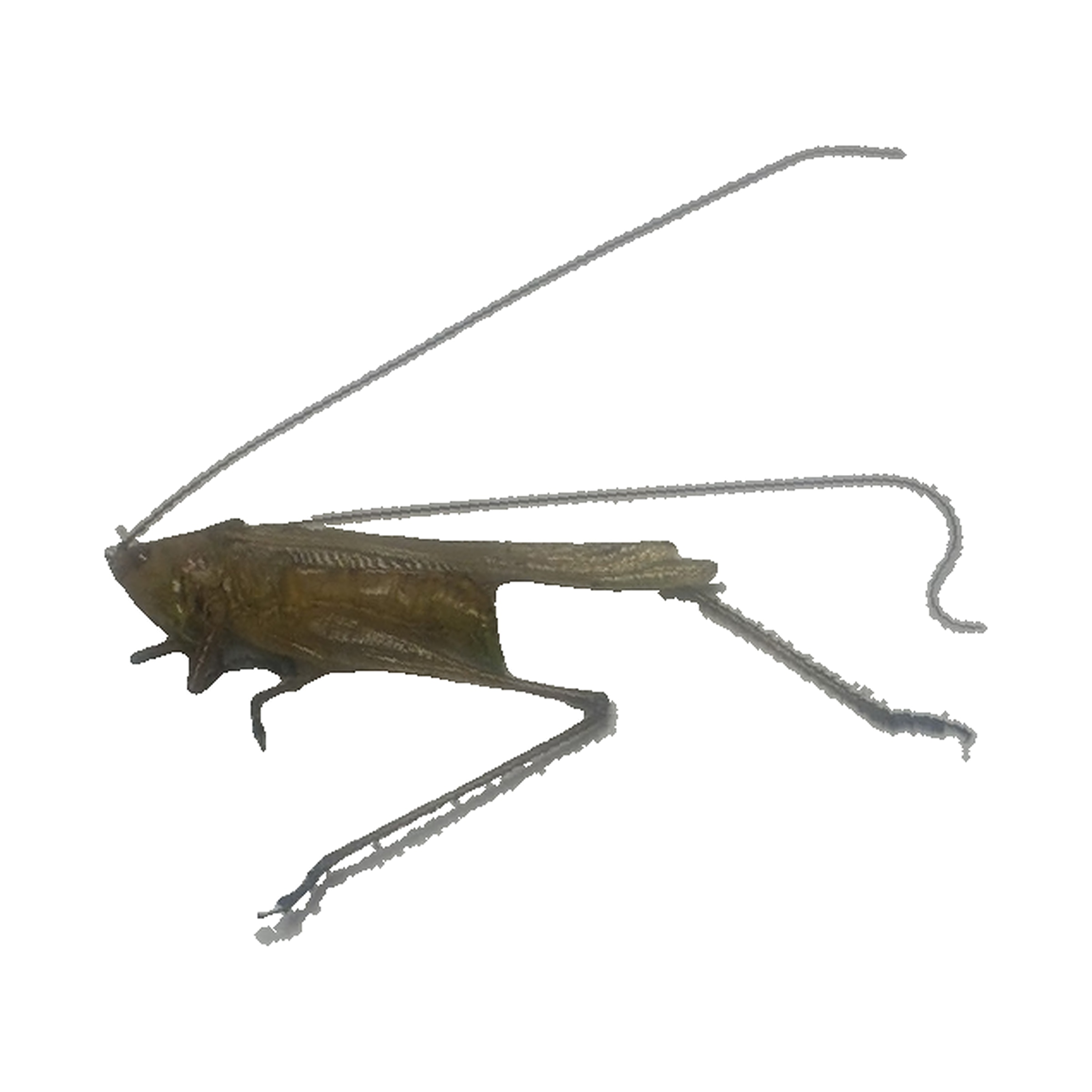
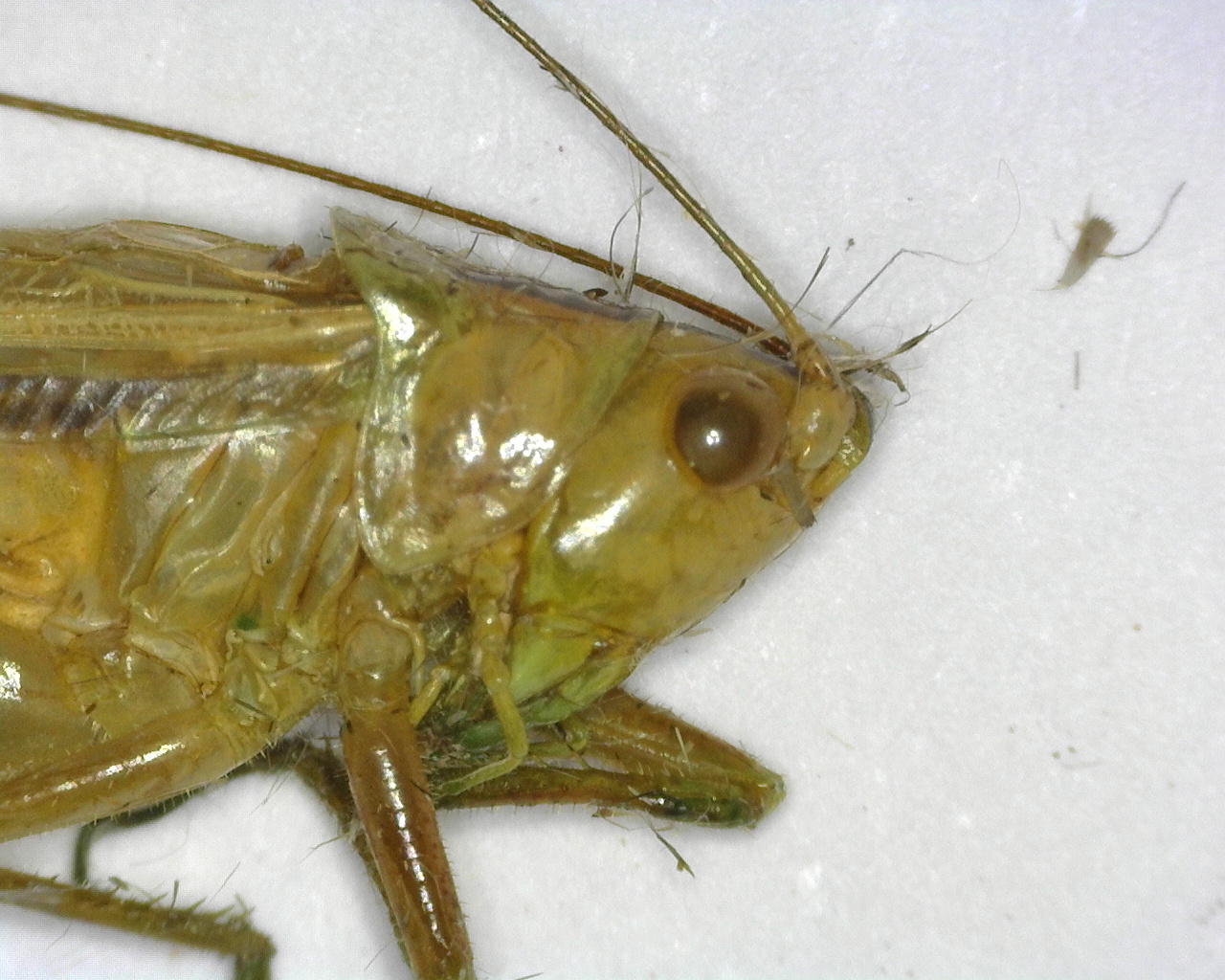
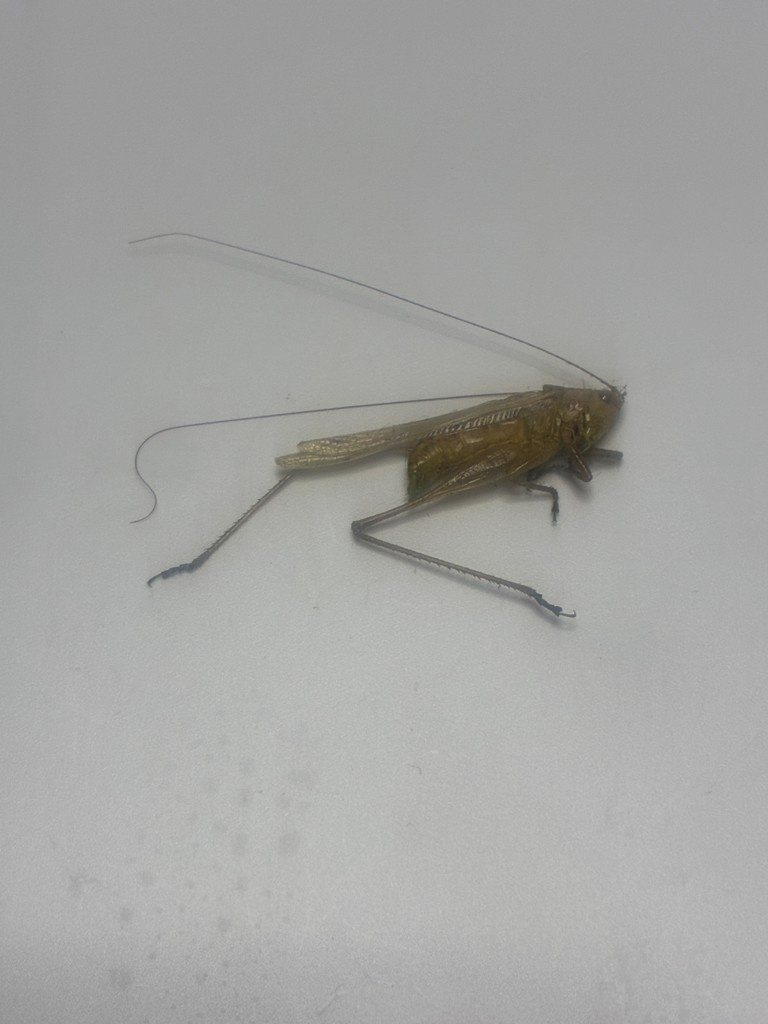
Greater meadow katydids in the genus Orchelimum are long-horned members of the family Tettigoniidae. Adults have a fairly stout head, strong jaws, and threadlike antennae that are often longer than the body. The wings usually run past the tip of the abdomen. Body length in this genus is about 20 to 42 mm, not counting the antennae. They are typically green or brown in life; dried specimens often fade to tan, olive, or straw. This genus is larger and heavier-headed than the lesser meadow katydids in the genus Conocephalus. Females have a curved ovipositor; males do not. The specimen in the photo is an adult male.
These katydids live in fields, meadows, and grassy or sedgy edges, and they often favor damper sites than lesser meadow katydids. The genus occurs across eastern and central North America, with at least one species reaching the West Coast. About twenty species are known from North America. Our specimen was collected in Douglas County, Wisconsin.
Males sit in grass and weeds and sing in late summer and fall, rubbing their wings together to attract females. The songs are high, buzzing trills or ticks, and several species may be calling in the same meadow. They feed mainly on grass and forb seeds, flowers, and sometimes leaves, and they will occasionally take other small insects. When approached they often slip around a stem or drop into the vegetation.
There is one generation per year. Females lay eggs in grass or plant stems. The eggs pass the winter, and nymphs hatch in late spring or early summer, growing through several molts before they become winged adults. Adults are most often found from midsummer until frost.
Meadow katydids do not bite or sting in any medically important way, though a large one can pinch with its jaws if handled roughly. They are useful for teaching Orthoptera identification and for comparison with lesser meadow katydids, coneheads, and other katydids.
Check it out on BugGuide! https://bugguide.net/node/view/7070/bgimage