
$8.95
 <–
1 in stock
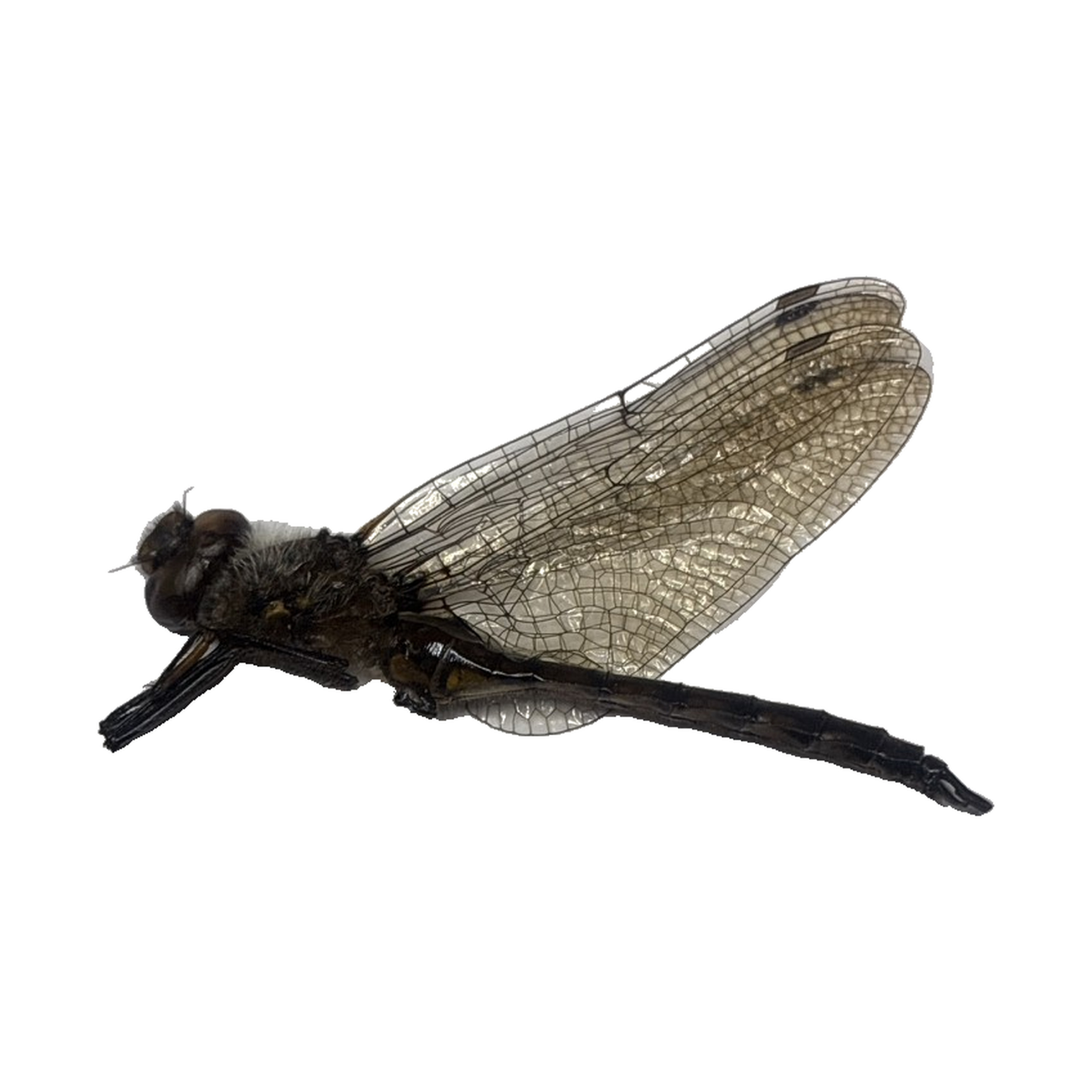
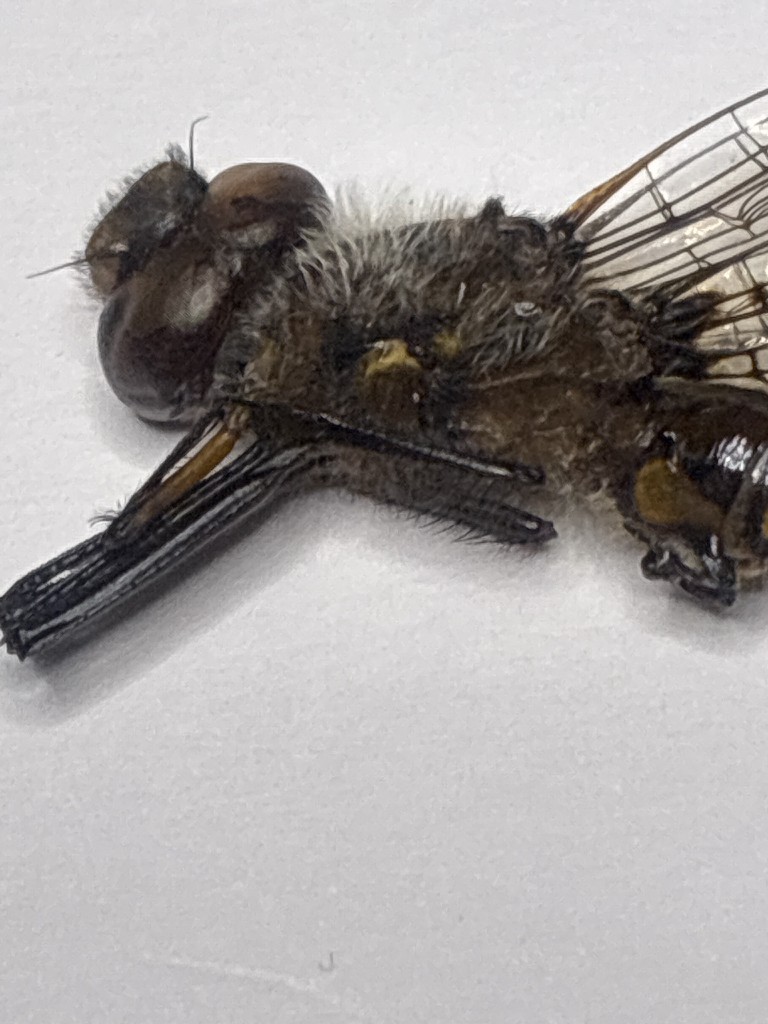
The Spiny Baskettail is a medium-sized emerald, about 43 to 47 mm (1.7 to 1.9 inches) long. The body is brown to olive, with a fairly hairy thorax, small yellow spots along the sides of the abdomen, and only a small dark patch at the base of each hindwing. The eyes are reddish or gray in younger adults and turn green or blue with maturity, and they meet at a seam on top of the head, as in other emeralds. This listing is for a male. Males have a sharp downward spine on each upper appendage at the tip of the abdomen, which is the usual way to separate this species from the closely related Common Baskettail.
Spiny Baskettails live at lakes, ponds, and slow streams, often marshy or slightly acidic waters, and they also forage in nearby clearings. The species is widespread across northern North America, from Canada south into the northern United States, and farther south mainly at higher elevations. Our specimen was collected in Fall River County, South Dakota, in July 2024.
This is an early-season dragonfly. Adults sometimes emerge in large numbers and often feed in swarms. Males patrol short stretches of shoreline, flying low over open water. Like other dragonflies, they are swift aerial hunters and prey on flying insects.
This species has incomplete metamorphosis, with egg, aquatic naiad, and adult stages. The naiads are aquatic predators. Adults emerge in spring, and the flight season runs from spring into summer.
Spiny Baskettails are beneficial predators of mosquitoes and other small insects. They are not pests and have no significant economic impact.
Epitheca spinigera (Selys, 1871) belongs to the emerald family Corduliidae, genus Epitheca (baskettails). It was originally described as Tetragoneuria spinigera.
This preserved specimen educates on dragonfly biology and wetland insects, suitable for displays or studies.
Check it out on BugGuide! https://bugguide.net/node/view/17816/bgimage