
$3.00
 <–
1 in stock
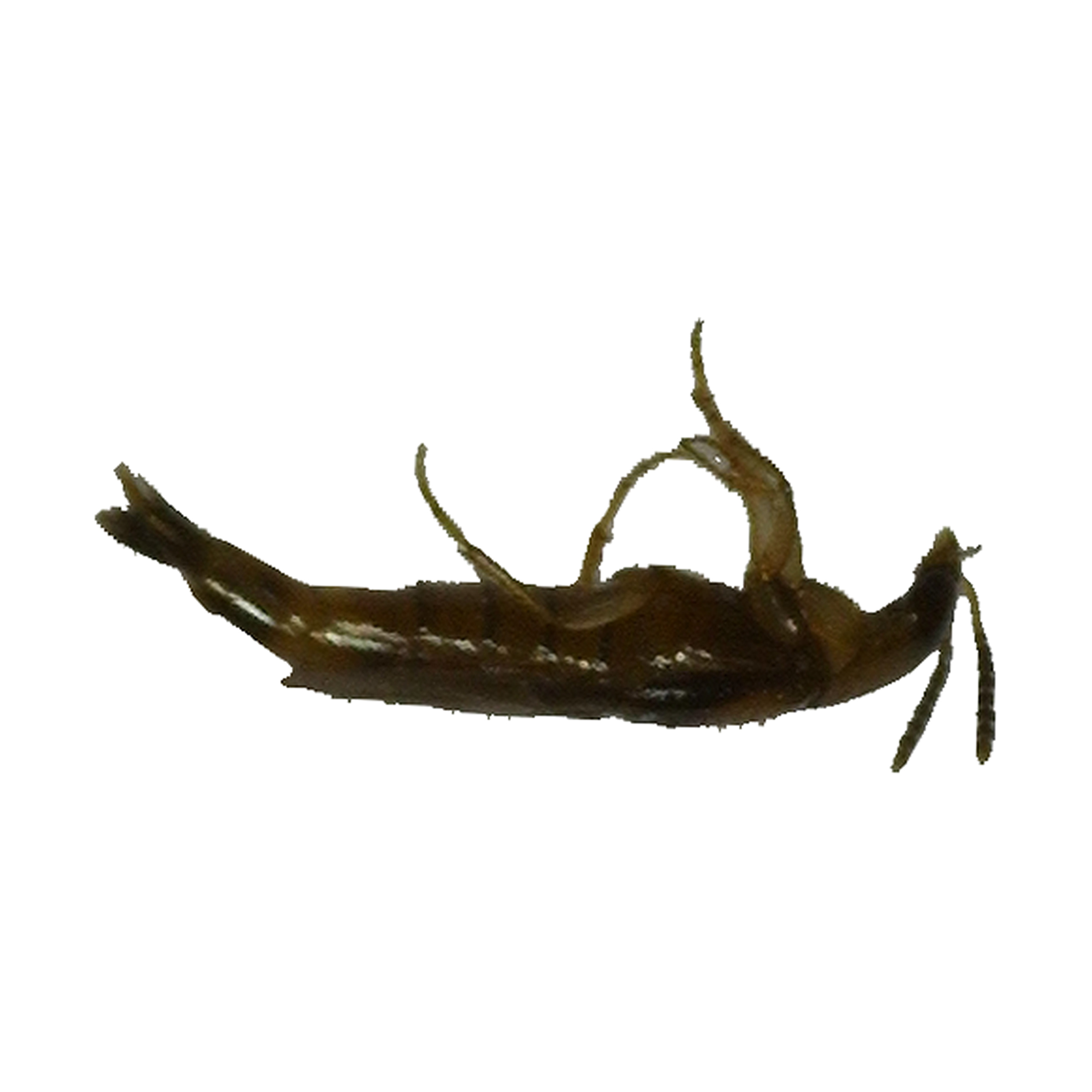
The Crab-like Rove Beetle is a small rove beetle in the genus Sepedophilus, usually about 2 to 5 mm long. The body is compact and tapering, wider toward the front and narrowing to a conical abdomen, which gives the group its crab-like look. The wing covers are short and leave much of the abdomen exposed, as in other rove beetles. The surface is evenly covered with short setae, so the beetle looks muted or slightly frosted rather than glossy. Color is typically yellowish brown to dark brown; on this specimen the pronotum is paler orange-brown and the elytra and abdominal tip are darker. The antennae are gradually clubbed, and the legs are slender and pale.
Sepedophilus occurs worldwide and throughout North America, including Missouri. About 30 species are found north of Mexico, three of them introduced from Europe. These beetles live mainly in forest leaf litter and debris and under bark, and some species are associated with polypore or fleshy fungi. Our specimen was collected from leaf litter with a Berlese funnel in Phelps County, Missouri, in November 2026.
Adults are most often found by sifting litter or peeling bark, where they move quickly into crevices when disturbed. Some species are generalists in litter and under logs, while others are more closely tied to fungi. Depending on the species, adults and larvae may prey on small arthropods, such as springtails, or feed on fungi.
Like other rove beetles, Sepedophilus has complete metamorphosis. Eggs, larvae, and adults typically live in the same moist litter, bark, or fungal habitats. Larvae of some species are active predators, and larvae of other species are adapted to feed on fungi. Development is usually completed in the same microhabitat, and adults of many rove beetles overwinter in litter in temperate climates.
Crab-like rove beetles are not pests. They do not damage crops, stored products, or structures, and they are harmless to people. As small predators and fungus feeders in leaf litter and decaying wood, they are a normal part of the forest decomposer community.
Sepedophilus Gistel, 1856 belongs to the rove beetle family Staphylinidae, subfamily Tachyporinae (crab-like rove beetles), tribe Tachyporini. An older synonym is Conosoma. The name means “decay loving.” There are more than 350 species worldwide. North American species were revised by Campbell in 1976; many can be identified to species only with a close look at the abdomen and, for males, the genitalia, so this specimen is listed as Sepedophilus sp.
This preserved specimen educates on rove beetles and the leaf litter community, suitable for displays or studies.
Check it out on BugGuide! https://bugguide.net/node/view/38401/bgimage