
$3.00
 <–
1 in stock
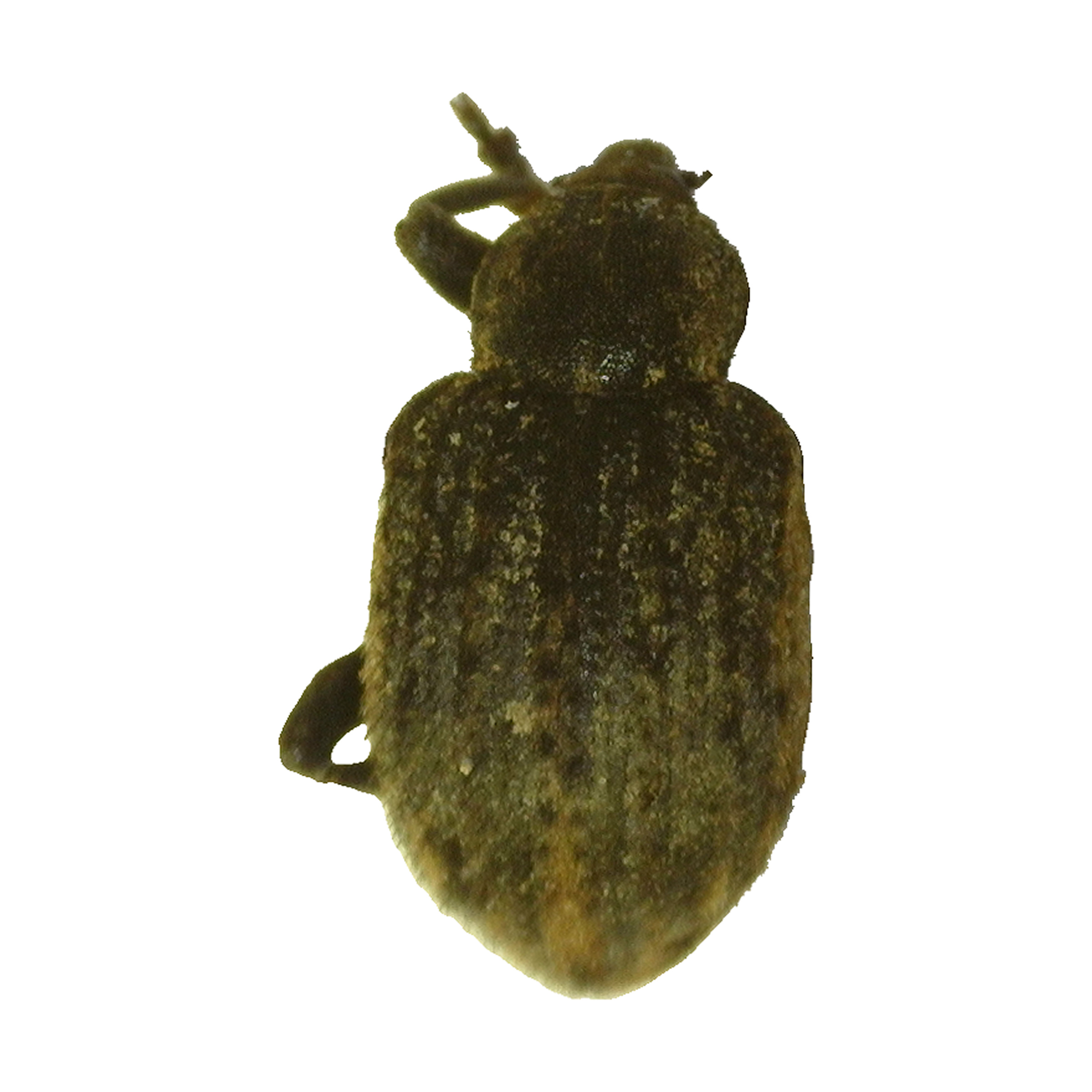
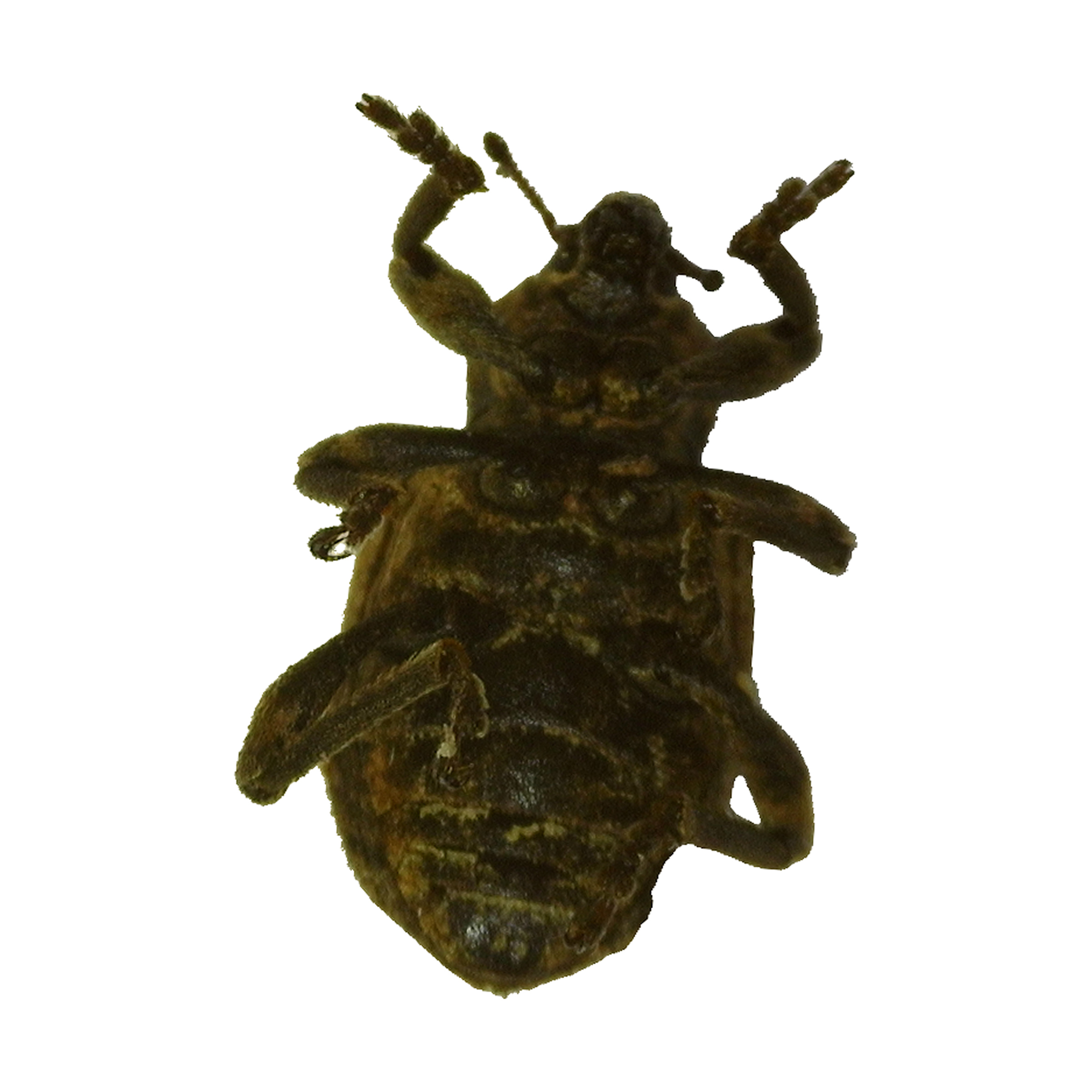
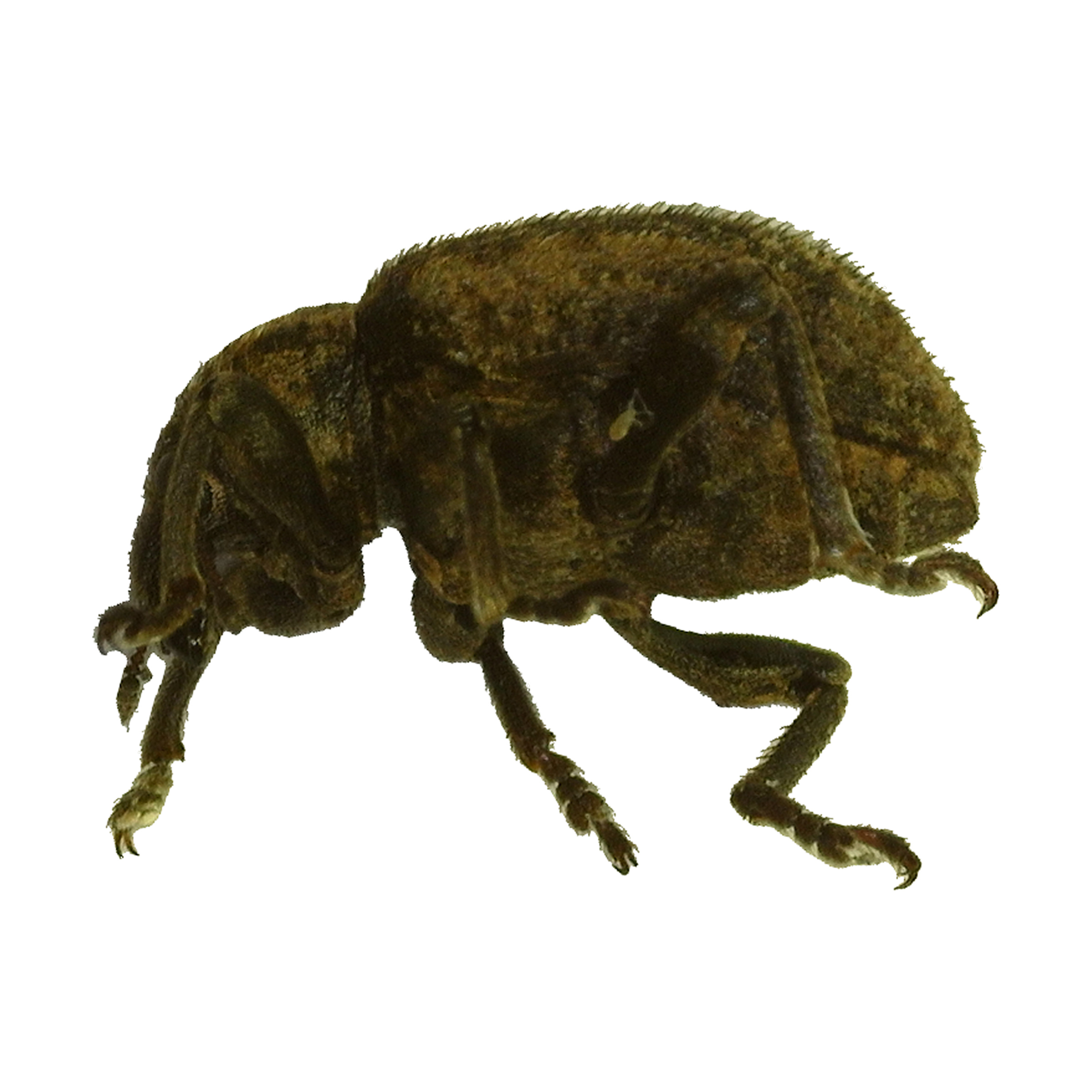
The Black Vine Weevil is a broad-nosed weevil about 7.5-11 mm long. The body is dull matte black to dark brown, with a rough, pebbled surface of pits and tubercles. Scattered patches of short yellowish or buff scales often remain on the elytra and sides, giving a mottled look even on worn specimens. The snout is short and broad, and the antennae are elbowed. The front femora each have a tooth, a useful field mark for this species. The elytra are fused, so adults cannot fly. It can be told from similar Otiorhynchus species by the combination of size, the tooth on the front femur, and the golden scale patches on a black body.
Native to Europe and introduced to North America by the early 1800s, this weevil is now widespread across much of southern Canada and the northern United States, and it also occurs in Australasia. It is less common in the central U.S. but turns up in gardens, nurseries, greenhouses, woodland edges, and leaf litter. Adults sometimes wander indoors to overwinter. Our specimen was collected from leaf litter with a Berlese funnel in Phelps County, Missouri, in November 2026.
Adults are nocturnal. They hide in litter or soil by day and climb onto plants at night to chew characteristic U-shaped or crescent notches in leaf edges. Preferred hosts include grape, rhododendron, yew (Taxus), hemlock, cyclamen, and many other ornamentals and nursery plants. Adults are flightless and spread by crawling or by being moved with plants and soil. When disturbed they often drop and play dead.
In North America the species is largely parthenogenetic, so populations are mostly or entirely female. Eggs are laid in soil and litter near host roots. Larvae are white, C-shaped, legless grubs with brown heads that feed on roots, often stripping bark from larger roots or girdling crowns. Half-grown larvae usually overwinter in the soil. Pupation is in earthen cells near the surface. Adults emerge in early summer, feed for several weeks before laying eggs, and may live more than one season. There is typically one generation per year.
Black Vine Weevil is a major pest of ornamentals, grapes, and nursery stock. Root feeding by larvae can stunt or kill plants, especially in containers and landscape beds. Adult leaf notching is mostly cosmetic but signals that larvae may be in the soil. The common names Taxus Weevil and Cyclamen Grub reflect its damage to yew and cyclamen.
Otiorhynchus sulcatus (Fabricius, 1775) belongs to the weevil family Curculionidae, subfamily Entiminae (broad-nosed weevils), tribe Otiorhynchini. An older synonym is Brachyrhinus sulcatus. Other common names include Taxus Weevil and Cyclamen Grub.
Check it out on BugGuide! https://bugguide.net/node/view/7480/bgimage