Search for a bug

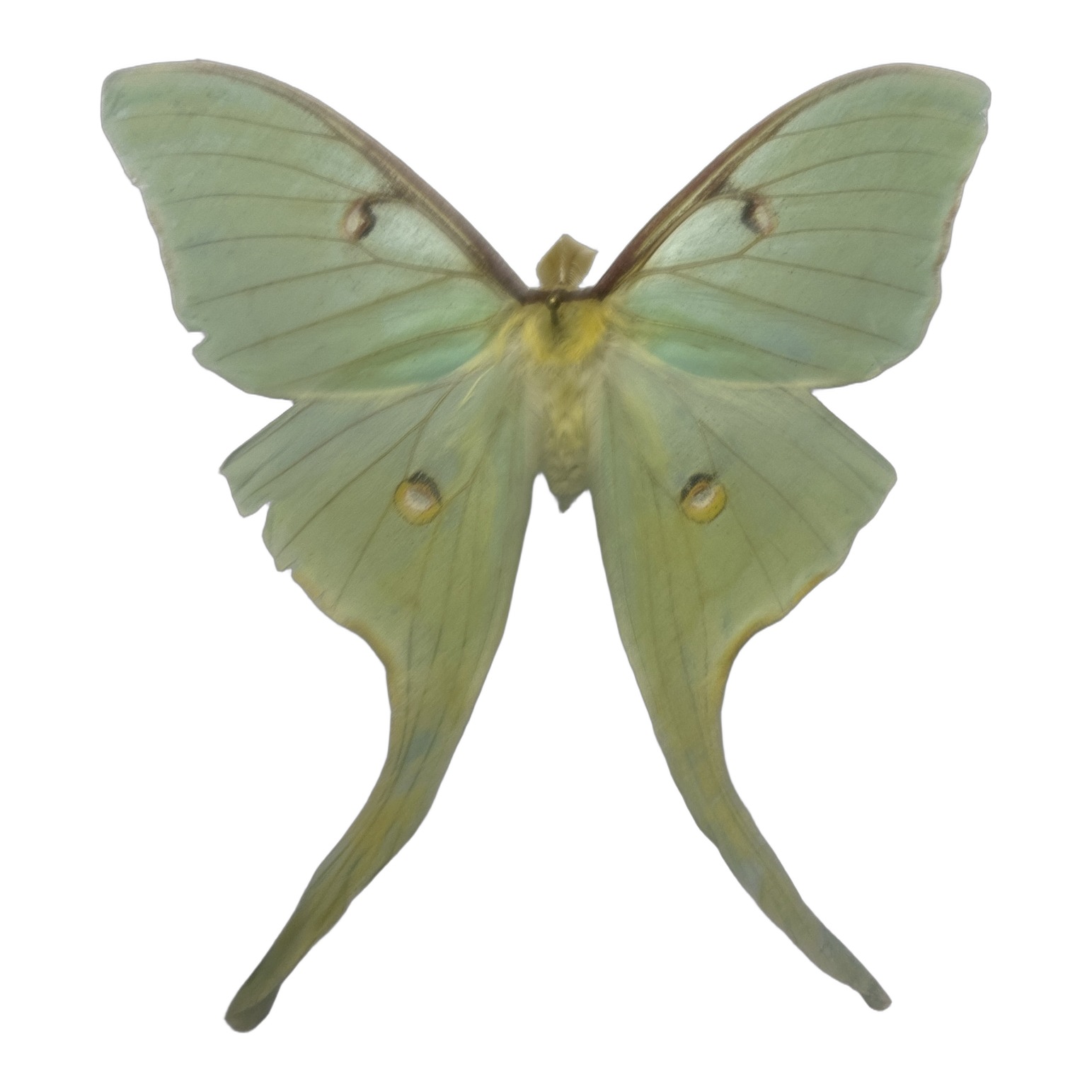
Luna Moth (Actias luna), Damaged

$7.95

  • bugguide info... <–
    See it in BugGuide
  • Actias luna
  • size wingspan 7.5-10.5 cm
  • DAMAGED SPECIMEN
  • Damaged specimen: may have a detached or missing antenna, a missing tail, a smudge or chip in a wing, or similar flaws
  • ALL OUR INSECTS ARE DEAD UNMOUNTED SPECIMENS
  • The photo is a representative example of the specimens we have in stock.
  • A.K.A. American Moon Moth

4 in stock

Appearance

The Luna Moth is one of the largest and most recognizable moths in North America, with a wingspan of 7.5 to 10.5 cm. The wings are pale green, and each wing has a transparent eyespot. The hindwings end in long, curving tails. The outer wing margins are pink or brown in the southern spring brood and yellow in northern and other southern broods.

Habitat and Range

This moth lives in deciduous hardwood forests across eastern North America.

Behavior

Adult Luna Moths do not eat. Their only objective is to reproduce, and they are easily attracted to lights at night.

Life Cycle

There is one brood in the north, flying May to July, and three broods in the south, flying March to September. The lime-green caterpillars feed on a variety of trees, including white birch, persimmon, sweet gum, hickories, walnuts, pecans, and sumacs. Cocoons are concealed in leaf litter. Adults live only about one week. The adult moth is the stage shown in the photo.

Economic Impact

This species is not considered a pest. It is a popular, showy native moth valued by collectors, educators, and nature enthusiasts.

Taxonomy Note

Hodges number 7758. The species was described by Linnaeus in 1758 and belongs to the giant silkworm and royal moth family Saturniidae, subfamily Saturniinae. The name luna is Latin for moon.

Check it out on BugGuide! https://bugguide.net/node/view/562/bgimage

Description

Appearance

The Luna Moth is one of the largest and most recognizable moths in North America, with a wingspan of 7.5 to 10.5 cm. The wings are pale green, and each wing has a transparent eyespot. The hindwings end in long, curving tails. The outer wing margins are pink or brown in the southern spring brood and yellow in northern and other southern broods.

Habitat and Range

This moth lives in deciduous hardwood forests across eastern North America.

Behavior

Adult Luna Moths do not eat. Their only objective is to reproduce, and they are easily attracted to lights at night.

Life Cycle

There is one brood in the north, flying May to July, and three broods in the south, flying March to September. The lime-green caterpillars feed on a variety of trees, including white birch, persimmon, sweet gum, hickories, walnuts, pecans, and sumacs. Cocoons are concealed in leaf litter. Adults live only about one week. The adult moth is the stage shown in the photo.

Economic Impact

This species is not considered a pest. It is a popular, showy native moth valued by collectors, educators, and nature enthusiasts.

Taxonomy Note

Hodges number 7758. The species was described by Linnaeus in 1758 and belongs to the giant silkworm and royal moth family Saturniidae, subfamily Saturniinae. The name luna is Latin for moon.

Check it out on BugGuide! https://bugguide.net/node/view/562/bgimage