
$5.95
 <–
7 in stock
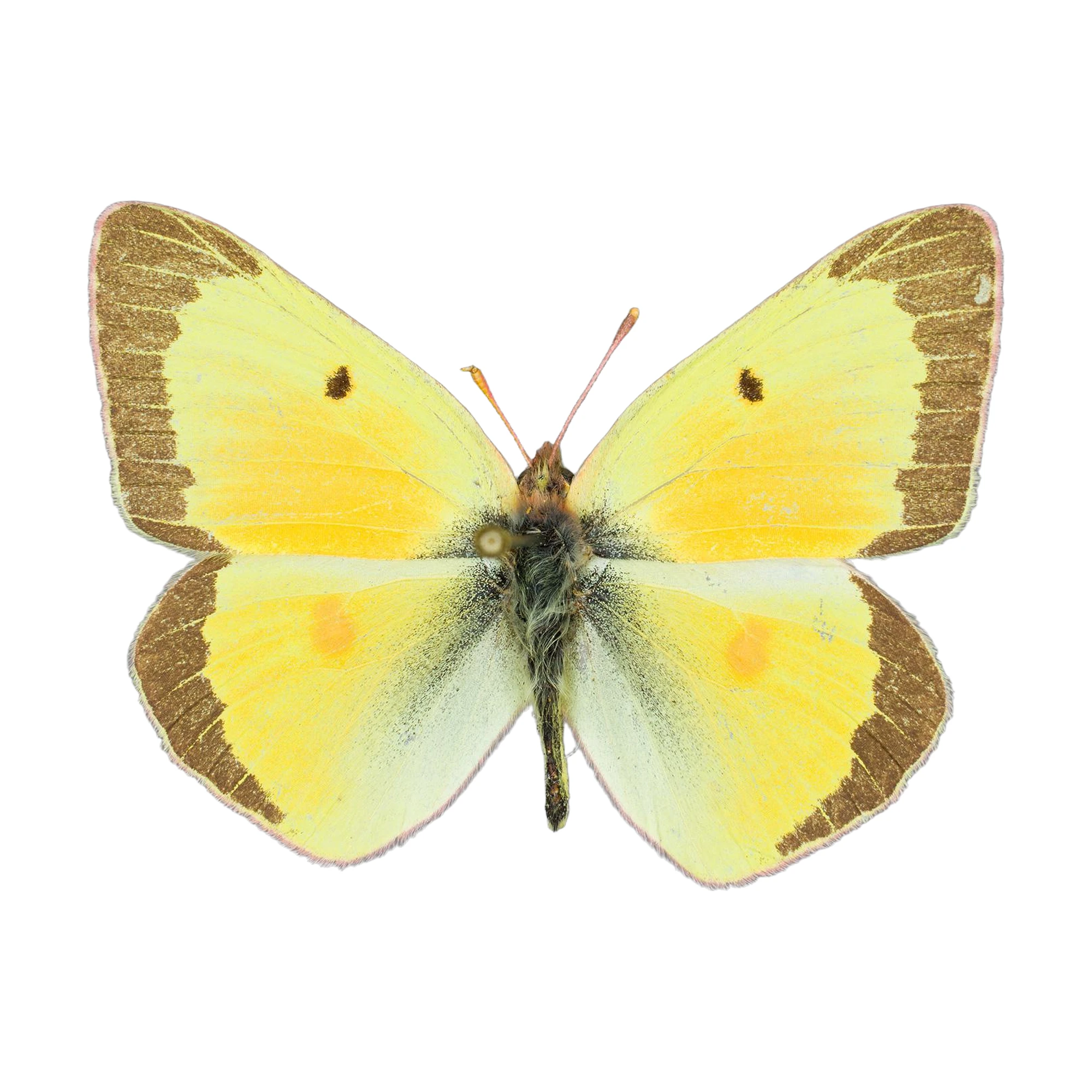
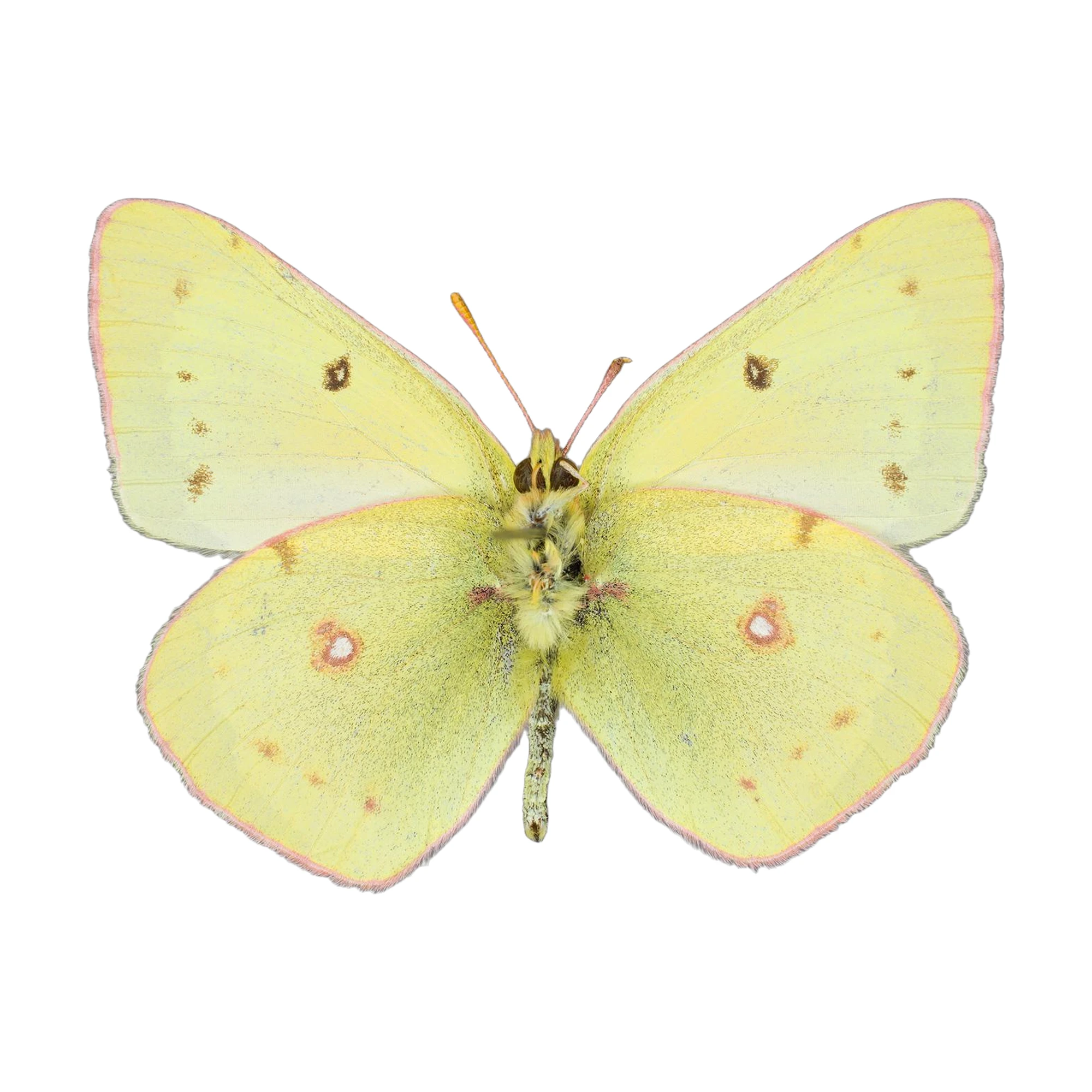
The Orange Sulphur, Colias eurytheme, also called the Alfalfa Butterfly or Alfalfa Sulphur, is a medium-sized sulphur butterfly with a wingspan of about 40 to 65 mm (1 5/8 to 2 1/2 inches). The dorsal side of the male is yellow washed with orange, with a solid black border on all wings, a small black spot on the forewing, and an orange spot on the hindwing. Females have a wider black border with yellow spots inside it, and some females are a white form with no orange at all. The ventral side is yellow with a row of small dark spots and a silver spot ringed in pink on the hindwing, often with a smaller spot beside it. It looks like the Clouded Sulphur, Colias philodice, but is usually larger and shows orange instead of plain yellow, most clearly on the dorsal side. Our photos show spread museum specimens of the same species, dorsal and ventral.
The Orange Sulphur lives in open places of all kinds, including alfalfa and clover fields, meadows, roadsides, vacant lots, and lawns. It is one of the most common butterflies in North America and is found across most of the United States and southern Canada, from coast to coast, and south into Mexico, though not as far north as the Clouded Sulphur.
Adults fly in several broods each year, from spring until the first hard frosts, and into December in many southern states. They fly fast and low over open fields and visit many kinds of flowers for nectar. Males often gather at puddles and damp soil to take up minerals.
Complete metamorphosis (egg, larva, pupa, adult). Females lay single eggs on the leaves of alfalfa, clovers, vetches, and other legumes. The caterpillars are green with a white stripe along each side and feed on the leaves. The Orange Sulphur spends the winter as a caterpillar or chrysalis.
The caterpillar is known as the alfalfa caterpillar and can be a pest of alfalfa in some years, especially in the western United States, when large numbers feed on the crop. Most of the time natural enemies keep it in check, and the adults help pollinate wild flowers.
Our specimens were collected in Douglas County, Wisconsin.
Please note that our specimens are damaged, with wing wear or chips and possibly a missing or bent antenna, which is why they cost less. The photos show undamaged examples.
This preserved specimen shows the orange and yellow wings with black borders of this common sulphur, ideal for butterfly education and displays. Check it out on BugGuide! https://bugguide.net/node/view/3248/bgimage
Photos: ETH Zurich Entomological Collection (specimen AZ13-0267), CC BY 4.0, via GBIF. Cropped, background removed. Photos are representative examples, not the exact insect you will receive.