
$8.95
 <–
1 in stock
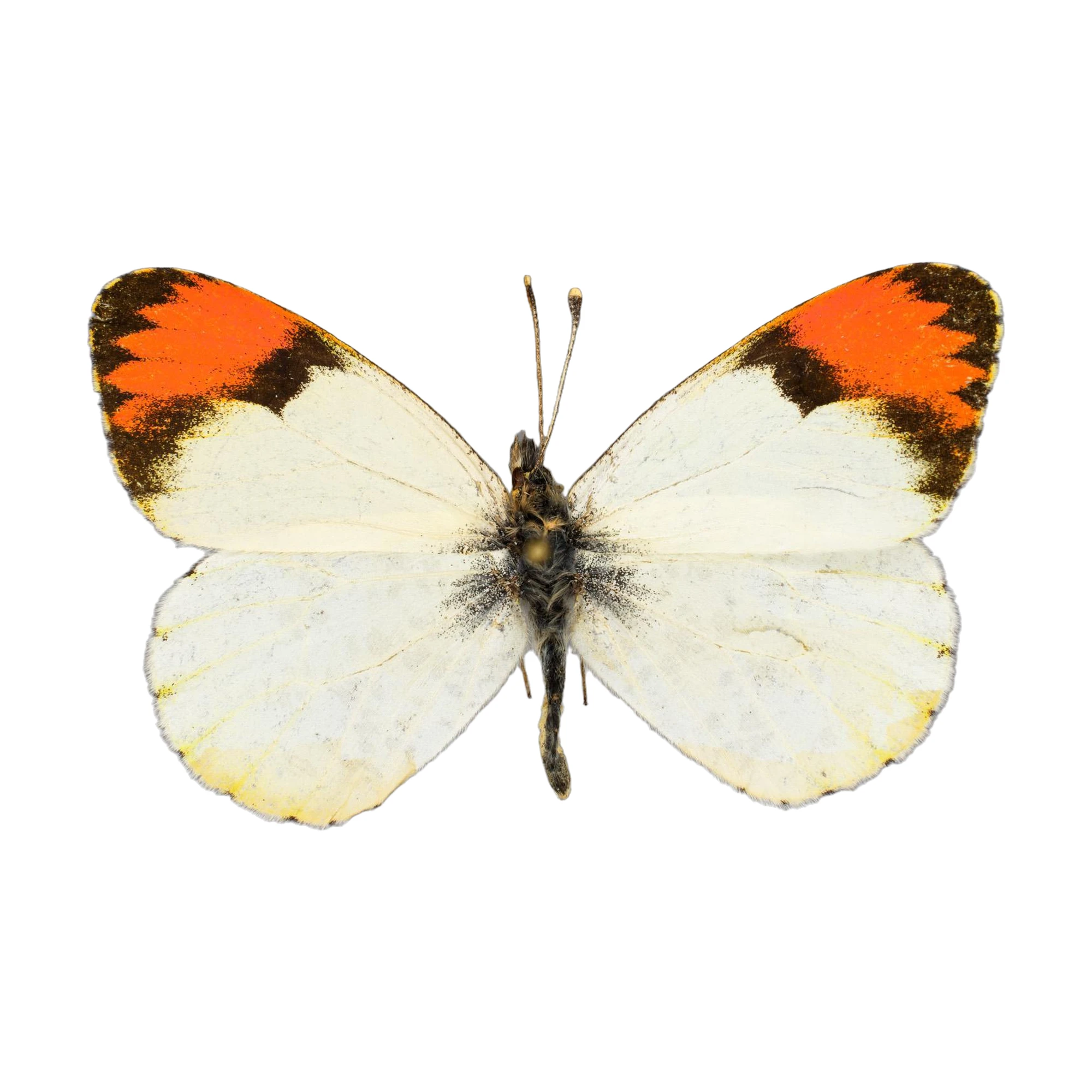
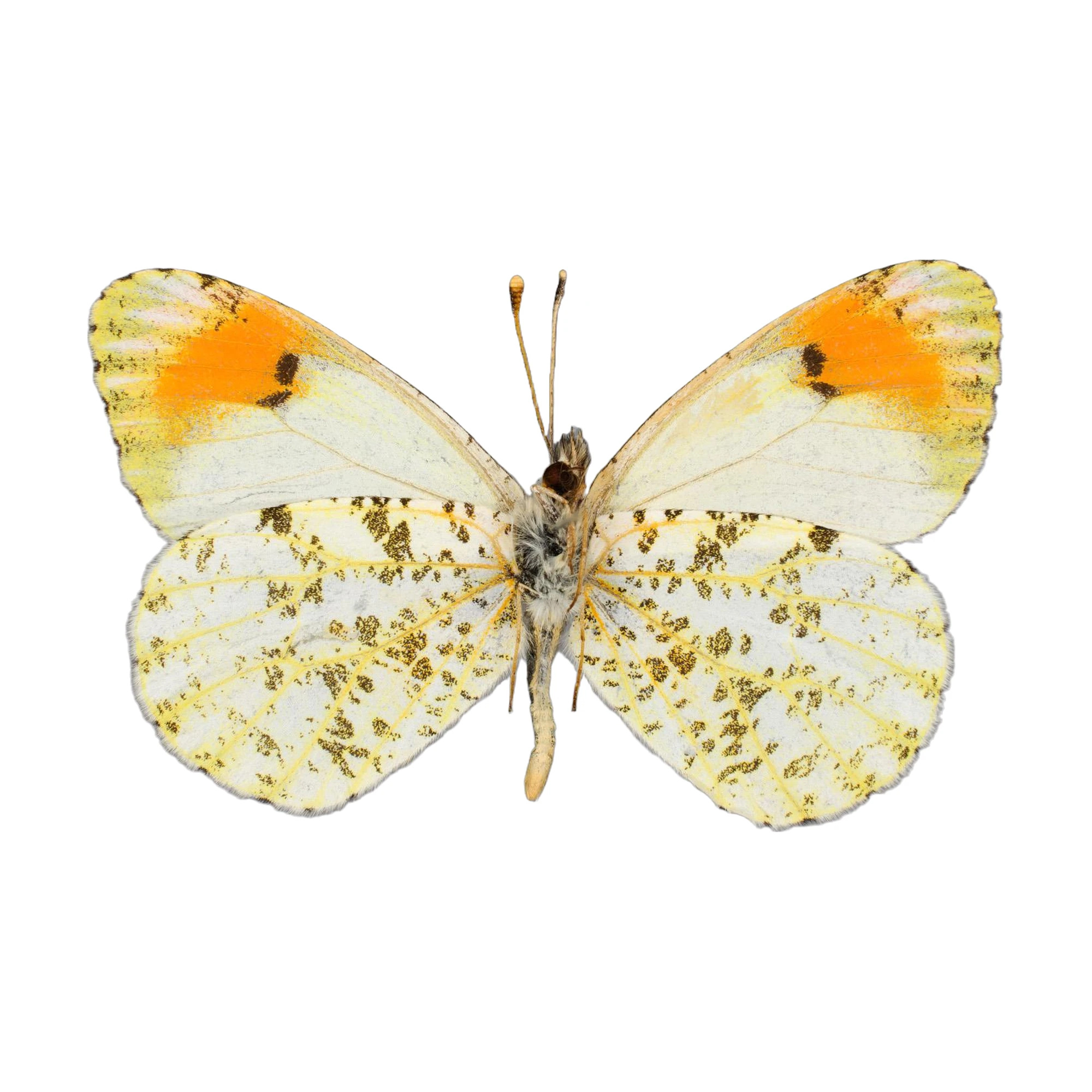
The Stella Orangetip, Anthocharis sara stella, is a small orangetip butterfly of the Sierra Nevada with a wingspan of about 35 to 48 mm (1 3/8 to 1 7/8 inches). It was long treated as a subspecies of the Sara Orangetip, Anthocharis sara, and many authors now treat it as its own species, Anthocharis stella, or as a subspecies of Anthocharis julia. The dorsal side of the male is white to very pale yellow, with a bright orange to orange-red patch edged in black at the tip of each forewing and a small black bar near the middle of the forewing. Females are a warmer yellow, with a smaller, paler orange tip. The ventral hindwing is covered with a scattered marbling of olive green over white, and the orange patch shows through on the ventral forewing tip. Our photos show spread museum specimens of the Sara Orangetip group, dorsal and ventral.
The Stella Orangetip lives in open conifer forest, along streams, roads and trails through the forest, and in rocky canyons, generally above about 1500 m (5000 feet). It is found in the Sierra Nevada of California and western Nevada, from Plumas County south, and related populations occur in the mountains of the Pacific Northwest and the Great Basin.
Adults fly in a single brood early in the season, from March to July depending on elevation, and it is one of the first butterflies to appear in the high Sierra each spring. Males patrol a regular beat along streams and trails looking for females. Adults visit flowers for nectar, very often the flowers of their rock cress host plants.
Complete metamorphosis (egg, larva, pupa, adult). Females lay single eggs on rock cress (Arabis and related mustards). The caterpillars feed on the buds, flowers, and young seed pods. The chrysalis is slender and thorn shaped, and the butterfly spends the summer and winter as a chrysalis before the adult emerges the next spring.
Not a pest. The caterpillars feed only on wild rock cress and related mustards in the mountains and cause no known damage to crops.
Our specimen was collected in Alpine County, California.
This preserved specimen shows the bright orange wingtips of this Sierra Nevada spring butterfly, ideal for butterfly education and displays. Check it out on BugGuide! https://bugguide.net/node/view/765186/bgimage
Photos: ETH Zurich Entomological Collection (specimen AZ11-1500), CC BY 4.0, via GBIF. Cropped, background removed. Photos are representative examples, not the exact insect you will receive.