
$5.95
 <–
2 in stock
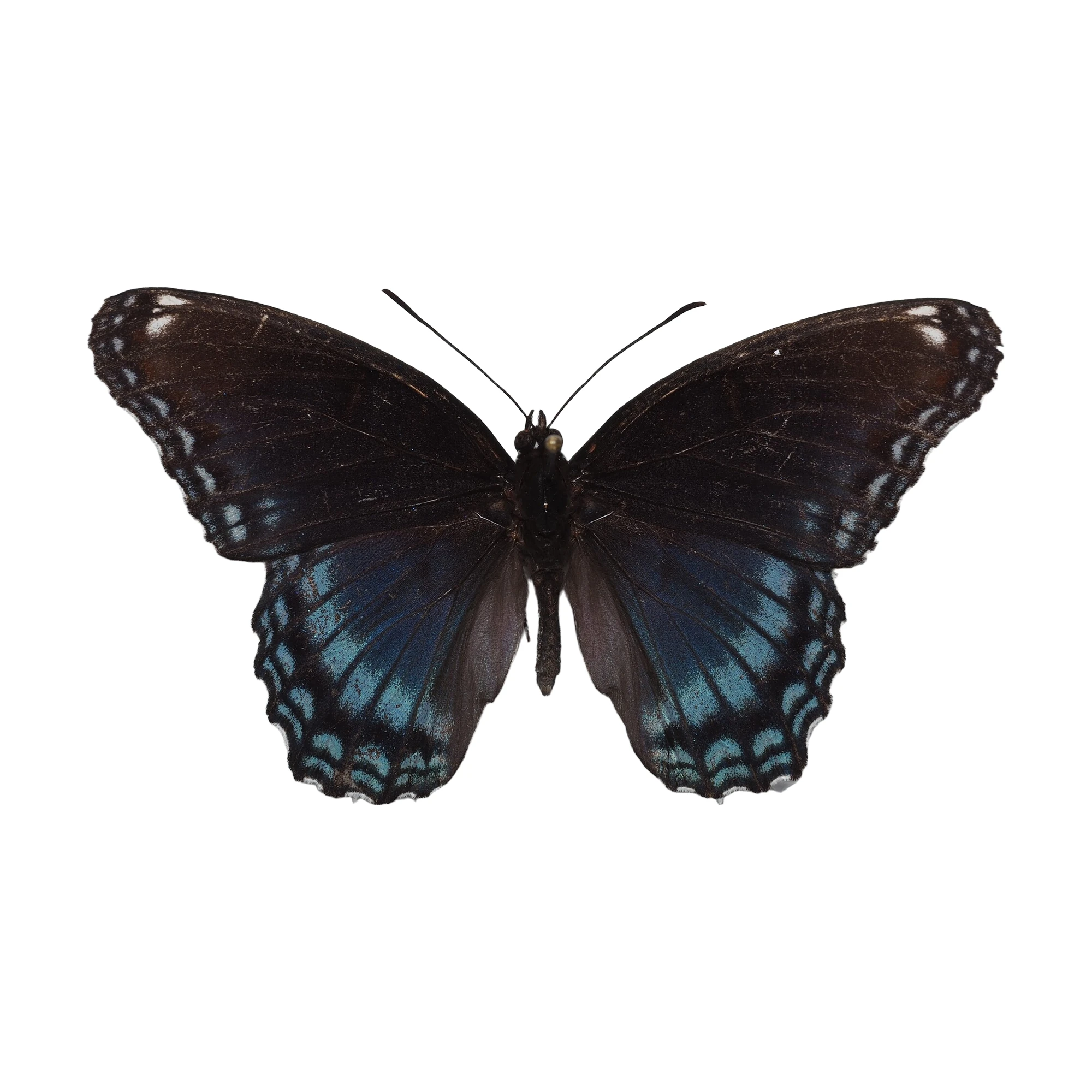
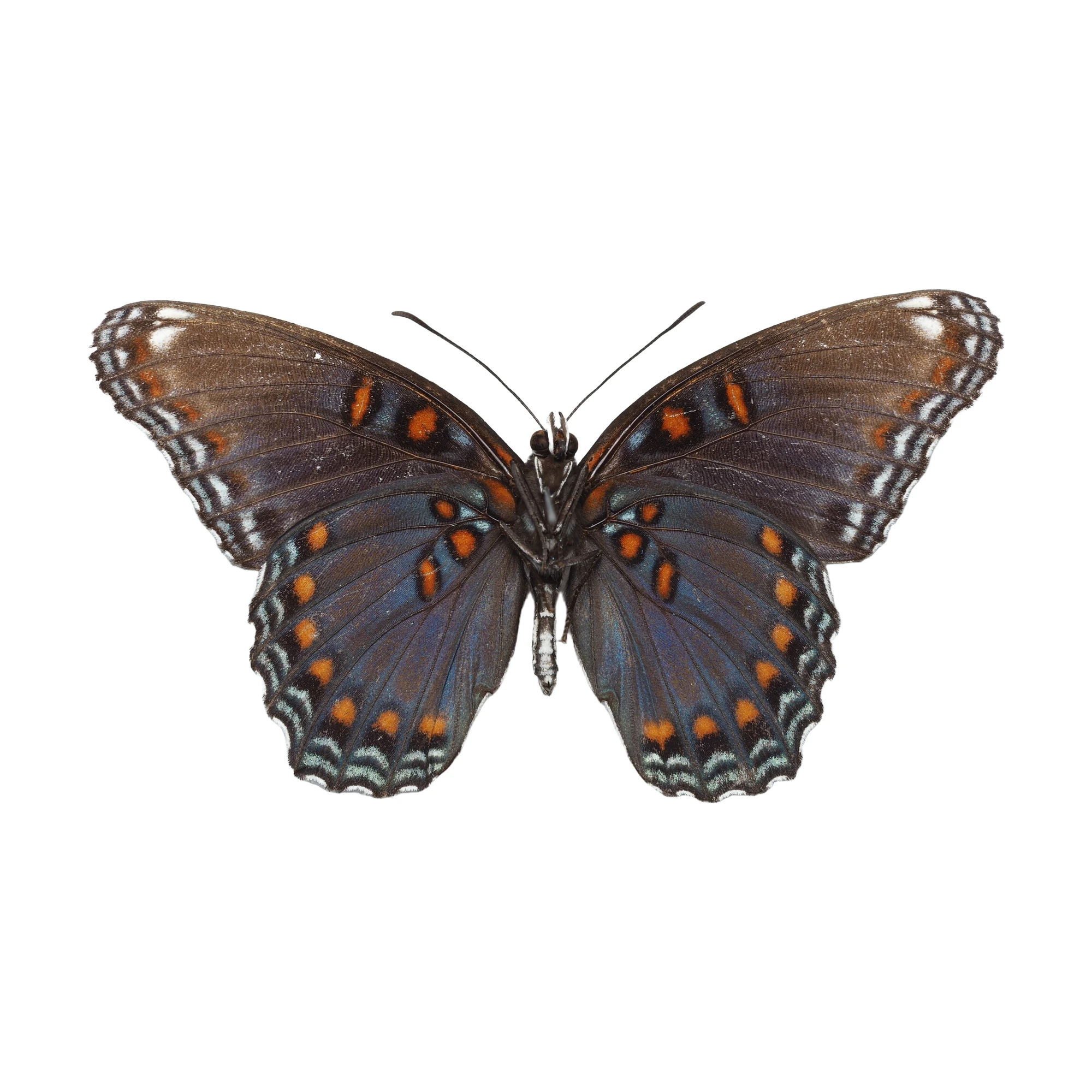
The Red-spotted Purple, Limenitis arthemis astyanax, is a large, dark butterfly with a wingspan of 75 to 101 mm (about 3 to 4 inches). The dorsal wings are black-brown with a metallic blue shine that is strongest on the hindwing. Depending on the light it can look blue, purple, or greenish. There is no white band across the wings, which sets it apart from the northern White Admiral form, and the wing edges have pale bluish to white marks. The ventral wings are dark brown. The ventral forewing has two red-orange bars near the base of the front edge, and the ventral hindwing has three red-orange spots near the base and a row of red-orange spots along the edge. The hindwing has no tails, which is one way to tell it from the Pipevine Swallowtail it mimics. Our photo shows the dorsal view of a spread specimen. Mature caterpillars are deep brownish-olive with a faint whitish patch on the middle of the dorsal side. BugGuide treats the White Admiral and Red-spotted Purple as forms of one species, and they often interbreed where they meet.
The Red-spotted Purple lives in deciduous or mixed forests, moist uplands, valley bottoms, coastal plains, forest edges, and shady roadsides. It is found in the eastern United States from the southern Great Lakes and southern New England south to Florida, and as far north as extreme southern Ontario. It usually lives south of a line running through north-central New England, New York, Pennsylvania, Michigan, and Minnesota. North of that line the White Admiral form takes over, and the two forms hybridize in the overlap zone. A similar form in the Southwest is called subspecies arizonensis.
Males perch on trees and tall bushes about a meter or more above the ground and watch for females, and they chase off rival males that enter their territory. Adults feed mostly on sap flows, rotting fruit, carrion, dung, and moisture from mud puddles. They only occasionally take nectar, from small white flowers such as spiraea, privet, and viburnum. The Red-spotted Purple is a Batesian mimic: the butterfly is harmless, but its dark body and blue hindwings copy the poisonous Pipevine Swallowtail (Battus philenor), which likely helps keep predators away.
Complete metamorphosis (egg, larva, pupa, adult). The female lays single eggs on the tips of host plant leaves. The caterpillars eat the leaves of many trees and shrubs, including wild cherry, aspen, poplar, cottonwood, willow, birch, oak, hawthorn, basswood, and shadbush. Third-stage caterpillars spend the winter in a small shelter called a hibernaculum and finish growing in spring. The chrysalis stage lasts about 10 to 14 days. There are usually two broods a year, with adults flying from April to October.
Not known as a pest. The caterpillars eat the leaves of wild trees such as cherry, willow, and aspen, and BugGuide lists apple and pear among their hosts, but we found no record of crop damage.
Some of our specimens were collected by L. Lilly near Ringgold, Georgia.
These are damaged specimens, sold at a reduced price. They are a low-cost way to study the blue dorsal iridescence and red-spotted ventral wings of a mimic butterfly, suitable for displays, practice mounting, or art projects. Check it out on BugGuide! https://bugguide.net/node/view/38193/bgimage
Photo: Brighton Lee (iNaturalist user meaningful_name), CC0, via iNaturalist.