
$3.00
 <—
7 in stock
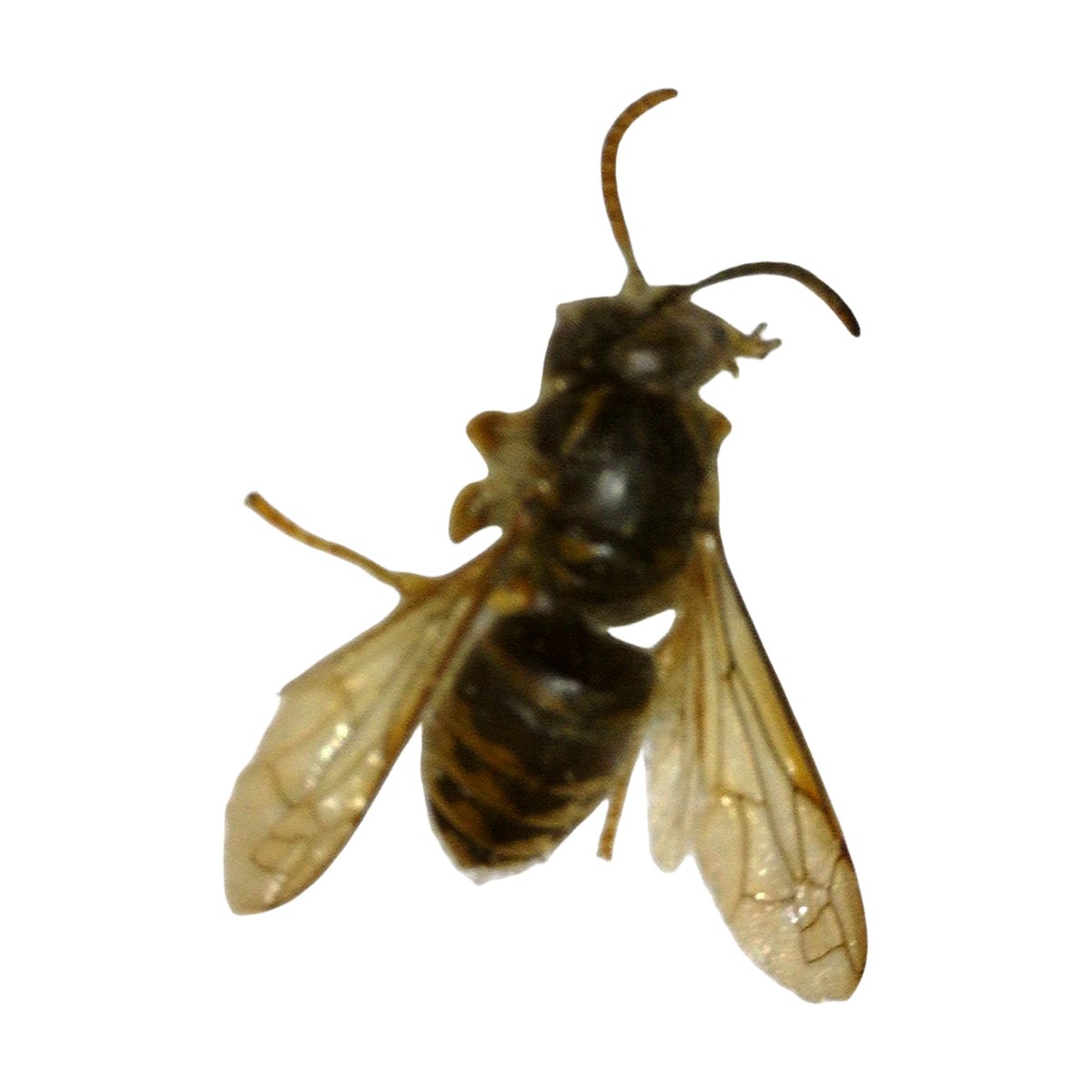
Yellowjackets of the genus Vespula, the ground yellowjackets, are medium-sized social wasps with a smooth, shiny body banded in black and yellow or white, and the species in this genus are very hard to tell apart without a microscope, so this listing is offered at the genus level. The specimens we offer are males, also called drones, which are about 11 to 17 mm long and look much like the workers of their species. Males are told apart by their antennae, which are longer than those of females and have 13 segments instead of 12, and by the abdomen, which shows seven visible segments instead of six. Males also have no stinger, because the sting is a modified egg-laying organ that only females have. In Vespula the gap between the bottom of the eye and the base of the jaw (the malar space) is very short, while in the aerial yellowjackets of the genus Dolichovespula it is long, and Vespula also lacks the pale vertical line on the thorax just behind the head that many Dolichovespula show. Because of dried-specimen fading and natural variation, the color of the bands can range from bright yellow to pale cream, tan, or orange-brown.
The genus Vespula has 13 species in North America (one of them introduced) and is found across Canada and the United States, from woodlands and meadows to farms, towns, and city parks. Most species nest underground in abandoned rodent burrows and other cavities, and a few nest in rotten logs, wall voids, or other protected spaces. Males are usually seen in late summer and fall, around the nest and then flying and visiting flowers in search of new queens. Some of our specimens were collected near Douglas County, Wisconsin.
Yellowjackets are social wasps that live in a colony of a queen, many workers, and, late in the season, males and new queens. Males do not work for the colony. They do not build the nest, hunt, or defend it, and they spend their short adult lives feeding on nectar and other sweet foods and looking for mates. Since males cannot sting, they are not the wasps that cause trouble near a disturbed nest, even though they look much like their stinging nestmates. The workers of the colony hunt flies, caterpillars, and other insects and scavenge sugar and meat, and they defend the nest vigorously.
Yellowjackets undergo complete metamorphosis (egg, larva, pupa, adult), and most colonies last only one season. A mated queen spends the winter alone, starts a new nest in spring, and raises the first workers herself. Males are produced in late summer and fall from unfertilized eggs, at about the same time as the new queens. They leave the nest, mate with queens from other colonies, and die as the weather turns cold. The old queen, the workers, and the nest die as well, and only the mated young queens survive the winter.
Yellowjackets are both beneficial and a nuisance. Their workers kill large numbers of caterpillars, flies, and other insects, which is a natural form of pest control. They can also become a problem in late summer, when they swarm around picnics and garbage cans and a disturbed nest can sting many times, which is dangerous to people who are allergic. Males are harmless to people and are a good, safe specimen to study the features that tell the sexes of wasps apart.
This preserved specimen educates on yellowjacket males and the differences between the sexes in social wasps, suitable for displays or studies. Check it out on BugGuide! https://bugguide.net/node/view/554